


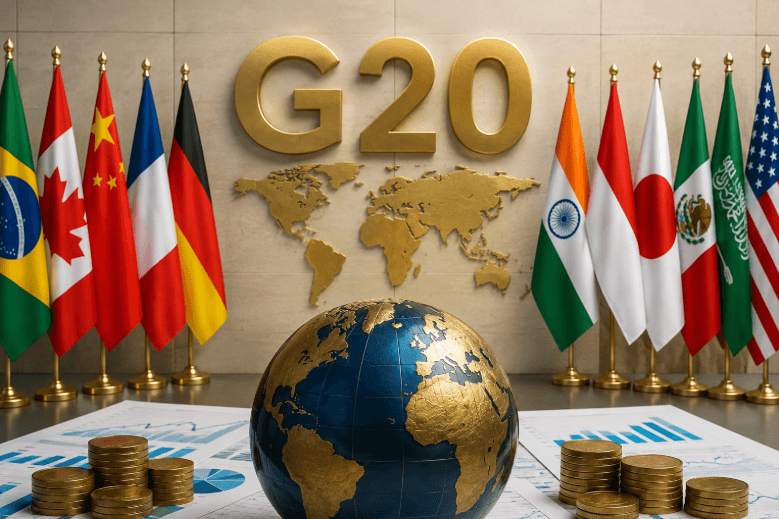
WASHINGTON, D.C. — G20 finance ministers concluded two days of meetings in North Carolina with sovereign debt, economic growth and financial stability among the central issues discussed as policymakers considered mounting pressures across the global economy.
The meetings, hosted by U.S. Treasury Secretary Scott Bessent, brought together finance officials from the Group of 20 major economies to address economic growth, international trade, sovereign debt and broader financial challenges.
“The Middle East war, challenges in US bond markets, economic growth, trade and too high sovereign debt were the key issues discussed at the meetings,” said Eric LeCompte, a UN finance expert and the Executive Director of Jubilee USA Network, a religious development coalition that monitors G20 meetings. “The G20 agreed that more action on debt and economic growth must take place.”
Economic Growth Takes Center Stage at G20 Meetings
Bessent emphasized economic growth in his opening remarks, placing the issue at the center of discussions as governments confront high debt burdens and uncertainty in the international economy.
A chair’s statement released following the meetings was supported by G20 members other than China and called for faster and more predictable debt relief policies.
The issue is particularly significant for developing economies, where large sovereign debt burdens and high borrowing costs can restrict governments’ ability to fund infrastructure, public services and other priorities intended to support long-term development.
“Too many developing countries struggle with high debts and low growth,“ said LeCompte. “There is a growing sense that current debt policies need significant improvement.”
The United States has made sovereign debt challenges a priority within its G20 agenda. U.S. officials are seeking changes intended to make sovereign debt restructuring faster, more transparent and more predictable.
“The US goverment is pressing debt as a key global issue to address,” added LeCompte.
G20 Technical-Level Study Group to Address Sovereign Debt
Bessent said work on global debt would remain a G20 priority and announced the formation of a G20 Technical-Level Study Group focused on the issue.
The group is expected to maintain momentum on sovereign debt policy and provide technical work that could help inform future discussions among G20 leaders.
Sovereign debt restructuring can involve complex negotiations among debtor governments, private creditors, other countries and international financial institutions. Delays and disagreements over repayment terms can prolong financial uncertainty for countries already facing economic difficulties.
The push for faster and more predictable restructuring is intended to address some of those challenges while creating greater clarity for governments and creditors involved in the process.
“The G20 study group on debt shows the commitment of the US government to improve debt policies,” shared LeCompte.
High Debt and Low Growth Raise Concerns for Developing Economies
The discussions underscored the relationship between sovereign debt and economic growth. Countries facing heavy debt-service obligations can have less fiscal flexibility to respond to economic shocks or invest in infrastructure, health, education and other areas that can contribute to longer-term expansion.
At the same time, G20 finance officials are navigating a broader set of risks, including geopolitical tensions, international trade challenges and concerns surrounding financial markets.
For the United States, improving the international framework for resolving sovereign debt problems is expected to remain part of its broader effort to promote stronger global economic growth.
The creation of the technical-level study group provides G20 officials with another mechanism for examining existing debt policies and considering potential improvements.
Debt Reform Remains a Key G20 Priority
The North Carolina meetings indicate that sovereign debt reform and economic growth will remain closely linked priorities for G20 policymakers.
The effectiveness of the new study group will ultimately depend on whether technical discussions translate into practical changes that make debt restructuring more efficient, transparent and predictable.
For developing economies facing high debt and weak growth, progress could provide greater certainty when financial difficulties require restructuring or debt relief. For the broader global economy, G20 officials are seeking policies that can reduce financial vulnerabilities while supporting more sustainable economic expansion.