


• About
  • Advertise
  • Privacy & Policy
  • Contact
Wednesday, October 21, 2026
TheClevelandAmerican
  • Home
  • U.S.
  • World
  • Business
  • Science
  • Tech
  • Sport
  • Entertainment
  • Contact Us
No Result
View All Result
  • Home
  • U.S.
  • World
  • Business
  • Science
  • Tech
  • Sport
  • Entertainment
  • Contact Us
No Result
View All Result
TheClevelandAmerican
No Result
View All Result
Home Science

Science.-New model to detect magnetospheres in distant solar systems

Rudyard Kipling by Rudyard Kipling
June 23, 2021
Science.-New model to detect magnetospheres in distant solar systems
Share on FacebookShare on Twitter
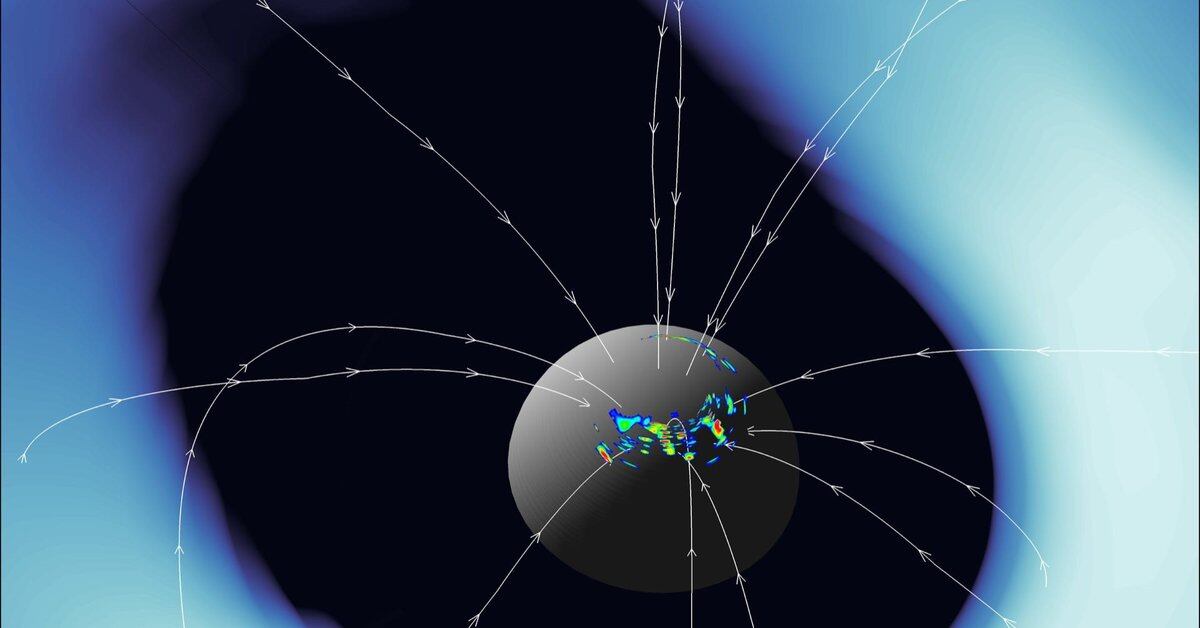
06-23-2021 Rice University scientists have improved models that could detect magnetospheric activity on exoplanets. We cannot detect them yet, but radio signals from distant solar systems could provide valuable information on characteristics of their planets. RESEARCH AND TECHNOLOGY POLICY ANTHONY SCIOLA

MADRID, 23 (EUROPA PRESS)

We cannot detect them yet, but radio signals from distant solar systems could provide valuable information about the characteristics of their planets.

A paper by scientists at Rice University describes a way to better determine which exoplanets are most likely to produce detectable signals based on the activity of the magnetosphere on the previously discounted night sides of the exoplanets.

Rice alumnus Anthony Sciola’s study, advised by co-author and space plasma physicist Frank Toffoletto, shows that while radio emissions from the daytime sides of exoplanets appear to peak during high solar activity, it is likely that those emerging from the night side add significantly to the signal.

This is of interest to the exoplanet community because the strength of a given planet’s magnetosphere indicates how well it would be shielded from the solar wind radiating from its star, in the same way that Earth’s magnetic field protects us.

Planets orbiting within a star’s Goldilocks zone, where conditions could give rise to life, could be considered uninhabitable without evidence of a strong enough magnetosphere. Magnetic field strength data would also help model planetary interiors and understand how planets form, Sciola said in a statement.

The study appears in The Astrophysical Journal.

Sciola says that the current analytical model is based primarily on emissions that are expected to emerge from the polar region of an exoplanet, what we see on Earth as an aurora. The new study adds a numerical model to those estimating emissions from the polar region to provide a more complete picture of emissions around an entire exoplanet.

See also  Montoya: Scientists have supported Castillo because he will promote a Ministry of Science

“We are adding features that only appear in lower regions during really high solar activity,” he said.

It turns out, he said, that the emissions on the nightside do not necessarily come from one large place, such as the auroras around the north pole, but from various parts of the magnetosphere. In the presence of strong solar activity, the sum of these night spots could increase the planet’s total emissions by at least an order of magnitude.

“They are very small in scale and occur sporadically, but when you add them all together, they can have a big effect,” said Sciola, who continues the work at the Johns Hopkins University Applied Physics Laboratory. “A numerical model is needed to solve those events. For this study, Sciola used the multiscale atmospheric geospatial environment (MAGE) developed by the Center for Geospatial Storms (CGS) based at the Applied Physics Laboratory in collaboration with the physics group. of Rice’s space plasma.

“Basically, we are confirming the analytical model for more extreme exoplanet simulations, but adding additional details,” he said. “The bottom line is that we are paying more attention to the limiting factors of the current model, but we say that, in certain situations, you can get more emissions than that limiting factor suggests.”

He noted that the new model works best in exoplanetary systems. “You have to be very far away to see the effect,” he said. It is difficult to know what is happening on a global scale on Earth; it’s like trying to watch a movie by sitting next to the screen. You only get a little patch. “

See also  How to free up space on your Android phone with a simple tweak

Also, radio signals from an Earth-like exoplanet may never be detectable from Earth’s surface, Sciola said. “The Earth’s ionosphere blocks them,” he said. “That means we can’t even see Earth’s own radio emission from the ground, even though it’s so close.”

Detecting signals from exoplanets will require a satellite complex or a facility on the opposite side of the moon. “That would be a nice, quiet place to make a matrix that will not be limited by the ionosphere and Earth’s atmosphere,” Sciola said.


Rudyard Kipling

Rudyard Kipling

Rudyard Kipling writes for The Cleveland American, covering news, politics, business, technology, sport, entertainment, and lifestyle. He focuses on clear, reliable reporting and useful information, helping readers stay informed about current events, important developments, and stories that matter.

Next Post
Louis Miguel: How much did ‘El Soul’ charge for the second season of the Netflix series?  |  Louis Miguel Series |  Series |  Mexico |  MX nnda nnlt |  Mexico

Louis Miguel: How much did 'El Soul' charge for the second season of the Netflix series? | Louis Miguel Series | Series | Mexico | MX nnda nnlt | Mexico

Leave a Reply Cancel reply

Your email address will not be published. Required fields are marked *

Trending.

DHS Secretary Markwayne Mullin to Attend Grand Opening of New USCIS Facility in Oklahoma City

DHS Secretary Markwayne Mullin to Attend Grand Opening of New USCIS Facility in Oklahoma City

September 26, 2026
Deepfake Search Study Finds Women Dominate Most-Searched Celebrity List

Deepfake Search Study Finds Women Dominate Most-Searched Celebrity List

September 16, 2026
‘6-7’ Tops America’s Most-Searched Slang Terms in 2026, Analysis Finds

‘6-7’ Tops America’s Most-Searched Slang Terms in 2026, Analysis Finds

September 23, 2026
Oklahoma Health Insurance Marketplace Opens Enrollment for 2027 Coverage

Oklahoma Health Insurance Marketplace Opens Enrollment for 2027 Coverage

October 1, 2026
VOX: American Voices Opera Lab Returns to New York City With New Works by American Composers

VOX: American Voices Opera Lab Returns to New York City With New Works by American Composers

October 13, 2026
TheClevelandAmerican

We bring you high-quality content covering news, stories, and insights that matter. Explore our platform for the latest updates

Categories

  • Art
  • Business
  • Economy
  • Energy
  • Entertainment
  • Games
  • Health
  • Science
  • Sport
  • Tech
  • Top News
  • World

Recent News

Cascade Effect Releases “Rogue Wave” Music Video Ahead of New Album The Weight of Nothingness

Cascade Effect Releases “Rogue Wave” Music Video Ahead of New Album The Weight of Nothingness

October 19, 2026
Isaac Mizrahi Returns to Guggenheim New York With Peter & the Wolf December 5–13, 2026

Isaac Mizrahi Returns to Guggenheim New York With Peter & the Wolf December 5–13, 2026

October 19, 2026
  • About Us
  • Contact Us
  • DMCA
  • Privacy Policy
  • Editorial Policy

© 2026 The Cleveland American Media Portal — Independent News & Media Network.

Welcome Back!

Login to your account below

Forgotten Password?

Retrieve your password

Please enter your username or email address to reset your password.

Log In
No Result
View All Result
  • Home
  • Review
  • Security

© 2026 The Cleveland American Media Portal — Independent News & Media Network.