


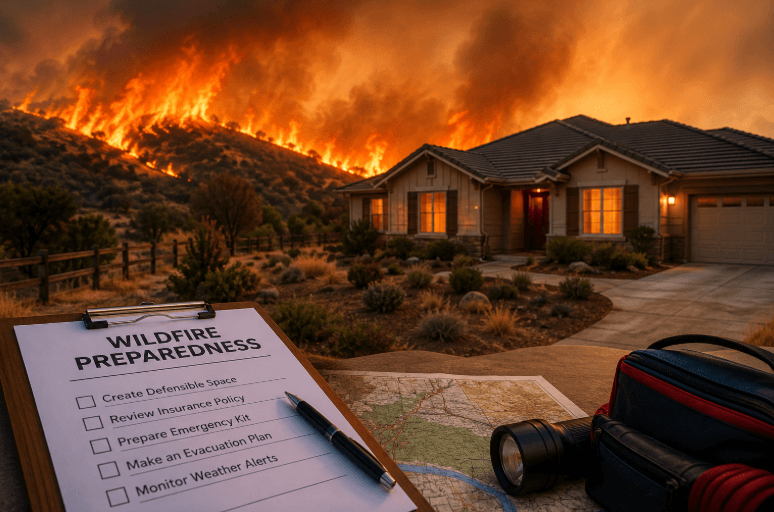
Oklahoma homeowners are being urged to strengthen wildfire preparedness and review their insurance coverage as extreme summer heat and widespread drought increase the threat of destructive fires across the state.
Oklahoma Insurance Commissioner Glen Mulready has outlined several measures residents can take to reduce property risks, prepare their households for possible evacuations and understand how homeowners insurance may respond if wildfire damage occurs.
Extreme Heat and Drought Increase Oklahoma Wildfire Risk
Much of Oklahoma has experienced daytime temperatures above 100 degrees, while nighttime lows have remained around 80 degrees. Combined with widespread drought, the persistent heat has created conditions that can allow wildfires to ignite and spread rapidly.
Dry conditions are affecting the entire state, while almost two-thirds of Oklahoma is experiencing severe to exceptional drought. Western Oklahoma is facing some of the driest conditions.
Forecasts indicate limited relief in the coming weeks, increasing concerns that dry vegetation, high temperatures and other environmental factors could contribute to significant wildfire activity.
The potential consequences were demonstrated during Oklahoma’s March 2025 wildfire outbreak. More than 170,000 acres burned, more than 500 homes and businesses were destroyed, over 200 people were injured and four people died.
For homeowners, businesses and insurers, major wildfire events can result in substantial property losses and lengthy recovery efforts.
Residents Encouraged to Closely Monitor Fire Conditions
Mulready is advising residents to monitor weather forecasts and remain alert to changing fire conditions, particularly during periods of extreme heat and low humidity.
Oklahomans should follow official burn bans and fire-related weather alerts and avoid activities involving open flames or sparks on high-risk days. Residents who receive evacuation instructions from authorities should leave immediately.
Preparation can be particularly important because wildfires can intensify quickly when dry vegetation and strong winds are present.
Homeowners Should Review Insurance Coverage
Insurance readiness is another important part of preparing for wildfire season. Homeowners are encouraged to review their policies before an emergency occurs and understand exactly what coverage they have.
Residents should determine whether their policies provide actual cash value or replacement cost coverage. The distinction can affect how much an insurer pays following a covered loss.
Actual cash value generally takes depreciation into account, while replacement cost coverage is designed to help pay the cost of replacing covered property subject to the policy’s terms and limits.
Homeowners can also contact their insurance companies to determine whether discounts are available for wildfire mitigation measures.
Maintaining an updated home inventory can also help document belongings and potentially simplify the claims process following a wildfire or other major property loss.
Property Maintenance Can Help Reduce Fire Exposure
Residents can take several practical measures around their properties to reduce wildfire exposure.
Guidance referenced by the Oklahoma Insurance Department recommends maintaining a five-foot noncombustible area immediately around a home. Vegetation, tree branches, stored vehicles and other flammable materials should be kept away from this zone.
Homeowners are also encouraged to maintain a 30-foot defensible zone beyond the immediate noncombustible area. Vegetation should be trimmed and detached structures maintained to help limit the potential spread of fire.
Replacing combustible building materials with nonflammable alternatives can provide another layer of protection when homeowners undertake renovations or repairs.
Regularly cleaning gutters is also recommended because accumulated leaves, branches and other dry debris can become fuel when exposed to wildfire embers.
Families Should Prepare for Possible Evacuations
Wildfire preparedness extends beyond protecting buildings. Families should have an emergency plan that can be implemented quickly if authorities order an evacuation.
Residents are encouraged to prepare a go-bag containing essential supplies, medications, identification, insurance documents and a current home inventory. Household members should understand the emergency plan and know the available escape routes from their homes and neighborhoods.
Planning should also account for family members who may have mobility, medical or other specific needs during an evacuation.
Insurance documents can be particularly important following a disaster because residents may need immediate access to policy information while displaced from their homes.
As Oklahoma continues to face intense heat and widespread drought, wildfire preparedness has become an important consideration for homeowners and businesses. Property mitigation, emergency planning and a clear understanding of insurance coverage can help residents reduce their exposure and improve their ability to recover if a wildfire causes damage.