

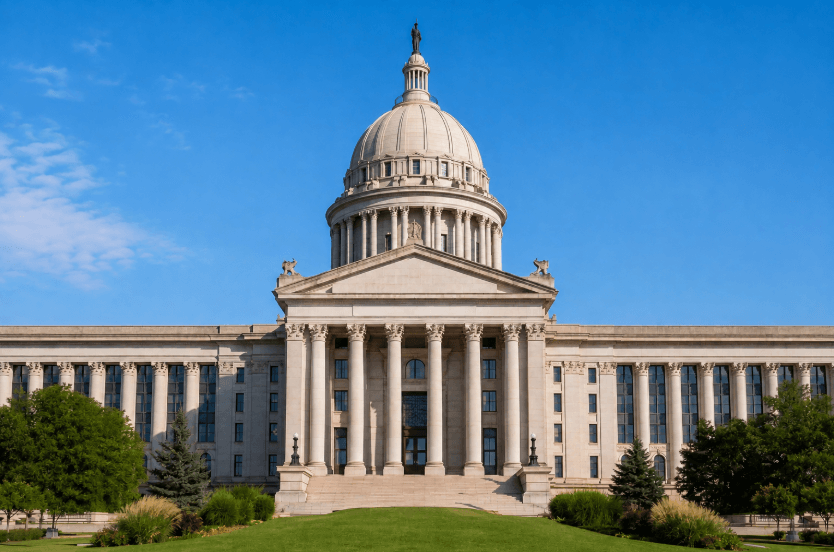
OKLAHOMA CITY — Oklahoma lawmakers are beginning a new round of interim legislative studies at the State Capitol, examining issues ranging from childcare costs and education policy to domestic violence, artificial intelligence and public health as they prepare potential policy proposals for the 2027 legislative session.
Interim studies give House and Senate committees an opportunity to examine specific policy questions between regular legislative sessions. Lawmakers can hear testimony, review data and gather information from state agencies, advocates, industry representatives and other stakeholders before deciding whether legislation should be introduced.
The Oklahoma Institute for Child Advocacy has identified several approved studies that it considers particularly significant for children, families and communities across the state.
Oklahoma House Studies Focus on Education, Childcare and Public Safety
Education will be a major area of examination in the Oklahoma House of Representatives. Study 26-022, requested by lawmakers Lowe and Johns, addresses truancy and chronic absenteeism and will be considered by the Appropriations and Budget – Education Committee. It has been combined with Study 26-080, requested by Alonso Sandoval, which focuses on youth engagement opportunities.
Other education-related proposals include Study 26-026, requested by Tammy West, examining alternative education in elementary schools compared with long-term suspension. Study 26-040, requested by Hall, will examine school discipline, classroom culture, student outcomes and teacher retention.
Childcare and family-related policies also feature prominently. Schreiber requested Study 26-030 on the health of the childcare industry following rule changes, along with Study 26-031 examining state incentives for employers that participate in childcare costs. Both will go before the Appropriations and Budget – Human Services Committee.
The committee will also consider Study 26-087, requested by Miller, concerning the Children’s Promise Tax Credit.
Several studies address food assistance and nutrition. Study 26-053, requested by Emily Gise, concerns home-delivered meals and has been combined with Studies 26-091 and 26-092. Study 26-091, requested by Roe, examines government-provided meals and nutritional practices, while Study 26-092, requested by Pae, focuses on SNAP.
Domestic Violence and Youth Safety Draw Legislative Attention
Public safety and domestic violence are another significant component of the interim agenda. Study 26-033, requested by Ellyn Hefner, will examine domestic violence in Oklahoma and has been combined with Study 26-074, requested by Timmons, concerning a domestic violence registry.
Study 26-082, requested by Turner, will examine child-sensitive arrest policies and practices. Meanwhile, Study 26-015, requested by Roe and Provenzano, focuses on delays involving the chain of custody and testing of sexual assault kits, as well as storage of non-reported kits.
Lawmakers will also examine youth access to potentially harmful substances. Study 26-034, requested by Pogemiller and Grego, covers vapes, kratom, THC products and other substances, with attention to youth access, marketing, regulation, health effects and policy.
Technology is also entering the legislative discussion. Study 26-120, requested by Clinton, will examine artificial intelligence accountability in high-impact state services, including agency use, transparency, human review and public trust.
Oklahoma Senate Studies Cover Foster Care, AI and Education
The Oklahoma Senate has approved its own group of studies addressing many of the same statewide concerns.
Domestic violence is the subject of several Senate proposals. IS 2026-17, requested by Brooks, focuses on domestic violence courts, while IS 2026-37, requested by Gillespie, examines services available to domestic violence survivors in Oklahoma. IS 2026-51, requested by Hicks, addresses supervised visitation safety and accountability.
Mann requested IS 2026-66 to examine intervention strategies related to domestic violence and juvenile gang affiliation.
Children and family services will receive additional scrutiny through IS 2026-31, requested by Dossett, examining foster care reimbursements, and IS 2026-43, requested by Hall, addressing childcare.
Artificial intelligence and its effects on young people are also on the agenda. Hamilton requested IS 2026-44, which will examine the impact of AI social companion use on minors. The study has been assigned to the Technology and Telecommunications Committee.
Education-related Senate studies include IS 2026-79 on student behavior and discipline and IS 2026-80 on civics education, both requested by Pugh and assigned to the Education Committee.
Another proposal, IS 2026-89, requested by Standridge, will examine state government-funded meals and their effects on the health of Oklahomans and taxpayers.
The interim study process will continue over the coming months as legislative committees gather information that could influence bills and budget priorities during the 2027 session. OICA said it plans to monitor these and other studies as lawmakers evaluate policies affecting Oklahoma children, families and public services.