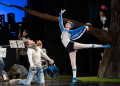



“Your classic is the one to whom you cannot be indifferent and helps you to define yourself in relation to and perhaps in contrast to.”
Italo Calvino
When we refer to classic works, we have no fixed list, as this has long been built on the foundation of authorized criticism which has laid down the law of what is to be considered transcendent and perpetual. Although many works of law are undeniably “universal,” the fact is that history and forces have left a large number of works that come from underpowered narratives, minority actors, or subjects deemed vulgar or inappropriate. Moral, it has not reached a fair assessment of its contributions to the history of world thought. To this we add the tendency to turn the book into something sacred, out of the way, largely because of its historical value, which is certainly not always healthy.
And it is that the magnificence of old books written by scribes for hours before candles and literary landscapes hidden in nineteenth-century texts is something that cannot be ignored. The beauty of the Critical Edition of the Classics and the symbolic and cultural value of the print are true. However, it is exciting to consider new forms of support for the classics fueled by technology and communications, as it relates to the critical role of the reader in interpretation.
In the postmodern era, it was important to decentralize the author and generate a new recognition of hidden meanings, expanding spaces for dialogue and co-creation through hermeneutics. The New Underpinnings shows that the value of classics must certainly lie in their content and, therefore, in their ability to reach audiences of all ages, people of all kinds throughout the world, beyond cultural differences and the time in which they live. If the classics go out of style, plain and simple, it’s not a classic.
It is interesting to learn about the impact of new technologies that integrate the book as an object with different multimedia languages. Books that incorporate augmented and virtual reality do not affect the reader’s relationship with the traditional, linear presentation of the text, allowing for predictable access to the content as it was originally created. However, they also include hyperlinks that produce a very different reading, an associative reading that exploits the network model, complementing, deepening, giving new meanings, and enriching written work through intertextuality and hypermedia. However, there was no shortage of controversy. Can classic texts withstand the onslaught of new reading paradigms and support for which they were not invented? Was it lost or gained by adapting the past to the present?
The incorporation of multimedia tools into literature has great potential as it allows for diversification of reading order and priorities, generating new ways of understanding and coping with linear narratives. In addition, it allows the transmission of emotions, thoughts and sensations through different languages to encode and decode messages in a specific way, which enhances the intervention of other senses.
Multimedia discourses can be related to each other and to the written text, generating an interaction between the reader and the work that enriches the possibilities of understanding and builds diverse stories. Reading, then, is not constrained by an absolute and timeless truth, but is subject to historical and social conditions. The author’s reception of imitation also influences his work, and this is reflected in the creative work. In conclusion, the incorporation of multimedia tools into literature expands the possibilities for interpretation and co-creation between the reader and the work.
But if classic texts are brought into an immersive experience, will they still be the same? The question is undoubtedly what makes a classic. Of course, language is not a limitation, for most of us did not read Greek Romans in Greek and Latin, nor did they read Don Quixote in ancient Spanish. But this does not mean that we did not understand them, but rather that in their message there is an adaptability that transcends time, breaks through space, and is able to construct alternative realities without the underlying message being buried in layers of meaning.
Reading is an act of understanding that is not limited by the idea of absolute and eternal truth. The organization of interpretations is a socially interfering act and depends on historical circumstances. In this sense, it raises the possibility of interacting with the text, creating a new text, but not completely separated from the one created by its author. An author’s reception of tradition influences the creative work not only because of the public’s expectations of his work, but also because of those he himself had from the works that nurtured him.
The aesthetics of reception, because it is related to Gadamer’s hermeneutic model, assumes an interpretation that distinguishes in its dialectical dimension the interaction between the author and the reader, where the text is the medium that represents the communicative act, but it is also inserted in the middle of the horizon more than a context, the aesthetics of reception accommodates the act of reading in the horizon. The way in which concepts relate to a language in which words acquire their own meaning in relation to the rest of the system that makes up languages. The reader’s expectations will not be wholly foreign to the author—which is not to say that they are inconsistent—to the extent that they are included within the possibilities of the language itself. Translation can assume a loss of meanings, but it should not alter the transcendental.
If the classics are transcendental, they have to overcome the temporal distance between their writings and the new space in which they affect, then what results from the encounter? A clash between the horizons of expectations can, as we have already seen, culminate in change or rejection. If rejection leads to oblivion, there are no classics, and if the texture of a text and readers create a timeless narrative, the works go on. However, although the rejection may sometimes be immediate, in the end the work can be reinterpreted and evaluated within a scaffold different from the one in which it was born, in accordance with the horizon set in it.. Many works acquire meaning when authors die, partly because of commercial logic, but also because they are, shall we say, “ahead of their time”.
In this sense, there is desynchronization in the way we experience business. Perhaps the classics have managed to overcome historical change while maintaining a universal content beyond the ravages of time and space; The classics go beyond support and languages, they are always in force. The act of reading influences the continuity of the classics, as in the laboratory constantly testing the guarantee of a product that must be resistant to everything. Defining what makes thought “universal” is an eternal philosophical debate we will allude to at another time, but the truth is that today we must eradicate the notion that change destroys tradition and be willing to embrace the exotic.
Manchamantles
Rainer Maria Rilke explains why the classics never die:
an offer
How my body blooms from every vein
With more flavor, since I met you!
See, I’m thinner and straighter,
And just wait…but who are you?
Look; I feel how distance
How do I lose the old, page after page.
Only your smile remains like many stars
About you, and soon about me too.
To all of that during my childhood
Nameless still shines like water,
I will put your name on the altar
What’s on your hair
They are lightly surrounded by your breasts.
The outrageous narcissist
He knew instantly that she had created a new feeling because her grief was incomparable to anyone else’s. @employee
Read more