

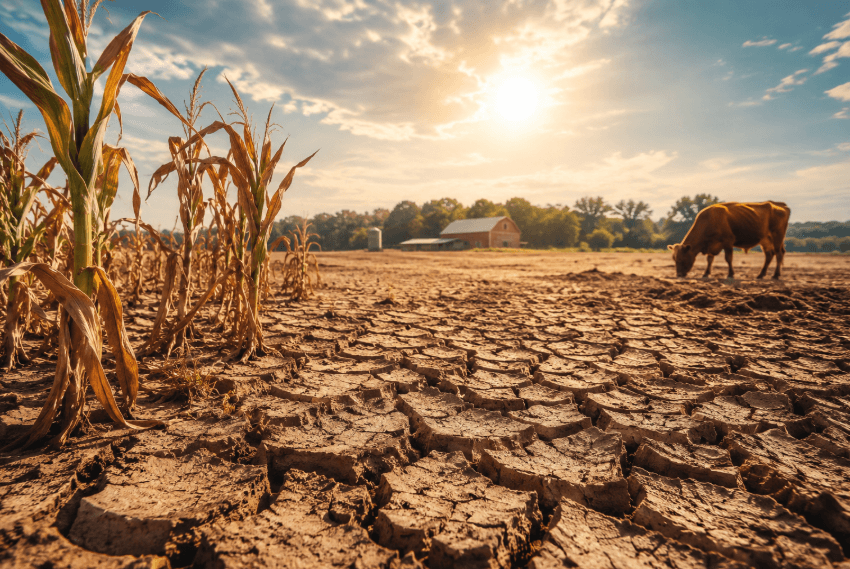
The U.S. Department of Agriculture has announced a range of technical and financial assistance measures for agricultural producers in North Carolina following prolonged drought conditions that have placed pressure on crops, grazing land, livestock operations and rural water supplies.
Federal officials said the support package is intended to help farmers and ranchers manage immediate losses while strengthening long-term resilience against future drought events. The assistance covers livestock forage losses, emergency conservation measures, crop insurance support and low-interest emergency loans.
“We know current drought conditions are adversely impacting crops, land, water supplies and livestock, creating financial and emotional strain for the farmers and ranchers we serve,” said Farm Production and Conservation Under Secretary Richard Fordyce. “I encourage producers to stay in close contact with their local USDA Service Center to report losses and damages and learn more about the many program options we have available to assist them in building drought resiliency and navigating drought recovery.”
Livestock Producers Eligible for Relief Measures
Among the key programmes available is the 2026 Livestock Forage Disaster Program (LFP), which provides assistance to livestock producers who suffered grazing losses on privately owned or cash-leased land as a result of drought conditions.
To qualify, producers must own or lease eligible livestock and provide grazing land that was affected during the qualifying drought period. The Farm Service Agency (FSA) maintains an updated list of counties eligible for the programme and reviews conditions on a weekly basis.
North Carolina producers seeking support through the programme must submit acreage reports for grazing land used in pasture or hay production. The next reporting deadline is July 15, 2026. Applicants leasing land are also required to provide supporting lease documentation or an Annual Lease Certification form.
Applications for LFP payments relating to 2026 losses must be filed by March 1, 2027.
Additional support is available through the Emergency Assistance for Livestock, Honeybees, and Farm-Raised Fish Program (ELAP), which compensates producers for above-normal costs associated with hauling water and transporting feed or livestock during drought conditions.
Commercial beekeepers may also qualify for assistance if drought-related feed shortages require the purchase of supplemental feed to sustain honeybee populations until natural forage becomes available again.
Additionally, orchardists and nursery tree growers affected by drought may qualify for support through the Tree Assistance Program (TAP), which helps cover the cost of replanting or rehabilitating eligible trees, bushes and vines damaged by adverse weather conditions.
Emergency Loans and Crop Protection Support
Federal officials said drought-affected producers may also access direct and guaranteed farm loans, including emergency operating loans designed to support farms unable to secure commercial financing.
Producers located in counties with primary or neighbouring disaster designations may qualify for low-interest emergency loans to replace damaged property, purchase livestock feed and seed, refinance farm-related debts or cover household living expenses.
The USDA also urged producers with crop protection coverage to report losses promptly.
Farmers enrolled in the Noninsured Crop Disaster Assistance Program (NAP) are required to file a Notice of Loss within 15 days of damage becoming apparent. For hand-harvested crops, the reporting window is limited to 72 hours.
Those covered under Federal Crop Insurance schemes must notify insurance agents within 72 hours of discovering crop damage and follow up with written confirmation within 15 days.
Officials stressed the importance of maintaining regular communication with local Farm Service Agency offices and insurance providers to ensure claims are processed correctly and within the required deadlines.
Conservation Measures Aim to Improve Long-Term Resilience
The USDA said conservation support will form a significant part of its drought response strategy.
Under the Emergency Conservation Program, farmers and ranchers may receive assistance for emergency water conservation measures, including livestock watering systems and irrigation infrastructure for orchards and vineyards.
Meanwhile, the Emergency Forest Restoration Program offers financial support to landowners and private forest managers seeking to restore damaged nonindustrial forest land.
The department also confirmed that emergency haying and grazing on Conservation Reserve Program acres could be authorised in areas severely affected by drought, subject to eligibility conditions linked to the Livestock Forage Disaster Program.
USDA officials said the Natural Resources Conservation Service would continue supporting long-term drought resilience projects through conservation planning and soil health initiatives. Funding may also be available through the Environmental Quality Incentives Program to help producers improve water conservation and reduce future drought-related losses.
U.S. Drought Monitor Central to Relief Eligibility
The USDA said the U.S. Drought Monitor remains central to determining eligibility for several drought-related assistance programmes.
The online monitoring system tracks drought severity across the United States using rainfall data, reservoir levels, soil moisture readings, streamflow measurements and on-the-ground observations submitted by contributors.
According to the department, the system is also used to accelerate Secretarial Disaster Designations, enabling affected producers to gain faster access to emergency financial assistance.
Federal officials warned that prolonged drought conditions could continue to reduce forage production, increase soil erosion and place additional pressure on agricultural operations across North Carolina in the months ahead.




/cloudfront-us-east-1.images.arcpublishing.com/eluniverso/ESZCYCVTMHULRF4XLKFETXEN2U.jpg "The phrase about the origins of Argentina, Brazilians and Mexicans is critical of President Alberto Fernandez. International | News")