


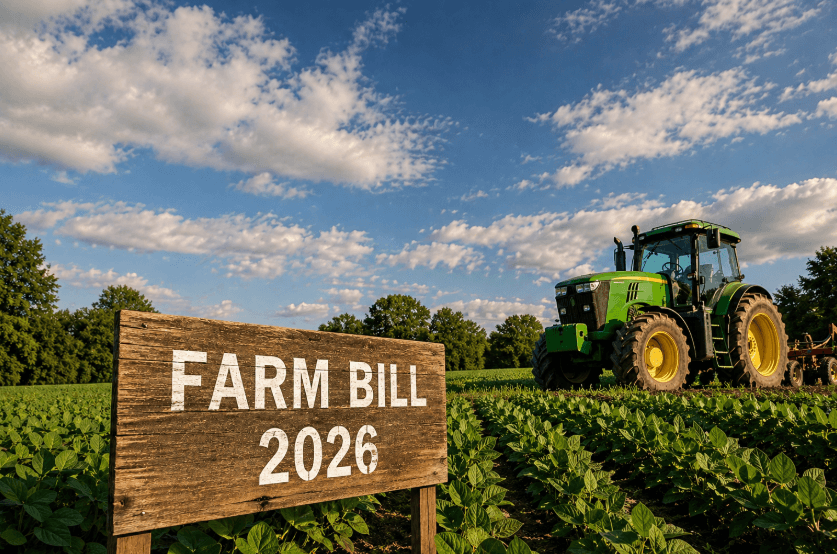
In Washington, DC, Frank D. Lucas has called on fellow lawmakers to support the proposed Farm, Food, and National Security Act of 2026, warning that its provisions will have far-reaching implications across both rural and urban economies.
Speaking on the House floor, the Oklahoma Republican positioned the legislation as a cornerstone of economic stability, supply chain resilience, and long-term agricultural sustainability. His remarks come at a time when policymakers are under pressure to balance food security concerns with broader fiscal and infrastructure priorities.
Delivering his statement as prepared, Lucas said:
“Thank you, Mr. Speaker.
I’m pleased to stand here today to offer my enthusiastic support of the Farm, Food, and National Security Act of 2026.”
The proposed bill represents the latest iteration of the United States’ comprehensive farm policy framework, typically renewed every five years. Such legislation governs a wide array of sectors, including agricultural subsidies, food assistance programmes, rural development funding, and environmental conservation initiatives. For business observers, the bill also plays a critical role in shaping commodity markets, trade flows, and investment patterns across the agribusiness sector.
Lucas, who previously chaired the House Agriculture Committee, underscored the complexity of advancing such sweeping legislation while stressing its tangible economic benefits.
“As the former Chairman of this committee, I have been down this road before and while passing a comprehensive farm bill is never easy, the rewards can be seen in tangible ways in every facet of our communities.”
His comments reflect longstanding bipartisan challenges in aligning competing interests—from large-scale commercial farming operations to smaller rural enterprises—while ensuring fiscal discipline. Nonetheless, Lucas argued that the economic ripple effects extend well beyond the agricultural sector itself.
“They can be seen not just on the farm, but in the grocery stores, universities, fire stations, community facilities, and rural hospitals across our country.”
From a business perspective, this broader framing highlights the interconnected nature of agricultural policy with public services and regional development. Rural economies in particular remain heavily reliant on federal support mechanisms tied to farm legislation, which in turn influence employment levels, infrastructure investment, and local supply chains.
Lucas also sought to broaden the bill’s relevance to lawmakers representing non-agricultural constituencies, signalling its national economic significance.
“To my colleagues who will cast their vote tomorrow, whether you represent a top agriculture district, small towns, or a booming metropolis, the policies in this bill affect you.”
Analysts note that framing is consistent with efforts to secure wider legislative backing, particularly among representatives from urban districts where direct agricultural activity may be limited but food distribution, retail, and logistics sectors play a major role.
Central to Lucas’s argument is the role of the legislation in safeguarding domestic production capacity. He emphasised the importance of ensuring continuity for future generations of farmers while maintaining stable supply chains for consumers.
“This bill will ensure that American farmers can continue to raise the food and fiber that ultimately finds its way into your home, and it will ensure that the next generation can continue that legacy.”
The reference to “food and fiber” underscores the dual importance of agriculture not only for food production but also for industries such as textiles and bio-based manufacturing—areas of increasing interest for investors seeking sustainable alternatives.
Concluding his remarks, Lucas issued a direct appeal for support ahead of the vote.
“I urge my colleagues to vote yes with me on final passage, and I want to thank Chairman Thompson for bringing forth this bill today.”
The legislative push comes amid ongoing debate over government spending priorities and the long-term direction of agricultural subsidies. Market participants will be watching closely for signals on funding allocations, particularly those affecting crop insurance, conservation programmes, and rural infrastructure—all of which can influence both domestic production and international competitiveness.
If passed, the Farm, Food, and National Security Act of 2026 is expected to shape the operating environment for agribusinesses, food producers, and associated industries over the coming years, reinforcing the sector’s central role in economic planning and national resilience.



:quality(85)/cloudfront-us-east-1.images.arcpublishing.com/infobae/45OXD2PP2VAWTFEPJZPEDWSDC4.jpg "The Ortega regime is closing embassies in cities with high immigrant populations, leaving thousands of Nicaraguans homeless.")