


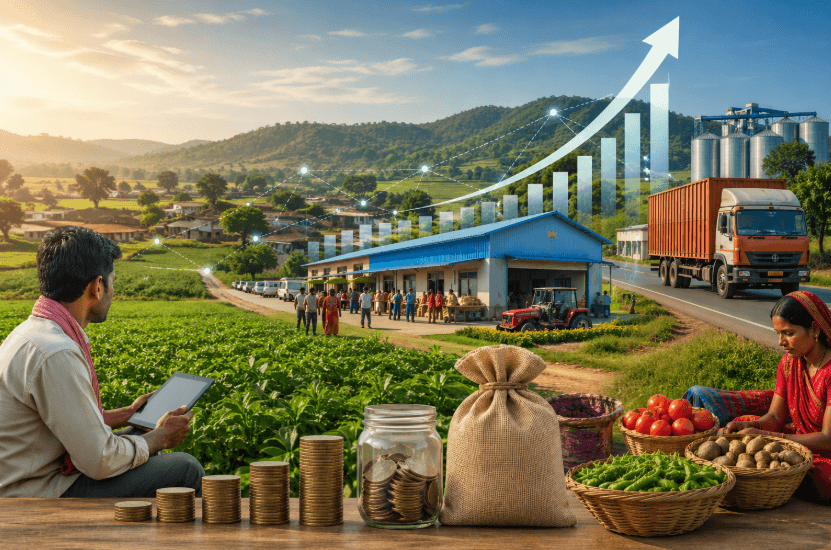
The United States House of Representatives has approved the Farm, Food, and National Security Act of 2026, a wide-ranging legislative package aimed at strengthening the country’s agricultural sector, rural economies, and global trade position. The measure, commonly referred to as the 2026 Farm Bill, has been met with support from lawmakers including Frank D. Lucas, who highlighted its long-term significance following the House vote.
The bill seeks to renew and expand a series of federal programmes that support farming communities, agricultural research, and rural infrastructure. Its passage represents a key milestone in the legislative process for a policy framework that is updated periodically to reflect economic, environmental, and market developments affecting the agriculture sector.
In a statement issued in Washington, Representative Lucas emphasised the collaborative effort behind the legislation and its intended impact across multiple areas of the rural economy.
“I’m pleased to see, after years of hard work, the 2026 Farm Bill pass the U.S. House of Representatives,” said Congressman Lucas. “This bill reauthorizes a suite of critical research, rural development, and credit programs that will invest into our communities and create rural resiliency for decades to come. It also focuses on expanding and investing into market access programs abroad, and it ensures that voluntary conservation programs continue to reflect the needs of producers. As former Chairman of the House Ag Committee, I have experienced firsthand what it takes to pass a comprehensive farm bill, and I commend everyone that worked so hard to get this over the finish line. I look forward to building on this success to help create a final product for President Trump to sign into law.”
The legislation includes provisions designed to enhance international market access for U.S. agricultural goods, reflecting a broader strategy to increase exports and strengthen trade relationships. Programmes supporting overseas market development are expected to play a role in expanding opportunities for producers and agribusinesses operating in an increasingly competitive global environment.
Alongside trade, the bill places a strong emphasis on research and innovation. Continued investment in agricultural science and technology is intended to support productivity, sustainability, and resilience in the face of evolving challenges such as climate variability and shifting market demands.
Rural development initiatives form another central component of the legislation. By maintaining and expanding access to credit and funding for infrastructure, policymakers aim to support economic stability in rural regions and improve access to essential services. These measures are viewed as particularly important for smaller communities that rely heavily on agriculture and related industries.
The bill also maintains support for voluntary conservation programmes, which encourage environmentally responsible farming practices while allowing flexibility for producers. Such initiatives have historically been a key element of farm policy, balancing environmental considerations with the operational needs of the agricultural sector.
The House passage signals progress, although further legislative steps remain before the bill can be enacted. The proposal is expected to be considered alongside related measures as lawmakers work towards a final version that can secure approval across both chambers of Congress.
Any finalised legislation would then be sent to Donald Trump for consideration. Until that stage is reached, stakeholders across the agriculture and business communities are likely to continue monitoring developments closely.
The 2026 Farm Bill is set to shape U.S. agricultural and rural policy for years to come, with its provisions reflecting ongoing priorities around economic resilience, sustainable practices, and international competitiveness.



:quality(85)/cloudfront-us-east-1.images.arcpublishing.com/infobae/45OXD2PP2VAWTFEPJZPEDWSDC4.jpg "The Ortega regime is closing embassies in cities with high immigrant populations, leaving thousands of Nicaraguans homeless.")