


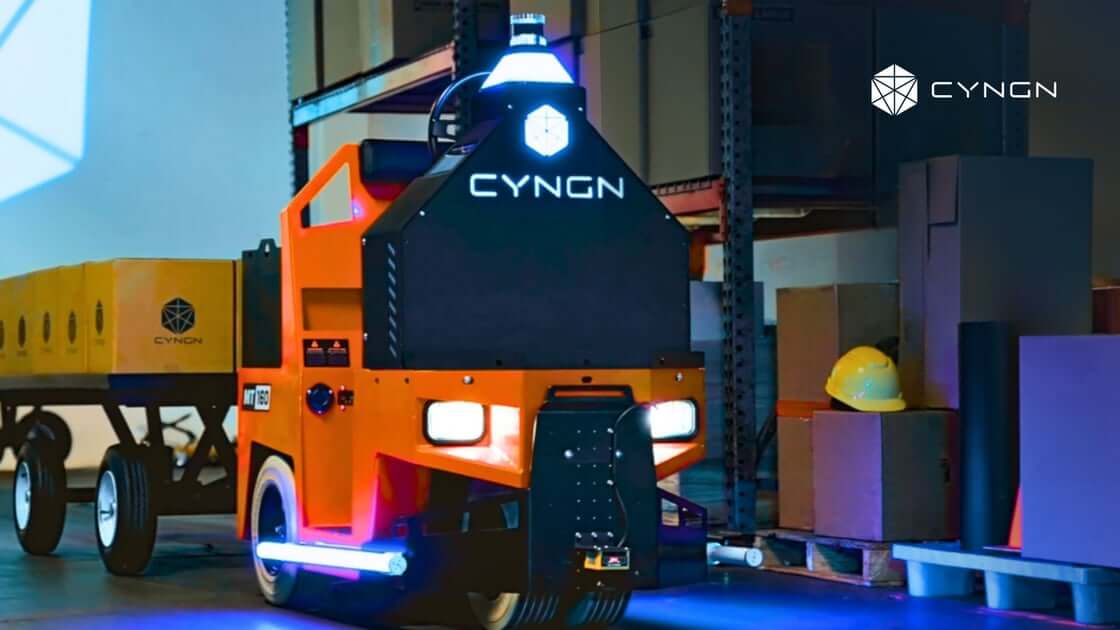
A United States manufacturing facility operated by WEG Electric Motor has begun deploying an autonomous industrial vehicle developed by robotics firm Cyngn, in a move designed to improve operational efficiency and free skilled labour for higher-value production tasks.
Cyngn, Inc. announced that it has secured a commercial contract to deploy its DriveMod Tugger autonomous vehicle at a WEG manufacturing facility located in Bluffton, Indiana. The deployment forms part of WEG’s broader effort to modernise internal logistics and optimise the use of forklift operators within its production environment.
The DriveMod Tugger is designed to automate the transportation of materials across factory floors. At the Bluffton site, the system will handle the movement of electric motor components between machining stations and warehouse storage areas, tasks that were previously completed manually by forklift operators.
Under the new system, the autonomous vehicle is expected to transport up to 60 pallets per day. By taking over repetitive internal transport duties, the technology aims to reduce congestion within the facility while allowing employees to focus on tasks that contribute more directly to manufacturing output.
Cyngn said the deployment reflects a growing trend among manufacturers seeking to introduce autonomous systems to streamline routine operations without disrupting existing production processes.
Prior to the introduction of the automated vehicle, material transport between production zones involved forklift drivers moving single pallets at a time across the facility floor. This created a recurring workflow that required significant labour hours and contributed to increased traffic in shared factory spaces.
The DriveMod Tugger has been developed specifically to address such scenarios by managing predictable and repeatable movements across fixed routes inside industrial environments. The system enables consistent material flow between operational areas while reducing the time employees spend on routine transportation duties.
Cyngn’s chairman and chief executive officer Lior Tal said the collaboration highlights the role autonomous technology can play in improving operational efficiency within manufacturing environments.
“At WEG, material handlers were spending a significant portion of their time on repetitive transport runs,” said Lior Tal, Cyngn’s Chairman and Chief Executive Officer. “This deployment allows forklifts and skilled labor to remain focused on machining and warehouse operations, while DriveMod handles predictable, repeatable movement. We believe it’s a clear example of how autonomy can improve safety, utilization, and operational efficiency in manufacturing.”
By automating pallet movement across the facility, the system is expected to stabilise the flow of materials between machining areas and warehouse operations. The reduction in manual forklift traffic may also contribute to improved safety conditions on the factory floor by lowering the number of vehicle movements required to complete routine logistics tasks.
For WEG, the implementation represents part of a wider push among global manufacturers to integrate robotics and automation into daily operations. Such systems are increasingly being used to address labour shortages, improve consistency in production environments and enhance operational efficiency.
The Bluffton facility plays a role in the production and distribution of electric motor components, which are widely used in industrial applications across multiple sectors. Efficient material handling within such facilities is considered critical to maintaining stable production schedules and meeting supply chain demands.
Cyngn, headquartered in Mountain View, California, develops autonomous driving software and industrial vehicle solutions designed for logistics and manufacturing environments. Its DriveMod technology platform enables existing industrial vehicles to operate autonomously within controlled environments such as warehouses, factories and distribution centres.
The DriveMod Tugger is part of Cyngn’s broader strategy to expand the use of autonomous vehicle technology within industrial settings, where repetitive transport tasks often account for a significant share of operational labour.
Meanwhile, WEG continues to expand its global industrial footprint. The company reported revenue of approximately $7 billion in 2024 and operates branches in 41 countries. Its product portfolio includes more than 1,500 product lines distributed across five continents, covering a wide range of electrical and industrial equipment.
As manufacturers increasingly explore automation to enhance productivity, deployments such as the DriveMod Tugger installation at the Bluffton facility illustrate how autonomous logistics solutions are beginning to reshape internal operations within industrial plants.