

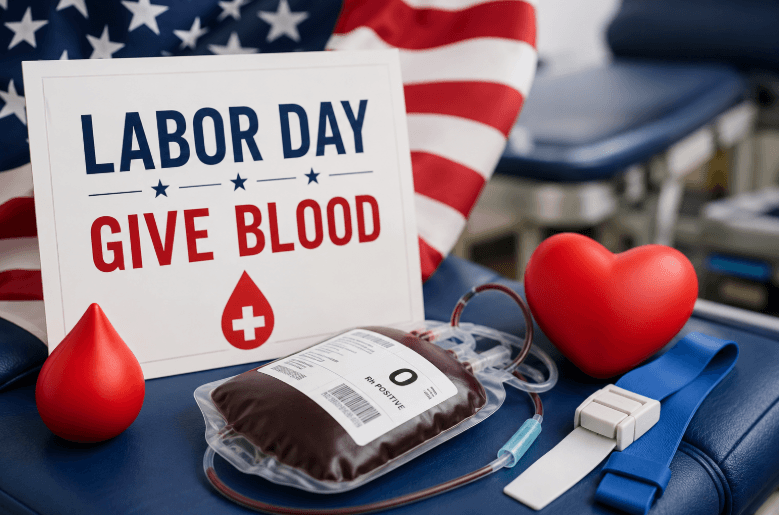
Our Blood Institute is calling on donors to help protect regional blood supplies ahead of the Labor Day holiday, warning that more than 700 expected donations could be lost as businesses close, blood drives are canceled and regular donor schedules are disrupted.
The anticipated decline comes as hospitals continue to depend on a steady supply of blood products for emergency care, surgeries and other medical needs. The organization is encouraging eligible donors of all blood types to give before, during and immediately after the holiday weekend to help offset the expected gap.
Labor Day Holiday Expected to Disrupt Blood Donations
Holiday weekends can create challenges for blood collection organizations because workplace drives and other regularly scheduled donation events may be postponed or canceled. Our Blood Institute expects those disruptions to result in more than 700 missed donations over the Labor Day period.
The organization said maintaining adequate inventory requires consistent donations, even during holidays when many businesses and community organizations operate on reduced schedules.
The need extends across all blood types, although Our Blood Institute is placing particular emphasis on donors with type O blood and those with type AB.
Type O red blood cells play an important role in emergency situations, while plasma from AB donors can be provided to patients across blood types. Maintaining sufficient supplies of those blood products can therefore be particularly important for hospitals managing urgent cases.
“Blood needs don’t take a holiday,” said Dr. John Armitage, president and CEO of Our Blood Institute. “Losing more than 700 donations in just a few days has a real impact. We’re asking donors to make giving blood or plasma part of their Labor Day plans.”
Special Blood Drives Planned Ahead of Holiday Weekend
To encourage donations before Labor Day, Our Blood Institute is holding Beef Council blood drives on Thursday, Sept. 3, and Friday, Sept. 4, at all of its donor centers.
Participants at those drives will receive an all-beef hot dog provided by the Oklahoma Beef Council, along with a new Halloween-themed Our Blood Institute T-shirt.
For donors who cannot visit one of the organization’s donor centers, mobile blood drives are also scheduled in communities throughout the region. The mobile events are intended to make donations more accessible while helping maintain blood supplies heading into the holiday weekend.
Our Blood Institute is encouraging donors to consider appointments not only before Labor Day but also during and immediately after the holiday, when collections may still be recovering from the disruption.
Donor Eligibility and Donation Frequency
Healthy individuals who are at least 16 years old may be eligible to donate blood, subject to age and weight requirements.
Sixteen-year-old donors must weigh at least 125 pounds and provide signed parental permission. Seventeen-year-olds must also weigh at least 125 pounds, while donors age 18 and older must weigh at least 110 pounds. A photo ID is required.
Whole blood can be donated every 56 days. Platelet donors can give more frequently, with donations permitted as often as every seven days and up to 24 times per year.
The organization is asking both regular donors and eligible first-time donors to consider participating as it works to compensate for the anticipated Labor Day decline.
Hospitals Depend on Consistent Holiday Blood Supply
Blood collection organizations must manage inventories throughout the year because demand from hospitals does not stop during holidays. Accidents, emergency procedures and scheduled medical treatments can continue even as normal donation activity falls.
For Our Blood Institute, the expected loss of more than 700 donations over a matter of days represents a significant gap that the organization hopes donors can help close.
By increasing donations surrounding Labor Day, the organization aims to maintain sufficient supplies for hospitals and patients throughout the holiday period and limit the effects of a temporary decline in collections.