

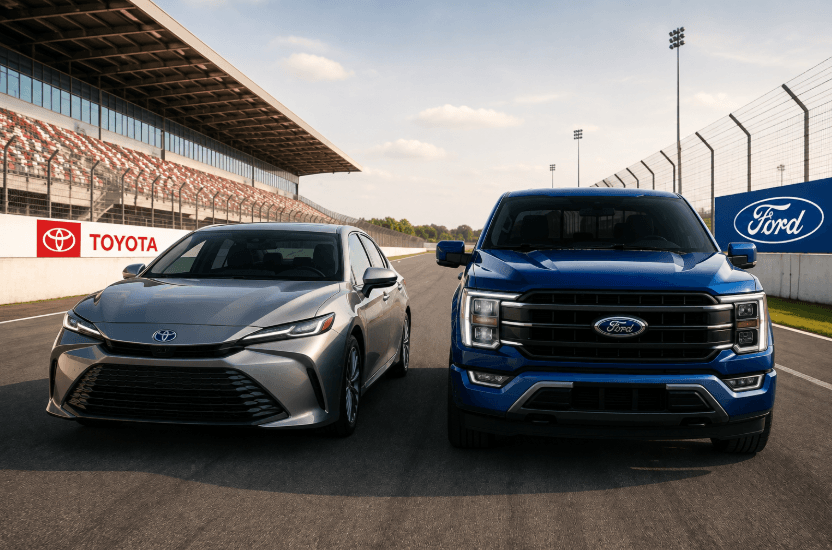
Toyota and Ford emerged as the leading automotive brands in sports sponsorship across the Americas in 2025, as vehicle manufacturers increased their investment in high-profile partnerships to expand brand visibility and support vehicle marketing, according to research from GlobalData.
Automotive brands’ sports sponsorship spending across the Americas has increased 18.6% since 2020. Toyota ranked as the region’s biggest spender and most active automotive sponsor in 2025, followed by Ford, reflecting the industry’s continued use of sports to reach large and diverse consumer audiences.
Toyota Shifts Toward Premium Sports Partnerships
GlobalData’s “Sponsorship Sector Report: Automotive – Americas 2026” found that Toyota has significantly increased the value of its sports sponsorship portfolio even though the number of deals has grown at a considerably slower pace.
Olivia Snooks, Sport Analyst at GlobalData, said: “Since 2020, despite Toyota’s deal volume rising by just 13%, its annual spend is up 104.2%. The increase is driven by a shift toward fewer, premium, high-visibility partnerships—the NFL, the Nascar Truck Series, Joe Gibbs Racing, and the TGR Haas F1 Team—which require larger investments but deliver outsized reach and brand impact.”
The strategy highlights the value automakers place on major sports properties that can deliver national exposure through television, digital media, live events and other marketing channels.
Ford also remains one of the most prominent automotive sponsors in the region. Chevrolet, meanwhile, matches the sponsorship spending of Toyota and Ford but does so through fewer deals, according to the report.
Chevrolet has become increasingly selective about its partnerships. Its sports sponsorship deal volume has declined 27.6% since 2020, while its annual spending has remained relatively stable.
North America Commands Higher Sponsorship Values
North America leads the Americas in both automotive sponsorship deal volume and total spending. Average deal values are substantially higher than in South and Central America, reflecting access to premium sports properties, larger broadcast audiences and more developed sponsorship valuation models.
The difference also reflects how automotive companies approach individual markets. In South and Central America, brands generally favor smaller, locally focused partnerships that can be connected more easily with dealerships, retail promotions and regional marketing campaigns.
Snooks said: “The value gap between North America and South & Central America indicates that North America’s inventory carries a premium. North America’s average deal value, which is over three times higher, reflects higher media-rights pricing, stronger corporate hospitality demand, and more integrated media/content/digital/data packages—attributes automotive marketers prefer for national campaigns and measurable reach.”
For automakers, those larger North American properties can provide platforms for broad brand-building campaigns as well as messaging around electric vehicles, new technologies and product launches.
Motor Racing Attracts Spending as Soccer Expands Deal Volume
Motor racing accounted for a major share of automotive sponsorship spending in 2025. The sport offers manufacturers a direct connection between competition and the engineering, performance and electrification technologies they market to consumers.
Soccer, however, has become an increasingly important source of sponsorship activity. Automotive companies are using clubs, leagues and competitions to reach younger and more diverse audiences throughout the Americas.
The expansion of soccer sponsorship also provides brands with opportunities for continuous digital content, local promotions and dealership-based marketing campaigns.
Snooks said: “Soccer is the fastest-growing growth engine for automotive sponsorship, with deal volume increasing by 107.1% since 2020, alongside a significant increase in annual deal value by 74.2%. The pattern suggests that automakers are using soccer to build broader, activation-heavy sponsorship portfolios across leagues and teams (MLS/Liga MX/CONMEBOL and growing women’s properties), driven by soccer’s younger and more multicultural fanbase and its suitability for always-on digital content and localized dealership activation.”
The findings indicate that sports remain an important marketing channel for vehicle manufacturers across the Americas. While premium North American properties attract the largest investments, the rapid expansion of soccer partnerships and continued strength of motor racing are giving automakers multiple ways to connect sports audiences with their brands and vehicle portfolios.