


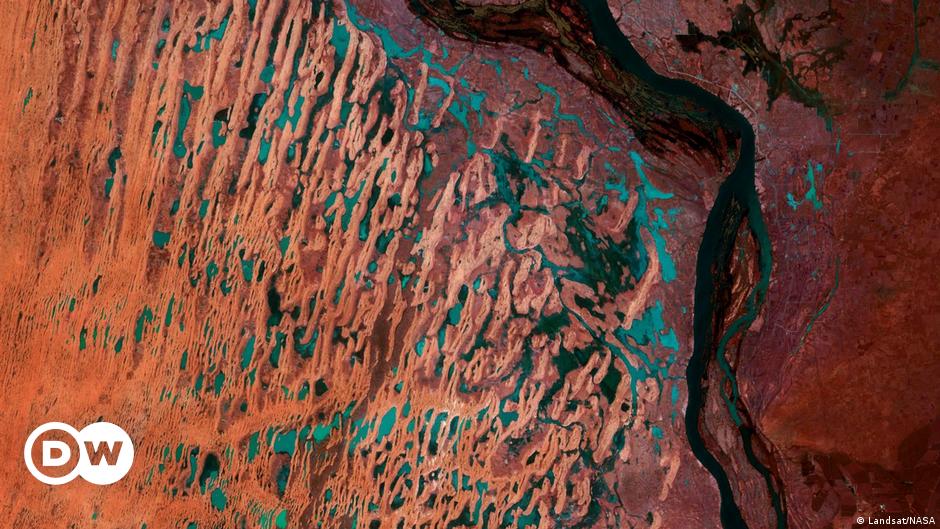
The earth is not just dust and dirt, it is the habitat of millions of bacteria that make life possible on the planet. And soils are key in the fight against climate change.
In 1937, then-President of the United States, Franklin D. Roosevelt, told his governors at a time of droughts and sandstorms: “A country that destroys its soils destroys itself.”
Perhaps there are those who when hearing the word “soil” think of dirt, dust or mud. But on World Soil Day, this December 5, we want to take a look below the ground to understand why soils are of central importance for humans and for the ecosystem.
Diversity of species ensures the existence of the human being
Earth, the planet on which we plant grains, fruits and vegetables, on which our forests create, and where we dig to make our gardens, is the surface through which our planet breathes. It is a mixture of mineral and organic substances, of rocky sediments, of plants in a state of putrefaction and of microorganisms.
Our soil is one of the living spaces with the most diversity of species in the world. A separate cosmos, with worms, insects, bacteria and fungi, in which life bustles. One square meter of land is home to up to 10,000 different types of living organisms.
About a billion bacteria can be found in just one gram of soil. And 160 people on a soccer field is roughly equivalent to the weight of those bacteria under the ground, on the same surface: 11 tons.
These organisms are irreplaceable for the life cycle of the Earth. Fungi and bacteria break down dead leaves, trees, and organisms. Thanks to this, the plants receive the nutrients they need to grow.
Worms, termites, and other soil organisms improve soil productivity by mixing the upper layers with their activity. This causes a redistribution of food substances. In this way, the soil is also aerated and water can reach it and be stored.
We are losing our soils
So far only a fraction of living soil organisms have been investigated. What scientists do know, however, is that our soils are diseased, and that diversity is declining.
Around the world, much of the land is in fair, bad or very bad condition, according to a United Nations report on soil conditions. The more life there is in the soil, the more fertile the land is, and that also protects it from erosion, so it will not be swept away so easily by wind, rain or floods.
Above all, Brazil, the Caribbean countries, Central Africa and Southeast Asia have suffered losses due to soil erosion on 70 percent of their arable land.
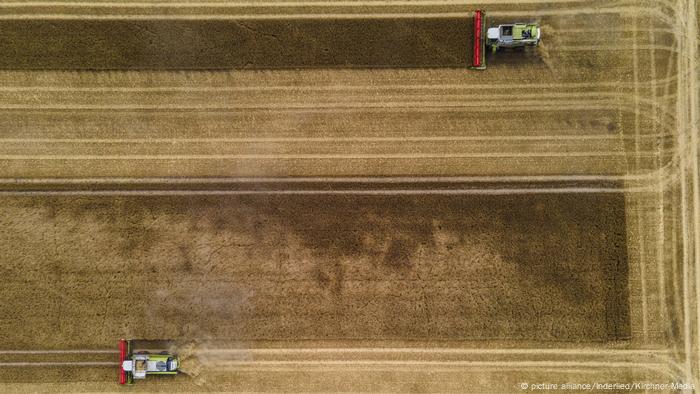
About half of all fields are cultivated with monocultures, and that is not good for the soils.
A 2015 study shows that over the past 40 years 33 percent of the world’s arable land has been lost due to pollution and erosion. “This is catastrophic when you consider that it takes about 500 years for one inch of topsoil to form,” the study authors said.
According to the World Food and Agriculture Organization (FAO), around 90 percent of the soil could be lost by 2050. An estimated 3.2 billion people are already feeling poor harvests and their consequences, including rural communities in the global south. , small farmers and people from the poorest countries in the world.
Decoupled agriculture
The current trend in agriculture continues to point towards monocultures. Rice, corn, soybeans and wheat alone are grown in more than 50 percent of the world’s cultivated areas.
If large areas are planted with a single crop to maximize yield and facilitate harvest, this eventually leads to the fact that the soil carries fewer and fewer nutrients. This means that farmers depend on artificial fertilizers, which pollute the water and alter the natural balance of ecosystems.
But soils are not only a vital factor for the subsistence of our ecosystem, they are also of central importance in slowing climate change. This is because not all greenhouse gas emissions go into the atmosphere, but are absorbed by plants, forests and oceans.
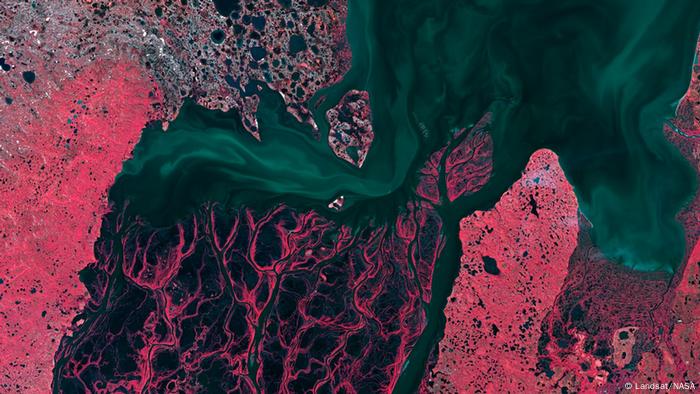
Most of Siberia is traversed by CO₂-storing wetlands and peat soils.
When plants die and decompose, much of the carbon dioxide (CO₂) that they absorb from the atmosphere is in turn absorbed by the soil. It concentrates twice as much CO₂ as the plant kingdom and the atmosphere.
In particular, wet and frozen soils store large amounts of CO₂. That is why the drying of swamps for the extraction of peat doubles damages the climate of the planet. Not only is a CO₂ deposit destroyed, but by removing the water from those soils, gases that were accumulated there are released, including methane, which is very harmful to the climate.
This also applies to permafrost soils in Antarctica and Canada. As temperatures rise, they melt faster and faster. If they disappeared completely, it would release almost as much CO₂ as if the United States continued to emit the same current amount of fossil fuels annually until 2100.
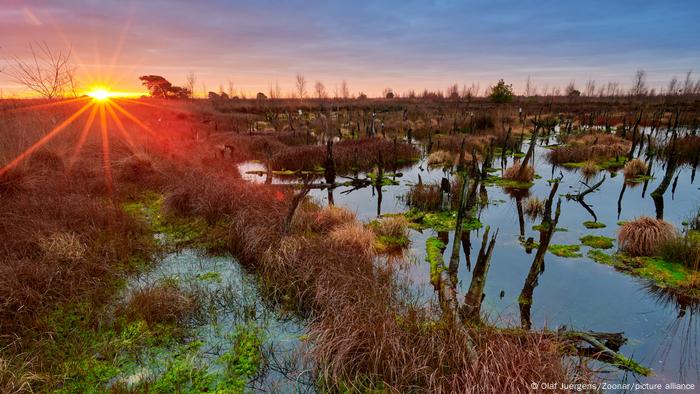
Swamps would have to be renatured around the world so that they do not become sources of CO₂.
How can soils be protected?
If you want to avoid the release of greenhouse gases from dry swamps, you must restore those natural spaces on a large scale, says a study in the journal Nature, published in 2019.
Also, in agriculture, traditional farming methods such as permaculture and subsistence farming could be used, which allow the land to recover. Among these methods is the alternation of fruit trees in the fields, the combination of plant species in the crops, or sowing without machinery or plow. They are not very profitable, but the costs of the exploitation of the soils with the usual methods are enormous.
It is estimated that the increase in soil biodiversity could add up to 2.3 billion tons of additional crops worth 1.4 trillion dollars annually. Sufficient quantity of earthworms alone increases crop yields by an average of 25 percent. So healthy soils always pay off.
(cp / lgc)