

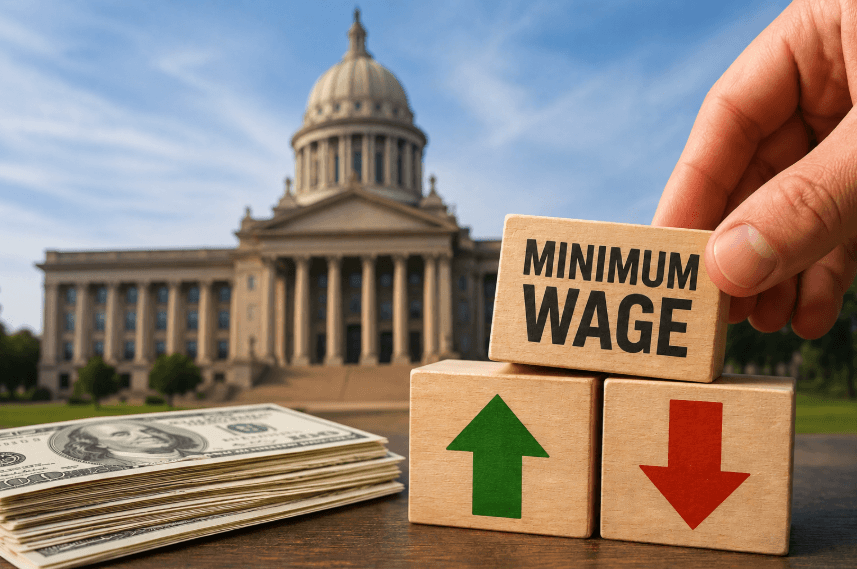
OKLAHOMA CITY — Oklahoma voters have rejected a proposal to significantly increase the state’s minimum wage, opening the door to renewed debate over how lawmakers might approach wage reform in the years ahead.
The vote on State Question 832 took place alongside Oklahoma’s Primary Election Day, which produced a series of notable political developments across the state. While the measure failed to gain majority support, the results have prompted discussions about whether a different approach to raising the minimum wage could attract broader backing among voters and legislators.
The primary elections saw a large number of races remain undecided. Of the 25 legislative primary contests featuring at least three candidates, 15 advanced to a runoff election scheduled for 25 August. Only one incumbent lawmaker, Sen. Dusty Deevers of Senate District 32, was defeated outright, while three other incumbents secured places in runoff contests.
A statewide runoff election will also be held for the Democratic nomination for the United States Senate. The General Election is scheduled for 3 November.
Despite the importance of the races and ballot measures, voter participation remained relatively low. Oklahoma has nearly 2.42 million registered voters, yet only 26% cast ballots on 16 June. The turnout figure reflects a broader trend seen across several states, where voter engagement in primary and runoff elections has often lagged behind participation in general elections.
Texas experienced a similar pattern this year. Although the state recorded strong participation during its primary elections, only 24% of registered voters went to the polls. Turnout dropped further in the subsequent runoff election, where just 10% of the state’s 18.7 million registered voters cast ballots.
Observers expect Oklahoma could see a similar decline in participation during its own runoff elections due to the reduced number of races on the ballot.
One of the most closely watched issues during the election was State Question 832, which sought to raise Oklahoma’s minimum wage. The proposal attracted a total of 630,085 votes, with 281,171 voters supporting the measure and 348,914 voting against it.
The ballot question generated more participation than the gubernatorial primary races. Among registered Democrats, 172,366 votes were cast for governor candidates, while Republicans cast 402,917 votes in their gubernatorial contest. Combined, those races attracted 575,283 votes, meaning the minimum wage proposal received 54,802 more votes than the governor races.
The difference is widely attributed to independent and Libertarian voters who were eligible to vote on the state question despite not having primary contests in which to participate.
Analysis of the voting patterns has led some observers to conclude that support for raising the minimum wage may extend across party lines, even though voters ultimately rejected the specific proposal presented to them.
“This suggests there is a bipartisan desire among Oklahomans to raise the minimum wage – but not the way this state question would have done it.”
Opposition to State Question 832 appeared to centre on several aspects of the proposal. One of the most significant concerns involved the provision that would have tied future increases beyond $15 per hour to the consumer price index, creating an automatic adjustment mechanism.
Critics also raised concerns about applying the same minimum wage to both high school students and adult workers. Agricultural employers expressed reservations about the impact of increased labour costs, while others questioned whether the proposed rise from $7.25 per hour to $15 over a three-year period was too rapid.
The rejection of the measure has shifted attention to what potential alternatives could emerge in the future.
“Now, the question is, ‘What’s next?’”
Political observers and lawmakers are expected to examine whether a revised proposal could secure broader support. Options being discussed include removing the automatic inflation-linked increases, setting a lower wage ceiling than $15, creating separate wage provisions for younger workers, introducing exemptions for agricultural employment, or extending the timeline for future increases.
Supporters of higher wages have indicated they intend to revisit the issue and develop a new proposal. Meanwhile, legislators will likely continue evaluating whether a modified approach could gain traction in a Republican-controlled legislature.
Although 55.38% of participating voters rejected State Question 832, the debate surrounding minimum wage reform in Oklahoma appears far from settled. With advocates already signalling their intention to return with a revised plan, the issue is expected to remain part of the state’s political and economic discussion in the months ahead.