


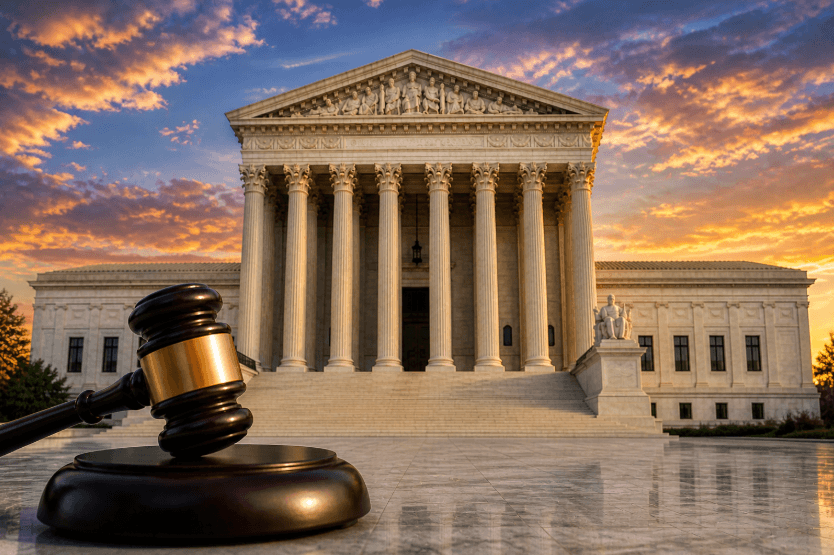
The Republican Attorneys General Association has welcomed a recent United States Supreme Court ruling in Louisiana v. Callais, describing the judgment as a significant development in the legal framework governing congressional redistricting. The decision, delivered in a 6–3 majority, addressed the role of race in the drawing of electoral district boundaries and is expected to have broader implications for election law and governance across multiple states.
The Court struck down a Louisiana congressional map that had been mandated by a lower court, concluding that the use of race as a predominant factor in redistricting must meet strict constitutional scrutiny. In doing so, the ruling reaffirmed the interpretation of the Equal Protection Clause as limiting race-based decision-making unless there is clear evidence of intentional discrimination.
The case has attracted attention not only for its legal significance but also for its potential policy impact. Redistricting remains a critical issue in the United States, influencing electoral competitiveness, representation, and legislative priorities. The judgment is likely to shape how states approach the complex balance between compliance with voting rights protections and constitutional constraints.
Liz Murrill, who played a central role in the case, has been positioned by supporters as a key figure in advancing the legal challenge. The association representing Republican attorneys general framed the outcome as both a legal and strategic milestone, highlighting coordination among state-level legal offices on election-related matters.
In a statement issued following the ruling, RAGA Executive Director Adam Piper emphasised the broader significance of the decision for public policy and governance:
“No group of elected officials make a bigger impact than Republican AGs. Everyone talks about redistricting, however Republican AGs actually act and win at the highest levels. RAGA is proud to have leaders like Louisiana Attorney General Liz Murrill among our ranks. The Callais decision reaffirms common sense – the Constitution requires colorblindness and courts cannot compel states to violate that principle,” said RAGA Executive Director Adam Piper.
The statement reflects a wider political and legal narrative in which state attorneys general have increasingly taken prominent roles in shaping federal policy debates through litigation. In recent years, multi-state legal actions have become a common mechanism for influencing regulatory frameworks, particularly in areas such as elections, healthcare, and environmental policy.
Mr Piper also pointed to ongoing activity following the Court’s ruling, indicating continued engagement by state officials in related legal matters:
“Since Wednesday’s Callais decision, Republican AGs have worked with President Trump and the White House to move the needle across the country from Steve Marshall’s emergency petition in Alabama to James Uthmeier winning on a separate election related matter in the Northern District of Florida.”
While the statement underscores a coordinated approach among certain state officials, the broader legal landscape remains contested. Redistricting cases frequently involve competing interpretations of constitutional protections, federal statutes, and judicial precedent. As a result, decisions such as Louisiana v. Callais are often viewed as part of an evolving legal dialogue rather than a definitive endpoint.
From a business and policy perspective, the ruling may also carry indirect implications. Electoral district boundaries can influence legislative agendas, regulatory priorities, and public spending decisions at both state and federal levels. For businesses operating in the United States, particularly those engaged in regulated sectors, shifts in political representation can affect the policy environment over the medium to long term.
Legal analysts note that the Court’s emphasis on evidentiary standards for race-based redistricting could lead to further litigation, as states reassess existing maps and consider future adjustments. This may introduce additional uncertainty in the short term, particularly in jurisdictions where redistricting remains under judicial review.
Nonetheless, the decision represents a significant moment in the ongoing intersection of law, politics, and governance in the United States. As states respond to the ruling, attention will likely turn to how the principles outlined by the Court are applied in practice, and whether further challenges emerge in subsequent election cycles.