

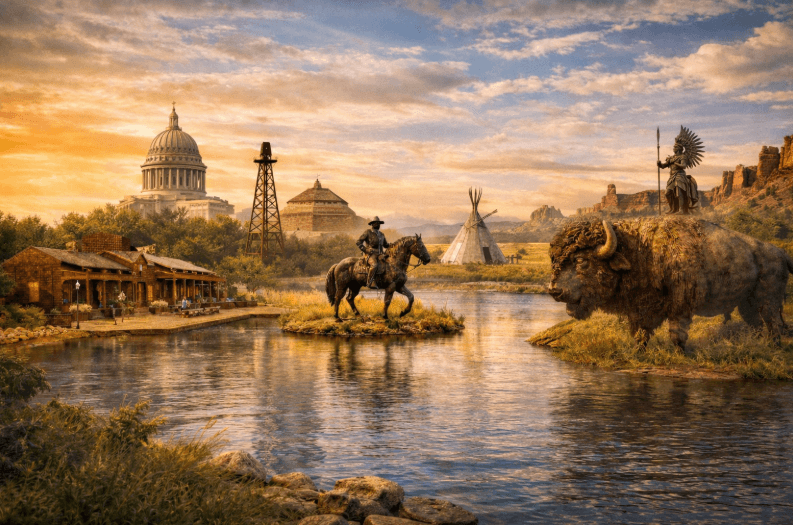
The Oklahoma History Symposium, titled “Milestones in Oklahoma History”, is set to take place on Saturday, May 2, 2026, at the Oklahoma History Center in Oklahoma City, offering a comprehensive programme of historical discussion, networking, and public engagement.
Organised by the Oklahoma Historical Society, the one-day event is designed to convene scholars, students, educators, public history professionals and members of the public from across the state and wider region. The symposium aims to provide a platform for participants to share research, exchange ideas and explore key themes shaping Oklahoma’s historical narrative.
The event reflects a broader effort to strengthen public engagement with regional history while fostering collaboration between academic and community stakeholders. With free admission, organisers are encouraging advance registration to manage attendance and ensure smooth coordination.
Proceedings will begin at 9:30 a.m. with networking opportunities, alongside access to symposium exhibitors running throughout the day until 4 p.m. Attendees will also be able to participate in a series of organisational meetings, including the Meeting of the OHS Membership at 10 a.m., which will provide updates on activities, board election results and the swearing-in of new board members. This will be followed by the Organizational Meeting of the OHS Board of Directors at 10:15 a.m., where officer elections and committee appointments may be conducted.
A key feature of the morning programme is a series of book signings scheduled between 10:30 a.m. and 11:30 a.m., showcasing recent publications on Oklahoma history. Featured works include Route 66 and the Story of Sam Hawks: Pioneer, Entrepreneur, Politician (2025, Oklahoma Hall of Fame Publishing) by W. Edward Rolison, Chitto Harjo: Native Patriotism and the Medicine Way (2025, Yale University Press) by Dr. Donald L. Fixico, and Tulsa, 2021: A Massacre’s Centennial and a Nation’s Reckoning (2021, University of Oklahoma Press) by Randy Krehbiel.
Additional titles include A History of the Cherokee Nation (2025, University of Oklahoma Press), edited by Patricia Dawson, a descendant of historian Rachel Caroline Eaton and an assistant professor at Mount Holyoke College.
The symposium’s keynote address will be delivered from 11:30 a.m. to 12:30 p.m. at the Chesapeake Event Center by the Honorable Glenn English, a former ten-term US representative and retired chief executive of the National Rural Electric Cooperative Association. His address will focus on his experience in public service and leadership within the electric cooperative sector.
English will reflect on the evolution of rural electrification and its broader economic impact, particularly referencing initiatives rooted in the 1930s under President Franklin Roosevelt’s Rural Electrification Act. His remarks are expected to highlight the continuing relevance of cooperative models, including their role in expanding broadband access to underserved rural communities.
Following a lunch interval from 10:45 a.m. to 12:30 p.m., featuring local food vendors such as ToGo Box, The ToGo Burger, and Oh Sugar Honey Iced Tea, the afternoon programme will shift towards thematic panel discussions.
Sessions between 12:45 p.m. and 1:30 p.m. will examine topics including “Creating Space: Real and Imagined Oklahoma Black Communities”, “Chào to Main Street: The Effort to Resettle Vietnamese Refugees in Western Oklahoma”, and “Native Women, the Dawes Act, and Resilience: A Milestone in Oklahoma History”.
Subsequent panels will explore a range of historical perspectives, from Indigenous history and post-Civil War developments to legal transformations and socio-political movements. Discussions such as “Milestones in Oklahoma Indigenous History: From the Civil War in Indian Territory to the State of Sequoyah” and “Testing Equality: Oklahoma’s Legal Landscape and the Evolution of the 14th Amendment” aim to provide deeper insight into structural and cultural shifts within the state.
Later sessions will address themes including women’s history, public health, Native American religious institutions and regional identity. Topics such as “Myths, Mysteries, and Milestones in the Lives of Oklahoma Women” and “A Milestone for the Peyote Road: The 1918 Chartering of the Native American Church of Oklahoma and its Legacy for Native Nations Today” underscore the diversity of subject matter covered.
The symposium will conclude at 4:30 p.m., rounding off a full day of presentations, discussions and community engagement.
Organisers have emphasised that while attendance is free, pre-registration is strongly encouraged. Enquiries regarding the event can be directed to symposium coordinators via official contact channels.
As interest in regional history continues to grow, the Oklahoma History Symposium is positioned as a key annual forum for knowledge exchange and public participation, reinforcing the role of historical scholarship in shaping contemporary understanding and civic identity.