


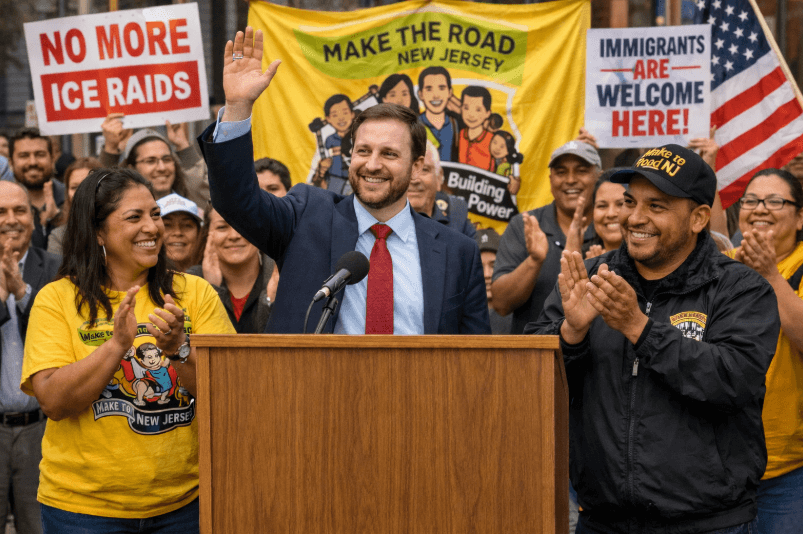
JERSEY CITY, NJ — Jersey City Mayor James Solomon has signed a sweeping executive order aimed at strengthening protections for residents in the event of encounters with US Immigration and Customs Enforcement (ICE), a move welcomed by immigrant rights organisations and advocacy groups operating across New Jersey.
The announcement comes amid heightened scrutiny of federal immigration enforcement practices in several US cities and follows growing pressure on local governments to clarify how municipal services and law enforcement should respond to ICE activity. The order is positioned by supporters as a preventative measure intended to ensure city staff and agencies act consistently, while reinforcing Jersey City’s stated commitment to being a safe and inclusive place to live and work.
Under the new directive, Jersey City will implement citywide training protocols designed to help municipal employees understand their responsibilities and rights when approached by federal immigration officers. The executive order also introduces operational requirements for local law enforcement, including measures to preserve body camera footage linked to interactions involving ICE.
In addition, the order prohibits city resources from being used for immigration enforcement. Supporters say this provision is intended to prevent municipal staff and services from being drawn into federal enforcement activity and to maintain separation between city operations and immigration enforcement functions.
The directive also sets out plans to expand partnerships with nonprofit organisations, with the stated aim of increasing “know-your-rights” training and access to legal support for community members. Such programmes are typically designed to help residents understand what documentation may be required in an encounter with immigration officers and what legal options may be available if enforcement action occurs.
Immigrant advocacy group Make the Road New Jersey, which represents thousands of members across the state, said the executive order sets a standard other cities should consider adopting.
“Every city across the state should be following Jersey City’s lead,” said Lauren Herman, Legal Director, Make the Road New Jersey, representing over 6,500 members across the state. “With this executive order, the city will now take proactive steps to make sure residents know their rights and city employees know what to do if ICE shows up. This order makes clear that Jersey City is a safe and welcoming city for all its residents and that our local resources will be used to support families, not terrorize them.”
From a business and workforce perspective, local immigration policy decisions can carry implications for labour stability, employee confidence, and community relations—particularly in cities with large immigrant populations and diverse service economies. Measures that clarify how public-facing staff respond to enforcement requests can also affect how residents access essential services, including housing, education, and healthcare, which in turn shapes local economic participation.
Jersey City is one of New Jersey’s largest urban economies and sits within the wider New York metropolitan area, making it a key hub for small businesses, hospitality, logistics, and professional services. Advocacy groups argue that strong local protections can help reduce fear among residents and allow families to continue working and contributing to the local economy without disruption.
The executive action in Jersey City also arrives as New Jersey lawmakers debate broader statewide immigration protections. In Trenton, a package of three immigrant protection bills previously passed both chambers of the state legislature, although two were ultimately pocket vetoed by then-Governor Phil Murphy as he left office.
In the new legislative session, advocates say momentum is building to revive the measures and bring them back for consideration. Supporters want the proposals advanced to the desk of Governor Mikie Sherrill, with the aim of establishing more uniform protections across New Jersey’s municipalities.
The legislative package would seek to codify the Immigrant Trust Directive and introduce new data protections intended to limit the ability of ICE to use sensitive state or healthcare data in enforcement actions. Backers of the proposals argue that stronger safeguards are needed to ensure that personal information held by public agencies cannot be used to identify or track residents for immigration purposes.
Advocates say the combination of municipal executive action and renewed legislative activity reflects a broader push to ensure residents are protected regardless of where they live in the state.
“We need to make sure everyone in New Jersey is protected against ICE,” said Lauren Herman. “This is not the time to sit idly by and hope the storm passes while a violent agency terrorizes our communities and separates families.”
For Jersey City, the executive order represents a clear policy statement on the limits of municipal involvement in immigration enforcement and sets out practical steps for staff training, evidence preservation, and community legal support. Observers will now be watching whether other New Jersey municipalities follow suit, and whether state lawmakers succeed in passing legislation that would expand protections at a statewide level.