

OKLAHOMA CITY — Oklahoma advocacy organizations and service providers are raising concerns about administrative challenges affecting the state’s social safety net as new federal requirements increase pressure on benefit programs serving older adults, families and people with disabilities.
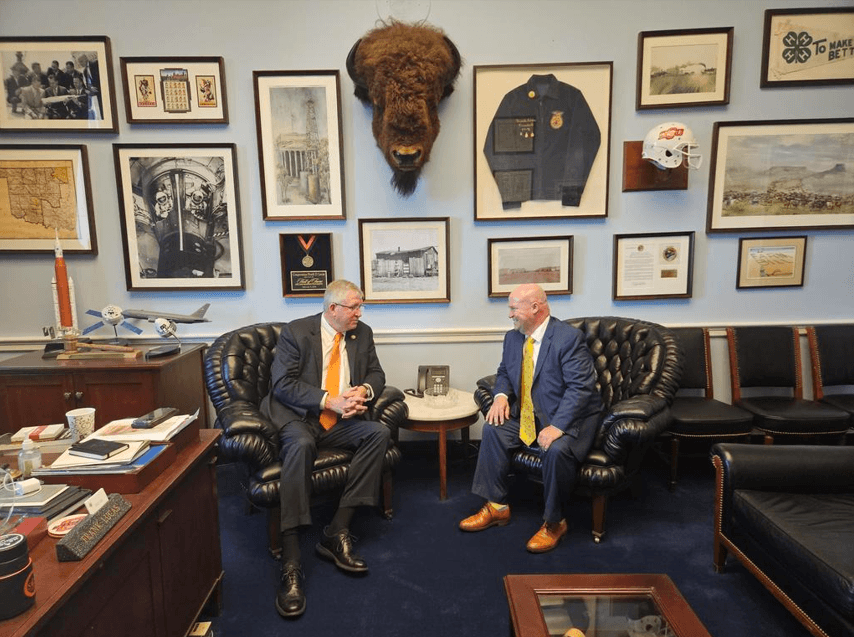
Representatives from Hunger Free Oklahoma, the Regional Food Bank of Oklahoma, the Eastern Oklahoma Food Bank, local food-support providers and the Oklahoma Institute for Child Advocacy recently traveled to Washington, D.C., to discuss federal mandates and their impact on Oklahoma residents with members of the state’s congressional delegation.
The discussions focused on requirements under the “One Big Beautiful Bill,” which requires states to reduce paperwork errors and improve accuracy in determining whether residents qualify for assistance. The changes have contributed to backlogs on help lines, confusion about required documentation and frustration among some people attempting to access services.
Oklahoma Human Services, the state agency responsible for administering several assistance programs, is working with the Oklahoma Institute for Child Advocacy to distribute information intended to help residents understand requirements and navigate the application process.
Oklahoma’s Aging Population Increases Demand for Services
The challenges come as Oklahoma prepares for significant growth in its older population.
Current figures show 943,377 Oklahomans are age 60 or older, representing approximately 23% of the state’s population. By 2034, that population is projected to increase by another 21.3%. Adults age 65 and older are also expected to outnumber children in Oklahoma for the first time.
Older residents play an important role in supporting younger generations, particularly in households where grandparents or other relatives are raising children.
In Oklahoma, 109,221 children live in households where a relative serves as the head of household, while about 61,000 children are being raised by relatives with no parent present. More than 43,000 grandparents are heads of households responsible for grandchildren living with them.
For every child being raised by relatives within the foster care system, another 22 are being raised by relatives outside foster care. That means much of the caregiving provided by extended families occurs without direct state involvement or support.
Oklahoma Human Services’ Community Living, Aging, and Protective Services division has identified four significant challenges affecting older Oklahomans: financial security, appropriate housing, the state’s capacity to meet increasing service needs and awareness of available assistance.
ADvantage Waiver Supports Care at Home
A network of 11 Area Agencies on Aging operates across Oklahoma to connect residents with local services. People seeking assistance can contact the Statewide Aging and Disability Info-Line at 1-800-211-2116, which routes callers to appropriate resources based on their needs.
The ADvantage Waiver is another major component of Oklahoma’s support system. The program allows eligible older adults and adults with disabilities to receive long-term services and support at home rather than entering a nursing facility.
Services may include personal care, case management, skilled nursing, home-delivered meals, respite care, home modifications, specialized medical equipment and adult day health services.
Eligibility is determined individually and includes financial requirements, medical level-of-care standards and age or disability requirements.
Applicants may also need to verify citizenship or immigration status, income, other financial resources and their Social Security number. They must select qualified providers in their area and complete a medical eligibility assessment.
Agency instructions require applicants to respond within 10 calendar days of the postmark on any follow-up letter for the application process to continue.
Residents who cannot complete the application online can call 1-800-435-4711 to arrange a telephone application or visit a local Oklahoma Human Services office.
Medicare and Community Assistance Remain Available
Medicare can present additional challenges for older residents comparing Medicare Advantage plans, prescription drug coverage, supplemental plans and programs intended to reduce health care expenses.
The Oklahoma Insurance Department’s Medicare Assistance Program, known as SHIP, offers free and objective counseling from trained counselors. Residents can contact the program at 800-763-2828.
Additional assistance is available through 2-1-1, where navigators can connect callers with a range of community resources. Be A Neighbor also provides a statewide online directory that allows residents to search for assistance using their ZIP code.
With Oklahoma’s older population expected to continue growing, access to clear information and assistance with benefit requirements will remain important for residents navigating food, health care, disability and aging-related support programs.

:quality(85)/cloudfront-us-east-1.images.arcpublishing.com/infobae/45OXD2PP2VAWTFEPJZPEDWSDC4.jpg "The Ortega regime is closing embassies in cities with high immigrant populations, leaving thousands of Nicaraguans homeless.")