


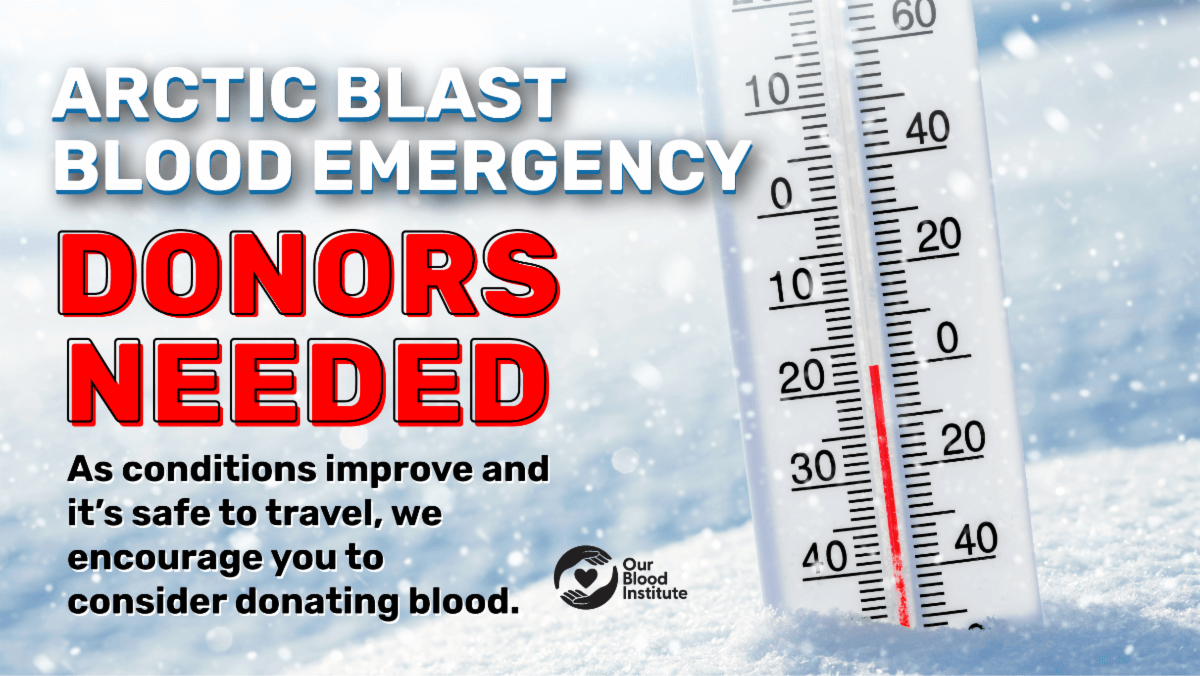
Although the worst of the winter storm has passed, its economic and operational consequences continue to ripple across the healthcare sector, as persistent ice, snow and sustained below-freezing temperatures disrupt travel and severely limit blood donations across the region.
Healthcare providers are now facing renewed pressure as hazardous road conditions prevent donors, staff and mobile collection teams from operating at normal capacity. The disruption has compounded over several days, creating what blood collection officials describe as a renewed emergency shortage at a time when hospitals typically rely on steady winter recovery.
Since the onset of severe weather, 86 community blood drives have been cancelled, resulting in the loss of more than 1,600 expected donations. The closures have been particularly acute within schools and universities, which remain shut in many areas. Educational institutions are typically among the most reliable sources of new and repeat donors, but continued closures have sharply curtailed collections.
As a result, Our Blood Institute reports it is currently missing an estimated 700 blood donations each day from educational drives alone, a shortfall that has rapidly eroded earlier gains made this month.
The impact is already being felt in patient care. Inventories of platelets and O-negative blood have fallen to critically low levels, placing strain on hospitals that rely on both for trauma response, cancer treatment and emergency surgical procedures. Platelets, which have a shelf life of just five days, are particularly vulnerable to short-term disruption, while O-negative blood remains essential for emergencies when a patient’s blood type is unknown.
Earlier in the month, the organisation declared an emergency blood shortage after inventories dropped to critical thresholds. A surge in donor turnout helped stabilise supplies temporarily, but the prolonged nature of the current weather event has reversed that progress.
Unlike a typical winter storm, where travel and community activity resume within a day or two, many side roads and residential areas remain impassable due to persistent ice and repeated refreezing. This has not only limited donor turnout but has also created staffing challenges, as employees face dangerous commuting conditions.
“When freezing temperatures linger, the impact on the blood supply compounds quickly,” said Dr. John Armitage, president and CEO of Our Blood Institute. “We are incredibly grateful to the donors who stepped up earlier this month, but the reality is that even a few days of missed donations can quickly put patients at risk.”
Healthcare systems depend on consistent daily donations to meet routine and emergency needs, and shortages can force hospitals to delay non-urgent procedures or prioritise limited supplies for the most critical cases. Industry analysts note that blood supply disruptions often have a delayed effect, meaning the full consequences may emerge days or weeks after collections fall.
All blood types are currently needed, with an urgent appeal for platelet donors and individuals with O-negative blood. Donation appointments remain available at fixed donor centres for those able to travel safely, though officials stress that personal safety should not be compromised.
Community members are being encouraged to return to donating once conditions improve and roads are safe, helping to stabilise supplies for patients across the region. Blood collection leaders emphasise that recovery depends not only on one-off emergency responses, but on sustained donor participation as weather-related backlogs are addressed.
To acknowledge those who are able to donate during the current disruption, all donors who give between Wednesday and Friday will receive a blood donor sweatshirt, while supplies last. Officials say the incentive is intended as a gesture of appreciation rather than a substitute for the critical need facing hospitals.
Eligibility requirements remain in place. Donors aged 16 must weigh at least 125 pounds and provide signed parental permission; 17-year-olds must also weigh at least 125 pounds; donors aged 18 and over must weigh at least 110 pounds. A valid photo ID is required.
As winter conditions persist, healthcare leaders warn that even short-term disruptions can have long-lasting consequences, reinforcing the importance of donor participation once travel becomes safe and accessible again.