


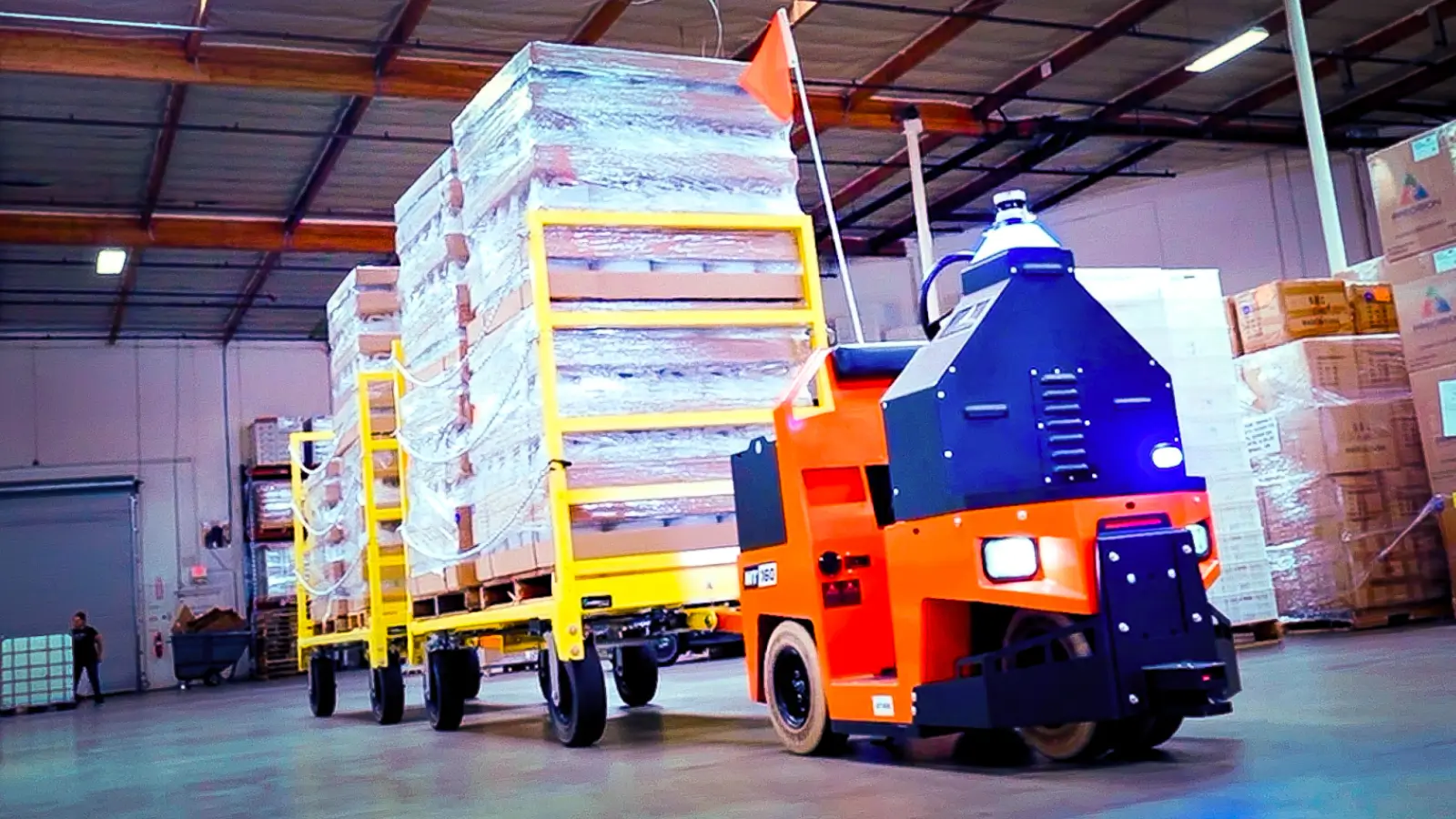
A growing number of enterprise customers are expanding their use of autonomous industrial vehicles developed by Cyngn, as companies increasingly integrate automation into logistics and manufacturing operations.
The California-based autonomous vehicle technology company said a record number of its existing enterprise and Fortune 100 customers have increased deployments of its DriveMod Tugger vehicles. The expansion involves adding more autonomous vehicles while extending operations across additional routes, workflows and production facilities.
Cyngn, which trades on the NASDAQ: CYN, said the development reflects growing confidence among industrial clients that autonomous vehicle systems can deliver measurable operational improvements in warehouse and factory environments.
DriveMod Tugger vehicles are designed to automate repetitive logistics routes within industrial sites, moving materials between production areas, warehouses and loading zones without human drivers. According to the company, many deployments begin on a limited scale before expanding across broader operations once reliability and productivity gains are demonstrated.
“We believe that fleet expansion is one of the clearest indicators that Cyngn’s autonomous vehicles solutions are delivering operational value,” said Natalie Russell, CFO of Cyngn. “So, we are very excited to be setting a new record in existing customer expansion. What we’re seeing is that customers who have deployed DriveMod Tuggers want even more DriveMod Tuggers.”
Industry analysts have long noted that automation technologies in manufacturing environments typically follow a staged adoption pattern. Companies often begin with targeted pilot programmes that focus on a single repetitive logistics task, allowing operators to evaluate performance and integration with existing processes.
Once the technology proves reliable in day-to-day production environments, organisations frequently expand deployments across additional internal routes or material-handling operations. Cyngn said its customers are following a similar pattern, introducing more autonomous vehicles into their facilities as confidence in the systems grows.
The company indicated that the trend highlights a broader shift within industrial sectors as manufacturers and logistics operators look to address labour shortages, improve efficiency and reduce operational costs through automation.
The latest customer expansion builds on wider commercial momentum reported by Cyngn over the past year. The company said it tripled the number of DriveMod Tugger vehicles sold in 2025 compared with the previous year, while overall autonomous activity across its installed fleet also increased significantly.
Technology development has also continued during the period. Cyngn said it enhanced its autonomous vehicle platform through simulation work using NVIDIA Isaac Sim, a robotics simulation tool developed by NVIDIA. Simulation environments allow companies to test and refine autonomous driving systems under a wide range of operational conditions before deploying them in live industrial settings.
Earlier this month, Cyngn also reported a deployment at an electric motor manufacturing facility operated by WEG, a global industrial manufacturer with billions of dollars in annual revenue. The project marked another example of the technology being implemented within large-scale manufacturing operations.
Operational metrics released by the company suggest that usage of its autonomous vehicles is accelerating as deployments transition from pilot phases into full production environments.
During 2025, total autonomous operating time across customer sites increased sharply. Cyngn said the number of hours its vehicles operated autonomously more than doubled in the second half of the year, rising by 113% compared with earlier periods.
Such growth indicates that clients are relying increasingly on autonomous systems for day-to-day logistics tasks within their facilities. In many industrial environments, tugger vehicles transport materials such as components, pallets or finished products along fixed routes, making them suitable candidates for automation.
Cyngn believes that as customers scale up deployments, autonomous vehicles could become a central part of factory logistics operations, reducing manual transport tasks while improving consistency and operational efficiency.
Looking ahead, the company expects its sales trajectory to continue improving as more industrial organisations adopt autonomous logistics solutions.
According to Marty Petratis, Cyngn’s VP of Sales, the company is on track to sell more in Q1 of 2026 than all of last year.