


Written by Vanina Lombardi
__
TSS Agency – In space, all devices use solar panels. Although silicon is the most widely used — and perhaps also the most famous — material for manufacturing solar cells, it cannot be used in satellites, radars and other space instruments, because in those cases lighter semiconductor materials are needed. Currently, the most commonly used are those in groups III through V of the periodic table of elements, such as gallium, germanium, and indium.
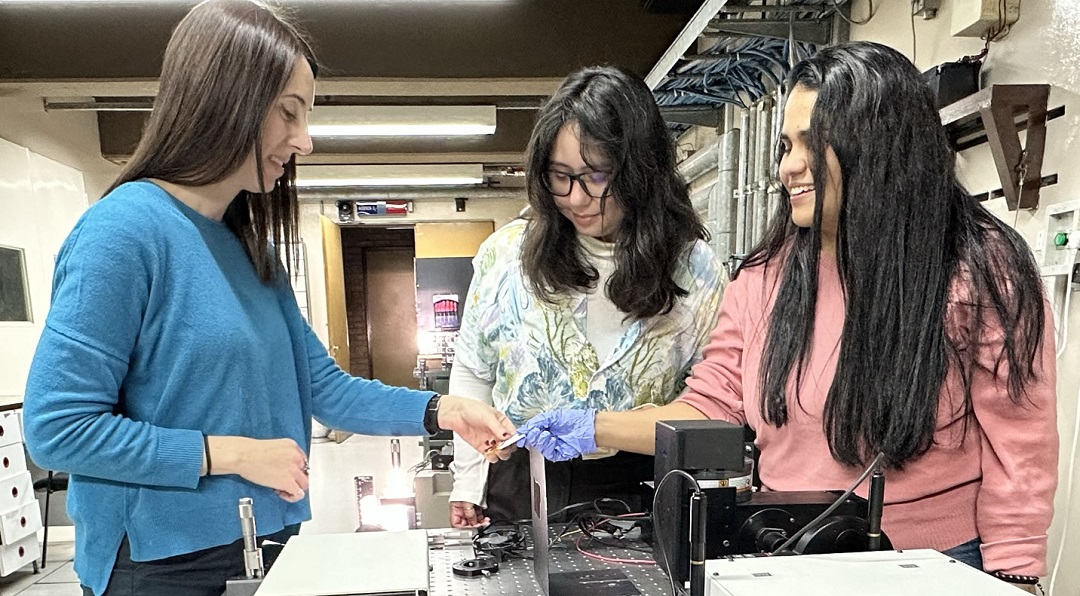
“These materials are very rare in nature, which is why each of these cells for space instruments are so expensive, even though they are the ones that are used because they are thin and light,” says Maria Dolores Pérez, a CONICET researcher at the center. Department of Condensed Matter Physics, National Atomic Energy Authority (CNEA), will be director in Argentina of a joint research project with colleagues from Indian Institute of Technology Roorkee (IITR), from India, where they will explore the radiation tolerance of perovskite solar cells – another rare mineral in nature with semiconducting properties – for space applications. CNEA has developed solar panel systems for use in space on missions National Committee for Space Activities (CONAE), as in the case of SAOCOM satellites.
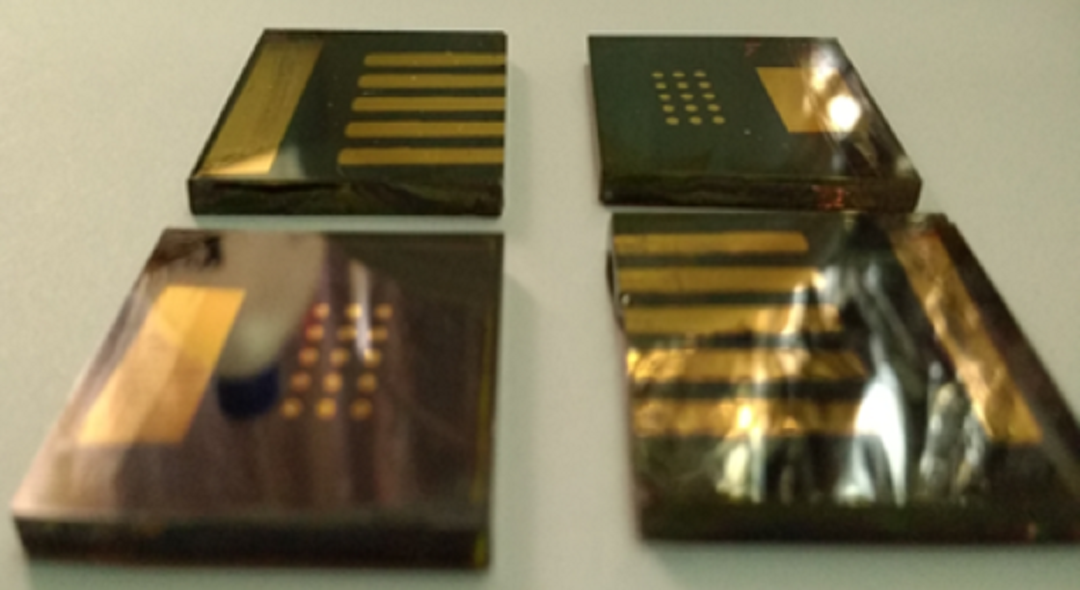
“Perovskites will allow these cells to be obtained through a very simple process: the inks are made by dissolving and mixing certain salts; This ink is then placed on a plate that we prepare, which we call a substrate, and in one day we manufacture a solar cell in a very simple way and with high efficiency,” explains Pérez, adding that another problem to be solved is resistance to radiation from materials used in space.
“In the vacuum of space, in addition to the sun and heat cycles, the space environment contains a lot of ionizing radiation, causing all electronic devices, including solar panels, to deteriorate due to this radiation,” explains Perez. That is why they are testing whether perovskites are robust against this radiation: “We have previous work in which we showed that the perovskites we studied support radiation; they will be a very good candidate for use in space applications,” the specialist confirms, highlighting that in the laboratory where she works they can Conducting tests and experiments simulating the requirements of the space environment.To do this, the Tandar particle accelerator line is used, specially designed for conducting solar cell irradiation tests, which allows observing the real response of each cell under direct irradiation, as if it were in outer space.
This capability was key to this project, as Indian specialists had developed their own perovskite cells but had no way to test them by simulating space environments. “The idea is that they send us the solar cells they produce, which work very well, so that here we can expose them to radiation and evaluate whether or not they are robust for use in space,” says Perez. The cells made by their colleagues in India differ from those they make in Argentina, as they are all inorganic, while the local cells are called hybrid, because they contain organic and inorganic components.
“When we go to India – which is a global powerhouse in terms of access to space – the idea is to learn how to make those cells in particular,” Perez adds, celebrating the kind of bilateral agreements that he sees the benefits going beyond. Academy only. “The good thing is that we have already established a connection, which we did not have before, with this group of colleagues from India who are highly recognized there for their developments with perovskites, and this allows us to expand our approaches,” Perez emphasizes.
This initiative was one of the four initiatives selected in the Call for Joint Research Projects with India (promoted as part of the Scientific Cooperation Program between the Ministry of Science (MINCYT) and the Department of Science and Technology of India (DST), which was signed in 2013. ), which seeks to support the development of research in the field of biotechnology and energy transition, among binational groups. MINCYT will fund each group for two years, up to a maximum of pesos equivalent to $10,000 per project each year.
In this particular case, the binational group hopes to manufacture highly efficient perovskite solar cells and study their performance and stability, before and after exposure to radiation. These types of cells offer several advantages over traditional space photovoltaics. For example, they are more cost effective, very lightweight, tolerant to radiation, and have the ability to expand.
Through this project, they hope to develop further capabilities in order to achieve a greater understanding of the radiation tolerance of inorganic perovskite solar cells for space applications, which will allow them to develop technology for the space application of inorganic perovskite solar cells. and generation of patents and joint publications.
“One of the goals of these bilateral projects is also cultural. For them, coming to Argentina is a very emotional thing, just as it is for us to travel to India, and in addition to learning all the technologies they have, it is something that opens up a lot of opportunities for us, possibilities,” he said. Perez concludes.

03 November 2023
Topics: Space Access, Solar Cells, Materials Science, CNEA, CONAE, International Collaboration, Materials Physics, India, MINCyT, Satellites, TANDAR
:quality(85)/cloudfront-us-east-1.images.arcpublishing.com/infobae/7ZOGFUNSNJBXHLGQ6WVVRQTZFI.png "Khloe Kardashian Responds to ‘Black Fishing’ Allegations Against Her: ‘It’s Tired’")