


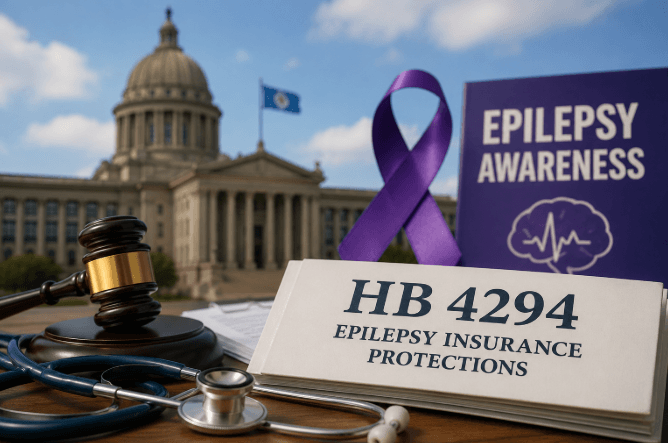
The Whitten-Newman Family Foundation has criticised Oklahoma Governor Kevin Stitt after he vetoed House Bill 4294, legislation supporters said would have expanded insurance protections and healthcare access for people living with epilepsy across the state.
The organisation said the governor’s decision, alongside the Oklahoma Legislature’s failure to override the veto, represents a significant setback for more than 40,000 residents diagnosed with the neurological condition.
HB 4294 was designed as the next phase of Dylan’s Law, a broader initiative focused on epilepsy awareness and Sudden Unexpected Death in Epilepsy (SUDEP). Supporters of the measure said the proposal would have prohibited epilepsy-based insurance discrimination and required insurers to provide coverage for medically necessary neurostimulation devices prescribed to reduce the risk of SUDEP.
The legislation was authored by Representative Daniel Pae and carried in the Senate by Senator Brenda Stanley. According to advocates, the bill aimed to ensure equal treatment for epilepsy patients by insurers and prevent denials of coverage based solely on diagnosis.
The Whitten-Newman Family Foundation, which has campaigned extensively on epilepsy awareness and patient protections, said the failure of the bill would continue to create barriers for families seeking specialised treatment and medical technology.
“This bill carries my brother Dylan’s name, and it carried the hopes of every Oklahoma family who has fought an insurance company for coverage that should never have been in question,” said Hannah Whitten of the Whitten-Newman Family Foundation. “We are deeply disappointed in Governor Stitt’s decision to veto it and in the Legislature’s failure to override that veto. Lives that could have been saved will now remain at risk.”
The proposed legislation followed the adoption of the original Dylan’s Law in 2025, which established a statewide framework for SUDEP awareness and education. The law was named in memory of Dylan Cheatwood, Hannah Whitten’s brother, who died from SUDEP at the age of 25.
Advocates for the bill argued that HB 4294 was intended to address ongoing challenges relating to access to care and affordability of treatment options for epilepsy patients. Supporters also highlighted the growing use of neurostimulation devices in epilepsy management, particularly for patients with severe or treatment-resistant conditions.
Medical advocates have said access to appropriate interventions can help reduce complications associated with epilepsy, including SUDEP. However, campaigners warned that without mandatory insurance coverage, many families could struggle to afford advanced treatment options recommended by physicians.
Reggie Whitten, co-founder of the Whitten-Newman Family Foundation, said the organisation viewed the veto as a missed opportunity to strengthen patient protections.
“When we lose a child to a preventable cause, we cannot bring them back. What we can do is fight like hell to make sure the next family does not have to endure the same loss,” said Reggie Whitten, co-founder of the Whitten-Newman Family Foundation. “This veto is a failure to protect Oklahoma families. Without access to the care and devices that can prevent SUDEP, more families may now face tragedies that could have been avoided.”
The debate surrounding HB 4294 reflects broader discussions in the United States healthcare sector regarding insurance mandates, specialist neurological care, and access to emerging medical technologies. Advocacy groups across several states have increasingly pushed for expanded insurance protections tied to epilepsy treatment and SUDEP prevention.
Hannah Whitten said Oklahoma had been positioned to take a leading role in strengthening epilepsy-related healthcare protections nationwide.
“Oklahoma had the opportunity to lead the nation in protecting people with epilepsy—not just in awareness, but in action,” Hannah Whitten added. “Instead, our Governor took action to prevent healthcare coverage for Oklahomans, including children with epilepsy, and that decision carries consequences for real people and real families.”
The Whitten-Newman Family Foundation said it intends to continue lobbying state lawmakers to revisit the issue during future legislative sessions. The organisation is also encouraging continued public engagement and advocacy surrounding epilepsy awareness, insurance access, and SUDEP prevention initiatives.
“This is not the end of this fight,” said Reggie Whitten. “Too many lives depend on it.”