

The Guthrie-Edmond Regional Airport has completed a major infrastructure improvement programme valued at $5.7 million, marking a significant milestone for the regional aviation facility and its long-term development plans.
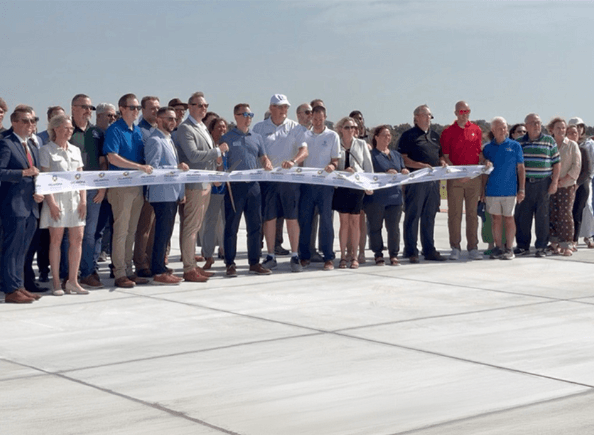
The project, known as the Taxiway Realignment and Lighting Project, was formally celebrated during a ribbon-cutting ceremony attended by representatives from the Oklahoma Department of Aerospace and Aeronautics (ODAA), the Guthrie-Edmond Regional Airport, and the Cities of Guthrie and Edmond.
The completed works are expected to strengthen operational safety, improve airport functionality and support future expansion efforts as aviation activity continues to grow across the region.
The investment focused on the reconstruction and realignment of approximately 3,750 feet of parallel taxiway infrastructure. The upgrades were undertaken to ensure compliance with current Federal Aviation Administration (FAA) design standards, helping the airport maintain modern operational requirements while supporting safe aircraft movements.
Airport infrastructure projects of this scale are often viewed as critical components of regional economic development strategies. Improved aviation facilities can enhance connectivity for businesses, support local investment and create opportunities for future commercial activity.
In addition to the taxiway reconstruction, the project included a complete upgrade of the airport’s taxiway lighting system. Older lighting infrastructure was replaced with modern LED fixtures designed to provide improved visibility and operational reliability.
The adoption of LED technology is increasingly common across airports due to its energy efficiency, lower maintenance requirements and longer operational lifespan. These benefits can contribute to reduced operating costs while improving overall airfield performance.
Officials involved in the project said the investment reflects a broader commitment to maintaining safe and efficient aviation infrastructure. Modernised taxiway systems play an important role in supporting aircraft operations, particularly as airports prepare for future increases in traffic and operational demands.
The project also delivered the first phase of a future terminal apron, laying the groundwork for additional airport development. Apron infrastructure is essential for aircraft parking, passenger operations and ground services, making it a key element of airport expansion planning.
Completion of this initial phase is expected to provide flexibility for future projects as airport leaders evaluate long-term growth opportunities. The development positions the facility to accommodate evolving operational requirements while supporting broader regional transportation objectives.
Regional airports continue to play an important role in connecting communities, supporting emergency services, facilitating business travel and providing access to aviation-related economic activity. Infrastructure investments such as the Guthrie-Edmond project are often viewed as necessary to ensure these facilities remain capable of meeting future demand.
The partnership between the Oklahoma Department of Aerospace and Aeronautics, airport officials and local governments in Guthrie and Edmond highlights the collaborative approach often required to deliver aviation infrastructure improvements. Public-sector coordination is frequently a key factor in securing funding, managing construction timelines and ensuring projects meet regulatory standards.
The completion of the taxiway and lighting upgrades comes at a time when many regional airports across the United States are pursuing modernisation initiatives aimed at improving safety and operational resilience. Compliance with FAA standards remains a central objective for airport operators seeking to maintain efficient and secure facilities.
With construction now complete, Guthrie-Edmond Regional Airport enters its next phase of development with upgraded infrastructure and a platform for future investment. Airport stakeholders say the improvements will help support continued growth while enhancing the facility’s ability to serve pilots, businesses and communities throughout the region.
The ribbon-cutting ceremony marked the official conclusion of the project and underscored the significance of the investment for the airport’s future. As regional aviation demand continues to evolve, the completed improvements are expected to provide lasting operational and economic benefits for the airport and the surrounding communities it serves.