

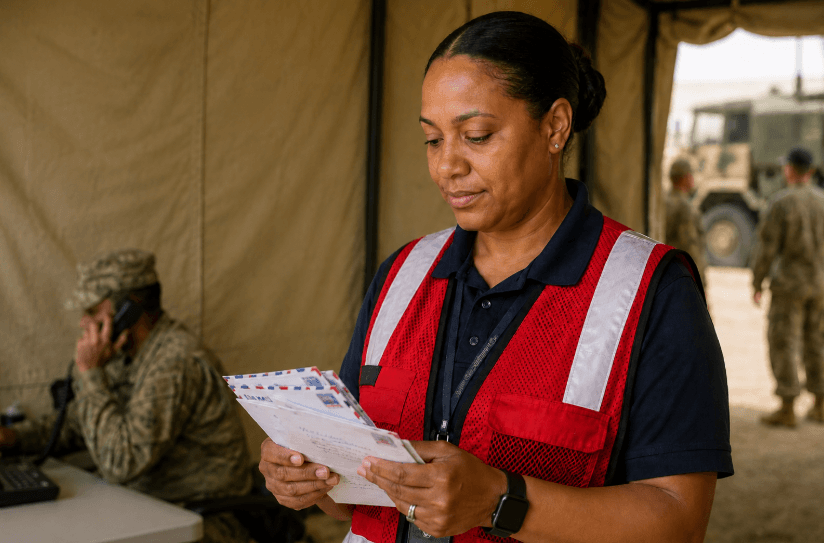
Military Appreciation Month continues to shine a spotlight on the contribution of veterans who remain committed to supporting armed forces personnel long after leaving active duty. Among them is Angelica Sowynn, a former Army servicewoman who has transitioned into humanitarian support work with the American Red Cross, assisting deployed troops stationed across the globe.
Based in North Carolina, Sowynn now works with the organisation’s Service to the Armed Forces and International Services (SAF/IS) division, helping military personnel maintain vital connections with their families while serving overseas. Her role reflects the long-standing partnership between the Red Cross and the military community, a relationship that has existed for more than 140 years.
“I spent years serving alongside these individuals,” Sowynn said. “Now I have the opportunity to support them in a different way — and that connection never goes away.”
Sowynn’s transition from military service into humanitarian operations highlights the increasing role veterans play within support organisations that work closely with defence communities. Her experience in uniform has provided firsthand insight into the emotional and operational pressures faced by deployed personnel, enabling her to deliver practical assistance and emotional support in high-pressure environments.
During a recent deployment to the Middle East, Sowynn assisted in facilitating thousands of emergency communication messages between service members and their families. The service is designed to ensure military personnel remain informed during urgent family situations, even while stationed in remote or conflict-affected regions.
Alongside communication support, she also worked within a respite centre established for deployed troops. The facility provided a temporary space where service members could rest, reconnect with loved ones and regain a sense of normality while operating far from home.
“When someone walks in and can just relax — take a breath, call home, feel like themselves again; those are the moments that stay with you,” Sowynn said.
The SAF/IS programme operates globally and forms a central part of the American Red Cross’s military outreach efforts. Services include emergency communication support, assistance for military families during deployments, support for veterans and caregivers, and welfare services at military installations around the world.
The organisation says the programme is designed to bridge the gap between military operations and family life, particularly during periods of overseas deployment when communication can become difficult.
Lauren Bolen, Executive Director of Service to the Armed Forces and International Services for the North Carolina Region, said Sowynn’s background gives her a unique understanding of the challenges facing military personnel abroad.
“Angelica represents what this mission looks like in action,” said Lauren Bolen, Executive Director of Service to the Armed Forces and International Services (SAF/IS, North Carolina Region. “She understands firsthand what service members carry with them — and because of that, she’s able to create moments of connection and care that really matter when they’re farthest from home.”
Veterans transitioning into humanitarian and community support roles has become an increasingly visible trend across military-linked organisations. Former service personnel often bring operational discipline, crisis management skills and an understanding of military culture that can strengthen welfare and support programmes aimed at active-duty troops and their families.
For the American Red Cross, veterans such as Sowynn also help reinforce trust among deployed personnel, particularly in overseas environments where morale and communication can significantly affect wellbeing.
Military Appreciation Month has traditionally focused on recognising the sacrifices made by active-duty personnel and veterans. However, stories like Sowynn’s demonstrate how military service can continue beyond active deployment, evolving into civilian-led support roles that remain closely tied to the armed forces community.
The continued expansion of international support programmes also reflects broader efforts by humanitarian organisations to address the mental, emotional and logistical challenges associated with modern military deployments.
For Sowynn, the transition from soldier to humanitarian worker represents a continuation of the same mission she began during her Army career — supporting those serving far from home.
Her work now centres not on combat operations, but on providing reassurance, communication and comfort to troops navigating the demands of deployment, ensuring service members remain connected to the people and communities waiting for them at home.