

Power outages can happen with little warning, leaving households without lighting, refrigeration, heating or cooling and access to everyday electrical devices. While restoring power may be outside a homeowner’s control, an electrician says avoiding several common mistakes can help reduce the risk of fires, carbon monoxide poisoning and electrical damage.
Chris Madikian, owner of Level 2 Electrician, has outlined five things households should never do during a power outage, while emphasizing that preparation can make unexpected disruptions safer and easier to manage.
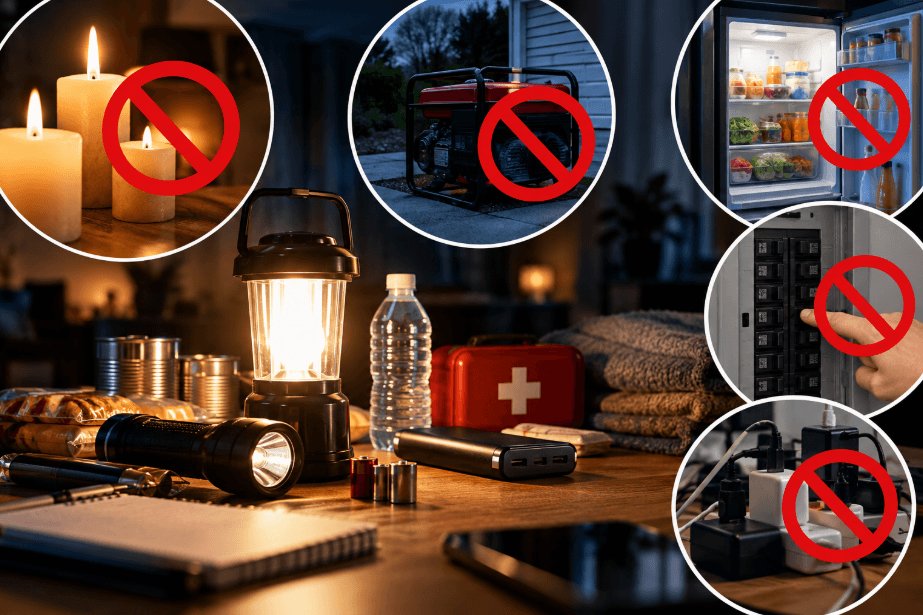
Avoid Candles and Use Battery-Powered Lighting Instead
Lighting candles is often one of the first responses when electricity goes out at night, but candles can introduce an unnecessary fire risk.
They provide less illumination than battery-powered lanterns or flashlights and can easily be knocked over. The risk is particularly significant in households with pets or young children, where an overturned candle could quickly start a fire.
Residents should also avoid relying exclusively on the flashlight built into a smartphone. Keeping a separate flashlight or battery-powered camping lantern allows households to conserve phone battery for emergency calls, alerts and other essential communication.
A camping-style battery lantern can provide substantial illumination and, when properly stored, remain useful for years.
Never Operate a Generator Inside the Home
Portable generators can provide backup electricity during prolonged outages, but they should never be operated indoors.
Generators, camp stoves and barbecue grills burn fuel and produce carbon monoxide. The gas is colorless, odorless and tasteless, making it difficult to detect without a working carbon monoxide alarm. Exposure can cause serious illness and can be fatal.
Fuel-burning equipment should not be operated in garages or enclosed patios either. Opening doors or windows does not guarantee adequate ventilation or prevent dangerous concentrations of carbon monoxide from accumulating.
Generators and similar equipment should remain outdoors, even when weather conditions are unfavorable.
Keep Refrigerator and Freezer Doors Closed
Opening refrigerators and freezers during an outage allows cold air to escape and reduces the amount of time food can remain safely chilled.
A refrigerator can keep food cold for about four hours when its door remains closed. A freezer can keep food cold for as long as 48 hours if it remains unopened.
Households can also keep a frozen bottle of water in the freezer as a simple way to monitor temperature changes. If the bottle shows signs of substantial thawing, it can indicate that temperatures inside the freezer rose significantly during the outage.
Keeping appliance doors closed for as long as possible is one of the simplest ways to preserve food until electricity returns.
Do Not Attempt Electrical Repairs Yourself
When an outage begins, residents may safely check whether a circuit breaker has tripped. Beyond that basic inspection, homeowners should avoid attempting electrical work themselves.
If neighboring homes still have electricity but one property does not, the homeowner should contact the local utility provider for assistance.
If an entire street or neighborhood is without power, residents should remain indoors when possible and stay well away from fallen power lines.
Downed lines should always be treated as live and dangerous, including those that have fallen onto private property. Residents should never attempt to move a power line or remove objects touching it, including outdoor furniture, tree branches or children’s toys.
Do Not Turn Everything Back On at Once
Sensitive electronic equipment should be switched off when an outage begins. That includes televisions, computers, gaming consoles and other devices containing circuit boards.
Once electricity is restored, residents should gradually turn appliances and electronics back on rather than restarting everything simultaneously.
Essential systems, including heating or cooling equipment, can be restored first. Nonessential electronics can then be switched on gradually.
This approach can reduce sudden demand on a household circuit breaker panel while also limiting the surge in electricity use that can occur across a neighborhood immediately after service is restored.
Preparation and Planning Can Make Outages Easier
Because outages are often unexpected, preparing emergency supplies in advance can help households respond without scrambling for essential items.
Recommended supplies include battery-powered lanterns, flashlights, nonperishable ready-to-eat foods, drinking water, blankets, a first-aid kit and a portable power bank for charging a phone.
Keeping those items together in an easily accessible part of the home can help residents respond more safely when electricity fails and avoid potentially dangerous alternatives while waiting for power to return.