


The Chicago Botanic Garden and The Morton Arboretum have announced new international conservation pledges aimed at safeguarding some of the world’s most threatened tree and plant species, reinforcing the growing role of nonprofit institutions in addressing biodiversity loss as governments scale back cross-border cooperation.
The commitments were unveiled to coincide with Reverse the Red Day, observed globally on 7 February, which highlights progress in reversing species decline and preventing extinctions. Reverse the Red is a worldwide coalition focused on improving the conservation status of species listed on the International Union for Conservation of Nature (IUCN) Red List of Threatened Species.
Institutions deepen global conservation strategy
Botanical gardens and arboreta are increasingly positioned as long-term stewards of biodiversity, providing scientific expertise, living collections, and international collaboration at a time of mounting environmental pressure. In this context, the latest pledges by the Chicago-based institutions signal a strategic deepening of their conservation portfolios across Latin America and Southeast Asia.
As part of this expanded commitment, both organisations are also preparing to play a central convening role for the global botanical community. In partnership with Botanic Gardens Conservation International, they will co-host the 9th Global Botanic Gardens Congress in Chicago from 2–6 August 2027. The event will mark the first time in 27 years that the Congress has been held in North America and is expected to draw delegates from the world’s 3,000 botanical gardens.
The conference will focus on the role of botanical institutions in habitat restoration, spanning both natural ecosystems and urban environments, and is intended to accelerate collaboration across science, conservation, and policy.
“This partnership on Reverse the Red Day for plant conservation showcases the best of the conservation world – together, we can recover species. The Chicago Botanic Garden and Morton Arboretum, and all of their collaborators, are leading gardens forward with an example of strategic, recovery-focused action for these six species, in addition to the species pledges committed last year by these two organizations,” said Reverse the Red’s Strategy Director Michael Clifford. “We are looking forward to being in Chicago in 2027 for the 9th Global Botanic Gardens Congress to share success stories of species recovery and accelerate actions like these in the plant and botanic garden community.”
Chicago Botanic Garden targets endangered tree and orchid species
The Chicago Botanic Garden’s pledges focus on two highly threatened species from biodiversity hotspots: Cucharillo (Magnolia dixonii), an endangered canopy tree native to northwestern Ecuador, and Stone’s Paphiopedilum (Paphiopedilum stonei), a critically endangered orchid found on inland cliffs and mountain peaks in Malaysia.
Conservation of Cucharillo is being carried out in partnership with Fundación Jocotoco and Atlanta Botanical Garden. Due to the rugged terrain in which the species grows, seed collection is extremely challenging and often limited to a small number of maternal trees. To address the resulting genetic risks, the Garden is assessing genetic diversity within its collections to inform restoration efforts that can support long-term resilience in wild populations.
Efforts to conserve Stone’s Paphiopedilum are being undertaken with the San Diego Zoo Wildlife Alliance. The Garden holds one of the largest Paphiopedilum collections in the United States and participates in the Botanic Gardens Conservation International Paphiopedilum working group. Given the sporadic flowering cycles of these orchids, the Garden is using plant pedigrees and a pollen bank to reduce inbreeding and enable genetically informed cross-institutional breeding.
“Strong partnerships are essential to preventing plant extinctions,” said Jeremie Fant, director of conservation at the Chicago Botanic Garden. “Well-managed collections in botanic gardens serve as active conservation tools that support research, restoration, and long-term recovery. None of this work happens in isolation—collaboration among gardens, researchers, and local partners is what allows us to produce meaningful conservation outcomes.”
The Morton Arboretum focuses on threatened Mesoamerican oaks
The Morton Arboretum’s pledge centres on four threatened oak species found in the tropical montane cloud forests of Mesoamerica, a region stretching from the US–Mexico border through Panama. These ecosystems, defined by persistent cloud cover at canopy level, are among the most biodiverse and most threatened habitats globally.
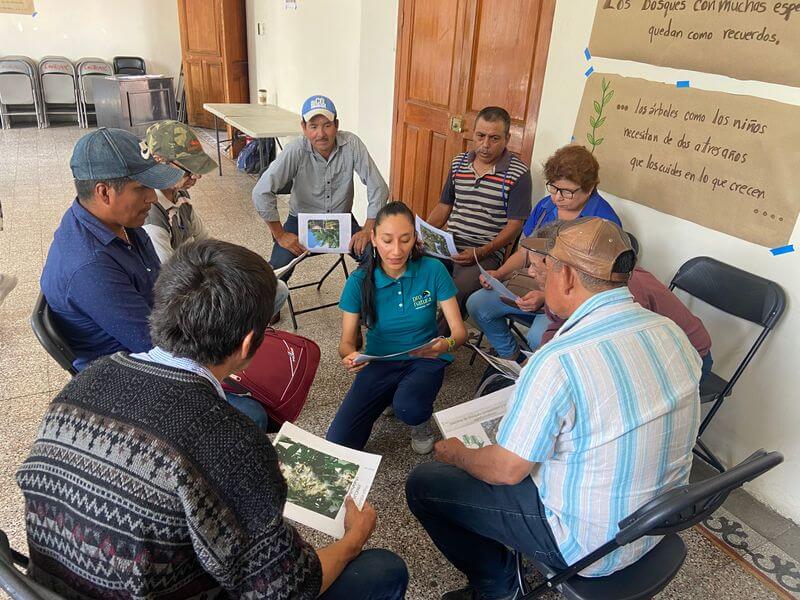
Working through its Center for Species Survival: Trees, the Arboretum is collaborating with partners in Mexico and Costa Rica, including Benemérita Universidad Autónoma de Puebla Botanic Garden, Instituto de Ecología (INECOL), and Asociación Pronatura Agathos, with support from the Fondation Franklinia. The initiative targets Quercus delgadoana, Quercus hirtifolia, Quercus insignis, and Quercus meavei, all impacted by deforestation, timber extraction, habitat fragmentation, and climate change.
The programme combines field research, conservation planning, and large-scale propagation, with thousands of seedlings being planted to reinforce native populations while raising awareness of the ecological and economic value of these trees.
“Reversing species decline is a difficult endeavor, but with science-informed, coordinated and cross-disciplinary actions that provide sustainable livelihood alternatives to local communities, we can secure the future of threatened tree species,” said the Arboretum’s Global Tree Conservation Program Director Silvia Alvarez-Clare, Ph.D. “We look forward to expanding our work on these big issues with the international plant community at the 9th Global Botanic Gardens Congress in Chicago in 2027.”
Together, the pledges underscore how nonprofit scientific institutions are increasingly shaping global conservation outcomes through long-term investment, data-driven strategies, and international collaboration.