


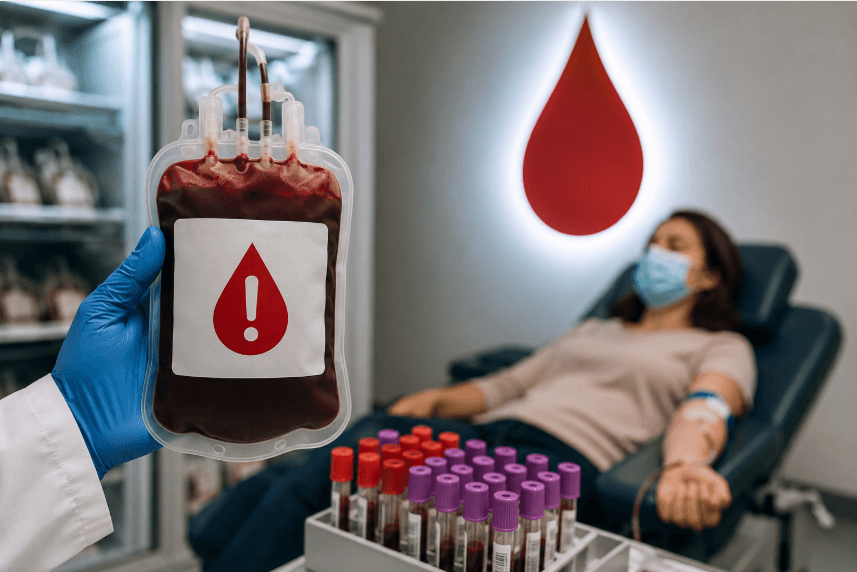
Our Blood Institute (OBI) has issued an emergency appeal for blood donations as inventories continue to decline, raising concerns among healthcare providers and hospitals that depend on a steady supply of blood products to support patient care.
The organisation is urging donors of all blood types to come forward immediately, with a particular emphasis on O-negative and B-negative donations, as supplies of those blood groups have reached critically low levels. The appeal comes amid a broader national shortage that has reduced the availability of blood products across multiple regions.
According to OBI, its systemwide inventory of O-negative blood has fallen to just 65 units, representing less than a one-day supply. The shortage has become increasingly serious as efforts to secure additional O-negative blood from other blood centres have failed due to similarly strained inventories elsewhere.
The development highlights the growing pressure facing blood services as demand from hospitals remains constant while donation levels struggle to keep pace. Blood products are essential for a wide range of medical treatments, including emergency trauma care, cancer therapies, major surgical procedures and childbirth-related complications.
The shortage has also exposed the limited ability of blood centres to rely on support from external networks during periods of low inventory.
“Typically, when inventories become critically low, blood centers can work together to move blood products where they are needed most,” said Dr. John Armitage, president and CEO of Our Blood Institute. “Right now, there simply isn’t a safety net. Communities across the country are facing the same challenges, making local blood donation more important than ever.”
Healthcare organisations frequently share blood products to help manage regional shortages. However, with blood centres nationwide experiencing similar supply constraints, opportunities to redistribute inventory have become increasingly limited.
Medical experts warn that if donations do not increase quickly, hospitals may be forced to delay certain surgeries and non-emergency procedures in order to conserve blood supplies for patients facing life-threatening conditions. Priority would likely be given to trauma cases, cancer patients, emergency surgeries and individuals experiencing severe childbirth complications.
Blood remains a unique healthcare resource because it cannot be manufactured and must be supplied through voluntary donations. Maintaining adequate inventory levels therefore depends entirely on a consistent flow of eligible donors.
While OBI is seeking donations from individuals of all blood types, it has identified O-negative and B-negative donors as particularly important at this time due to the severity of current shortages.
O-negative blood is regarded as the universal blood type because it can be transfused safely to patients of any blood group during emergencies when there is no time to determine a patient’s blood type. As a result, it is widely used in trauma situations and is often the first blood administered to critically injured patients.
The ability to maintain sufficient O-negative supplies is considered essential for emergency departments and trauma centres, where rapid treatment decisions can mean the difference between life and death.
The current shortage serves as a reminder of the vital role blood donors play in supporting healthcare systems and ensuring patients have access to lifesaving treatments when needed. With inventories under pressure and limited backup supplies available from other regions, local donations have become increasingly important to sustaining patient care.
OBI is encouraging eligible donors to schedule appointments and donate as soon as possible to help replenish inventories and reduce the risk of disruptions to medical services. The organisation said immediate community support will be critical in helping hospitals continue to meet patient needs during a period of exceptionally low blood supplies.



:quality(85)/cloudfront-us-east-1.images.arcpublishing.com/infobae/45OXD2PP2VAWTFEPJZPEDWSDC4.jpg "The Ortega regime is closing embassies in cities with high immigrant populations, leaving thousands of Nicaraguans homeless.")