

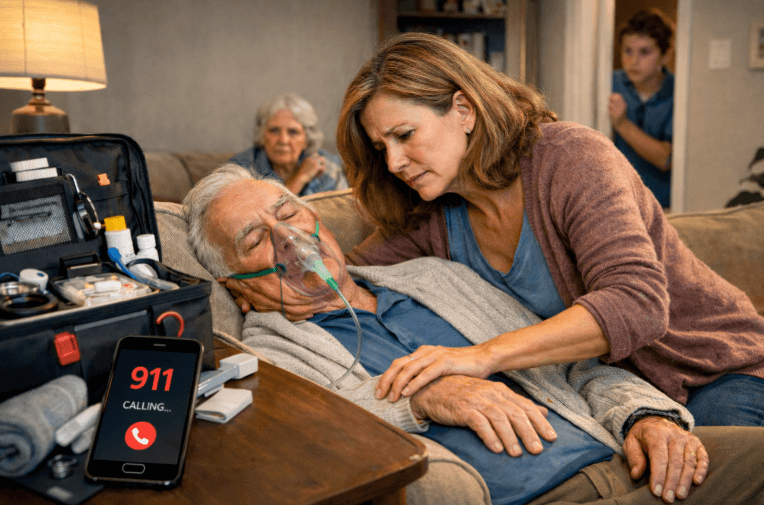
Millions of Americans are taking on caregiving responsibilities for both children and older family members, yet many admit they are not equipped with the skills needed to respond to life-threatening medical emergencies.
New awareness efforts from the American Red Cross highlight a growing gap between the number of people acting as caregivers and the number who feel confident responding to cardiac emergencies such as sudden cardiac arrest.
According to the organisation, only about one-third of adults in the United States say they feel ready to take action if someone experiences cardiac arrest. This lack of confidence comes despite the scale of the risk: more than 300,000 people suffer cardiac arrest outside hospitals each year across the country.
Health experts say the issue is particularly concerning given that the most vulnerable groups—infants, elderly people and those living with chronic conditions—are often cared for at home by family members rather than medical professionals.
For children of all ages, the majority of cardiac emergencies occur in domestic settings. More than 80% of such incidents take place at home, effectively making households the first line of response when a life-threatening situation arises.
As a result, organisations such as the American Red Cross are emphasising the importance of practical emergency training for everyday caregivers. CPR (cardiopulmonary resuscitation) and AED (automated external defibrillator) training, traditionally associated with healthcare settings, are increasingly being promoted as essential skills for families and communities.
“Having the ability to respond to a cardiac emergency makes you a better, more confident caregiver,” said Allison Taylor, Regional CEO of Humanitarian Services, North Carolina Region. “Learning first aid and CPR skills may make a lifesaving difference for your child, family member, or even a stranger.”
The appeal comes during National Heart Month, an annual awareness campaign aimed at improving public understanding of cardiovascular health and emergency response.
Lifesaving training highlighted as key public health measure
The Red Cross is encouraging individuals to demonstrate care for their families and communities by enrolling in first aid, CPR and AED training courses. The organisation argues that equipping the public with these skills can dramatically improve survival outcomes during cardiac emergencies.
Medical studies have long shown that early intervention is critical in cases of cardiac arrest. Immediate CPR and rapid use of an AED can significantly increase survival chances before professional medical services arrive. According to the Red Cross, having the knowledge and confidence to act quickly can triple someone’s chance of surviving cardiac arrest.
The organisation has played a prominent role in public first aid education for more than a century. Over the past 100 years, it has trained millions of people in emergency response techniques, with more than three million participants completing Red Cross courses annually.
In recent years, however, evolving medical science and new treatment approaches have prompted updates to existing training programmes.
To reflect current best practice, the Red Cross has introduced enhancements to its First Aid/CPR/AED curriculum. These updates include revised infant CPR techniques designed to improve response outcomes in babies and young children.
The training programme now also includes instruction on the use of epinephrine nasal spray, a recently approved treatment for severe allergic reactions known as anaphylaxis. The addition aims to prepare both caregivers and bystanders to respond quickly to a broader range of life-threatening medical situations.
Beyond emergency response techniques, the courses also focus on improving public understanding of heart-related conditions. Participants learn to recognise the differences between cardiac arrest and heart attacks, two medical emergencies that are often confused by the general public but require different forms of response.
Updated training guidance also highlights how heart attack symptoms can present differently in women compared with men—an issue that has historically contributed to delayed recognition and treatment.
By improving awareness of these warning signs, health organisations hope more people will seek immediate medical assistance when symptoms appear, potentially saving lives.
The American Red Cross says expanding access to emergency training remains a priority as caregiving responsibilities grow across the United States. With households increasingly serving as the frontline for medical emergencies, the organisation believes basic lifesaving knowledge should be as common as other everyday skills.
Individuals interested in learning these techniques can find local courses and training opportunities through the Red Cross website.