

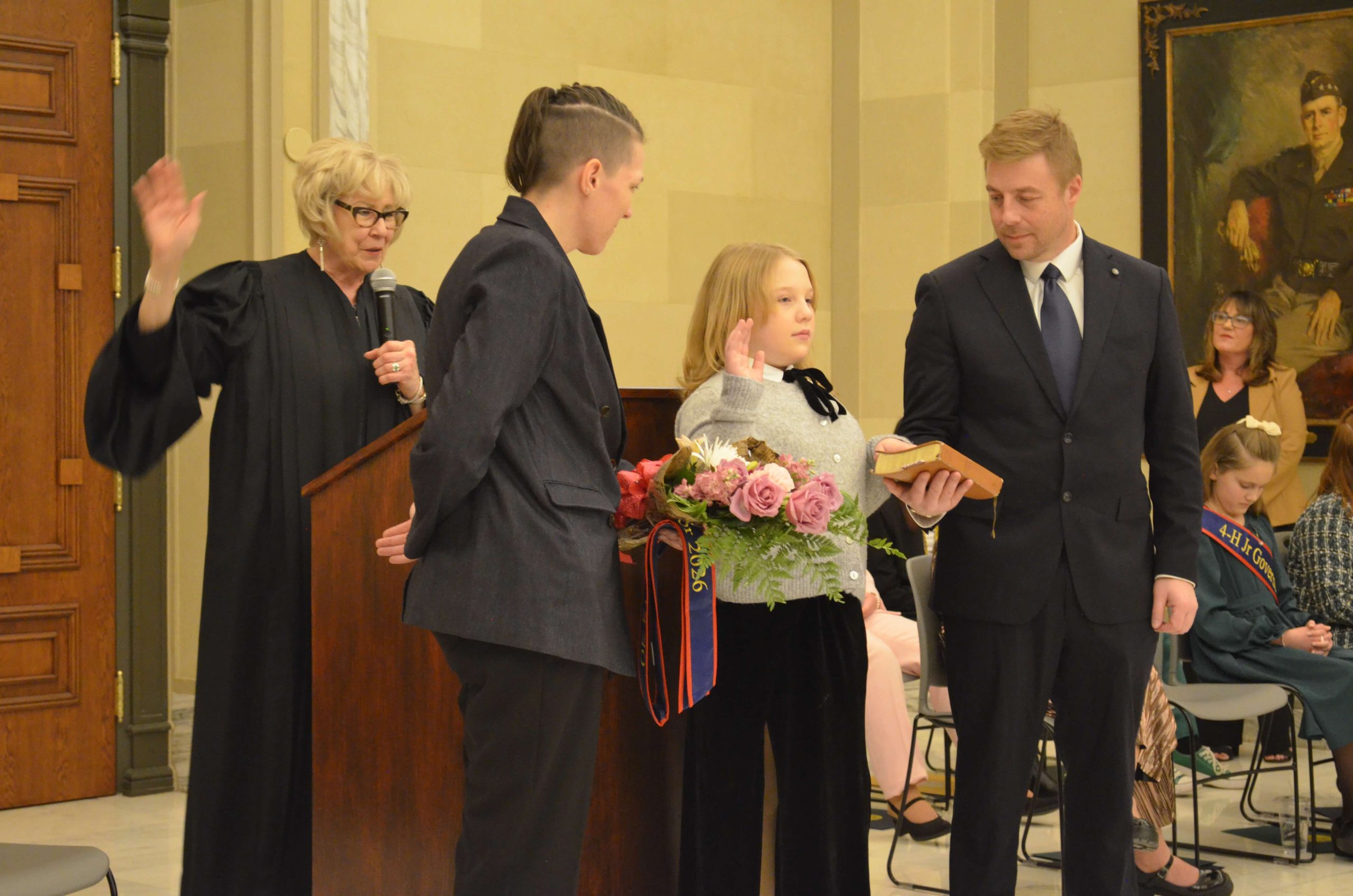
Oklahoma has formally inaugurated its 2026 cohort of student leaders through two flagship youth governance initiatives, underlining the state’s growing emphasis on early civic education and leadership development. The programmes, sponsored by the Oklahoma Institute for Child Advocacy (OICA), were marked by a State Capitol ceremony held on the opening day of the Oklahoma Legislature, where oaths of office were administered by State Supreme Court Justice Noma Gurich.
The ceremony brought together participants from the Oklahoma Kid Governor® programme and the Junior Governor programme, both designed to give young people practical exposure to democratic processes. While educational in nature, the initiatives mirror the structure, discipline and accountability of real-world governance, offering a structured introduction to leadership, advocacy and public service.
The Oklahoma Kid Governor® programme, delivered in partnership with the Connecticut Democracy Center’s national framework, is aimed at fifth-grade students and is built around a statewide election model. This year, 1,187 pupils from across Oklahoma took part, making it one of the programme’s largest intakes to date.
Under the scheme, students first participate in classroom-based elections, selecting candidates based on issue-focused platforms. Winners then submit two-minute campaign videos to a statewide contest, which is reviewed by a panel of former Oklahoma governors—David Walters, Frank Keating, Brad Henry and Mary Fallin—alongside OICA board members. From this process, finalists are selected and put forward to a statewide student vote conducted using ballots designed to resemble official Oklahoma election papers.
The elected Kid Governor for 2026 is Katelyn Talley, a fifth grader from Valliant in southeastern Oklahoma, who ran on a platform of animal abuse prevention. Supporting her administration are Sophia Chavarria Rivera of Bethany, elected as Kid Lieutenant Governor on a platform focused on bullying prevention, and Daphne Tanequodle of Lawton, who will serve as Kid Secretary of State with a platform addressing homelessness.
The programme is structured to extend beyond symbolic roles. The Kid Governor serves a one-year term, working alongside OICA to advance their chosen platform while encouraging peer engagement and advocacy across participating schools. Other finalists form a Kid Cabinet, ensuring broader representation of student-led issues.
Educational resources are central to the programme’s delivery. Participating teachers are provided with free, custom-designed lesson toolkits aligned with Oklahoma’s education standards. These materials cover state government, voting history, electoral processes and the importance of civic participation. OICA underwrites the programme’s costs through donations and fundraising activities supported by the state’s former governors, ensuring schools can participate without financial barriers.
Alongside the Kid Governor initiative, OICA also co-sponsors a Junior Governor programme in partnership with Oklahoma 4-H, targeting students in grades four through six. This strand culminated in a leadership conference held on 1 November 2025 at the State 4-H Office in Stillwater, where 72 students learned about state government before electing their own executive team.
Those sworn in as part of the Junior Governor programme include Junior Governor Riley Braden of Bristow in Creek County, who is homeschooled and ran on a platform promoting the sanctity of life. Whitlee Moser of Perkins Tryon Intermediate School was elected Junior Lieutenant Governor with a focus on education, while Junior Secretary of State Riley Rudder from Rattan Elementary in Pushmataha County campaigned on turtle conservation. Victoria Justice of Depew in Creek County, also homeschooled, was appointed Junior Cabinet Member, advocating for measures to prevent debt collectors from making spam calls.
Joe Dorman, chief executive of OICA, said the programmes are designed to instil civic values that extend well beyond the classroom. “The Kid Governor® program and the Junior Governor inspire students to be involved in the process and hopefully become lifelong agents of change for the better, maybe even running for Governor of Oklahoma someday,” he said. “If young people are given an opportunity to learn these lessons at an early age, they will grow into the leaders that will shape our tomorrow.”
While firmly educational, the initiatives reflect a broader strategic investment in civic literacy and leadership capacity, positioning Oklahoma as an active proponent of early engagement in democratic processes.