


NEW YORK — Teatro Grattacielo will present the world staged premiere of Joseph Summer’s The Tempest on July 16 at 7 p.m. and July 18 at 3 p.m. at the Ellen Stewart Theatre (Shares at La MaMa) in Manhattan, bringing a new operatic interpretation of William Shakespeare’s final play to New York audiences.
The production marks a significant milestone for Summer’s work, which adapts Shakespeare’s tale of exile, forgiveness, and renewal into a contemporary operatic experience. Featuring a libretto by the composer’s daughter, Eve Summer, the opera combines dramatic storytelling with a richly textured musical score that seeks to capture the emotional depth and enduring themes of the original play.
Interest in the work has remained strong since the release of a studio recording that earned critical acclaim. In its review of the 2015 recording, Opera News described the opera by stating, “Summer’s musical language is comfortably tonal but sophisticated, ceaselessly inventive and often gripping; he’s a vivid musical storyteller… an embarrassment of riches—the marvelous group numbers just keep coming, culminating in a blazingly celebratory climax.”
The upcoming production will be conducted by Enrico Fagone and directed by Teatro Grattacielo Artistic Director Stefanos Koroneos. The cast includes Daniel Klein, Kelly Guerra, Sara Kennedy, Benjamin Sieverding, Omar Najmi, Maggie Finnegan, Chantelle Grant, Sarah Johnson, Jordan Rutter-Covatto, Eliam Ramos, David Gordon, Justin Ryan, DeAndre Simmons, Heather Green, Valia Karagiorga, Shira Ziv, and Jenna Weitman. The performances will also feature the Teatro Grattacielo Orchestra.
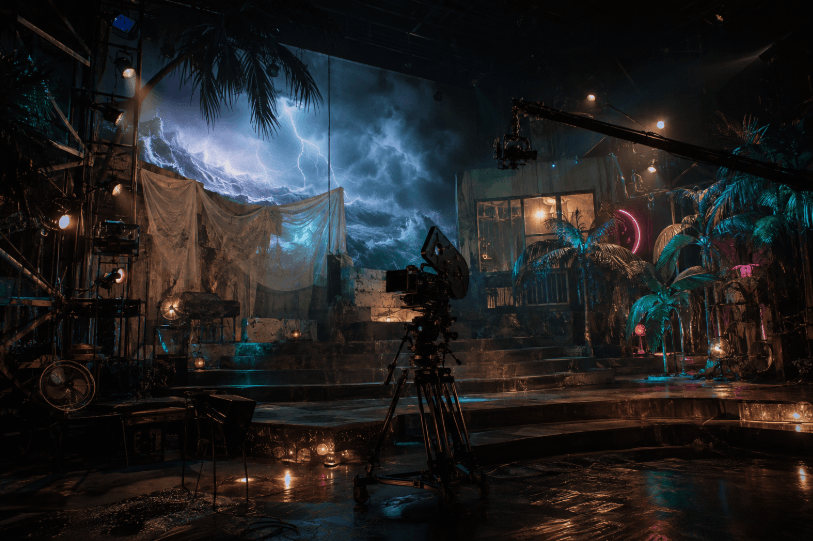
Koroneos has developed a distinctive production concept that reimagines Prospero as an exiled filmmaker living within the remains of a deteriorating 1980s film studio. In this interpretation, the island becomes a landscape of memories, artistic obsession, love, and trauma rather than a traditional physical setting.
The production transforms former audience risers into the island itself, creating a shifting environment where characters pursue power, freedom, and desire. Audience members are positioned above the action, allowing them to serve simultaneously as witnesses, directors, and dreamers within the unfolding narrative.
According to the creative team, the staging explores themes of authorship, identity, and control while examining the relationship between creators and the worlds they build. Through a combination of symbolic imagery and immersive design elements, the production seeks to highlight the psychological dimensions of Shakespeare’s story.
The visual concept incorporates synthetic jungle elements, artificial lighting, and film-inspired aesthetics to reinforce the production’s central themes. The result is a reinterpretation that blends opera, theater, and cinematic influences while maintaining the dramatic core of Shakespeare’s original work.
Koroneos detailed the artistic vision behind the production in a statement.
“The Tempest has always been a play about a man who cannot stop directing. Prospero conjures, manipulates, and stages every encounter on his island — and it is that compulsion, the obsessive need for absolute control, that ultimately destroys him from within. In this production, I place Prospero inside a crumbling 1980s film studio, where the island is not a place but a memory: a warped rehearsal hall built from plastic, vinyl, and artificial light. Here, the collision between manufactured control and raw, unscripted desire drives everything; desire erodes identity, gender is fluid and performed, and the line between creator and creation collapses entirely. The former audience risers become unstable terrain — a ruinous mountain where characters claw, fall, and reach for power, love, and freedom under the cold eye of a camera boom. As the island slowly fills with synthetic jungle — inflatable tropicals, neon flora, plastic vines — the illusion does not become more beautiful. It becomes more desperate. This is a Tempest about the destructive cost of control, what artists do to the people they love, and what it takes to finally put down the pen, break the staff, and let the story end without you,” said Stefanos Koroneos, Director.
The world premiere arrives as opera companies continue to explore innovative approaches to classic works in an effort to engage contemporary audiences while preserving the artistic foundations of the source material. By pairing Shakespeare’s timeless narrative with Summer’s modern musical language and an unconventional staging concept, Teatro Grattacielo aims to offer a fresh perspective on one of literature’s most celebrated plays.
For New York’s performing arts community, the production represents both a showcase for contemporary operatic storytelling and a significant debut for a work that has already drawn praise from critics. As audiences gather for the world staged premiere, The Tempest is poised to bring a new interpretation of Shakespeare’s masterpiece to the city’s cultural landscape.