


Scientists have discovered that corals possess reproductive hormone cycles that mirror those found in humans, a finding that could provide a valuable new tool for monitoring reef health and identifying reproductive stress before it leads to spawning failures.
The findings come from a three-year study published in iScience, where researchers tracked hormone activity in Red Sea corals to better understand the biological mechanisms that govern reproduction. The research was conducted by Ph.D. student Chen Azulay and Prof. Maoz Fine of the Hebrew University of Jerusalem and the Interuniversity Institute for Marine Sciences in Eilat, together with Dr. Karine Kleinhaus of Stony Brook University.
The study focused on understanding the internal signals that enable corals to synchronise their annual spawning events, one of the most important processes for reef survival. During these events, coral colonies release eggs and sperm into the sea simultaneously, maximising the chances of successful fertilisation.
As coral reefs face increasing pressure from climate change, pollution and overfishing, scientists are seeking a deeper understanding of the factors that support successful reproduction and long-term reef resilience.
“Corals reproduce with incredible timing, and while we know about the environmental cues involved, we wanted to understand the internal signals within the coral that keep that timing on track,” said Azulay.
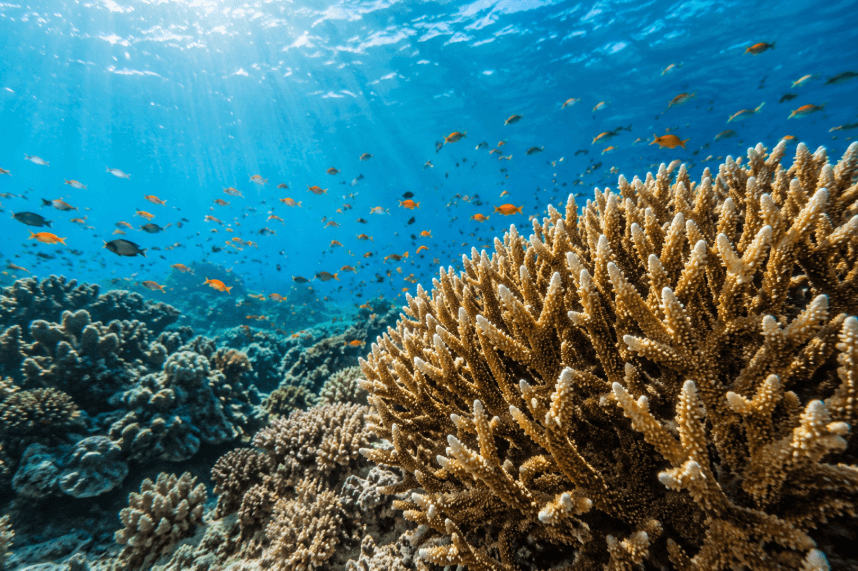
To investigate these biological processes, researchers examined Acropora eurystoma, a reef-building coral species found in the Gulf of Aqaba. The region is frequently regarded by scientists as a potential refuge from some of the impacts of ocean warming.
Between 2021 and 2023, the research team collected samples throughout the coral’s reproductive cycle, creating the first multi-year record of steroid hormone activity during coral gamete development.
The results challenged several existing assumptions about coral reproduction.
Researchers had previously expected estrogen-like hormones to peak shortly before spawning. Instead, they found that estrogen levels were highest much earlier in the reproductive cycle, during the initial stages of egg development. Hormone concentrations then gradually declined as the eggs matured.
Progesterone showed a different pattern. While levels remained relatively stable throughout most of the reproductive season, they increased significantly several months after spawning. Scientists believe this rise may help trigger the beginning of the next reproductive cycle.
The study also identified an unexpected environmental influence on hormone activity. Although rising ocean temperatures are often considered a major factor affecting coral ecosystems, the researchers found that sunlight-related factors had a stronger relationship with hormone levels.
Across all three years of observations, day length and ultraviolet radiation proved to be more reliable predictors of estrogen levels than seawater temperature.
“For decades, researchers have focused primarily on the timing of spawning itself,” said Dr. Kleinhaus. “But there’s a whole process beforehand, driven by these familiar reproductive hormones which are remarkable to find in corals, animals so evolutionarily distant from us.”
Another significant finding emerged from observations within individual coral colonies. Although hormone levels were relatively uniform throughout each colony, developing eggs were far more common in central sections than in the actively growing outer edges.
According to the researchers, this suggests that local conditions within a colony may influence how reproductive signals are received. Factors such as age, energy reserves and developmental stage could determine which polyps are more likely to participate in reproduction.
The findings could have implications beyond scientific understanding of coral biology.
As environmental pressures on reefs continue to intensify worldwide, conservationists are looking for ways to identify reproductive problems before they become visible through reduced spawning success or declining coral populations. The hormone patterns identified in the study provide a benchmark for what a healthy reproductive cycle looks like and may offer an early indicator of reproductive stress.
“Successful reproduction is what allows reefs to recover after disturbances,” said Prof. Fine. ” The more we understand the biology behind it, the better positioned we are to monitor and protect these reefs as conditions change.”
Researchers plan to investigate whether similar hormone cycles exist in other coral species and reef regions around the world. If the findings are replicated elsewhere, they could reshape scientific understanding of coral reproduction and provide conservationists with a powerful new method for protecting reef ecosystems in a changing environment.