


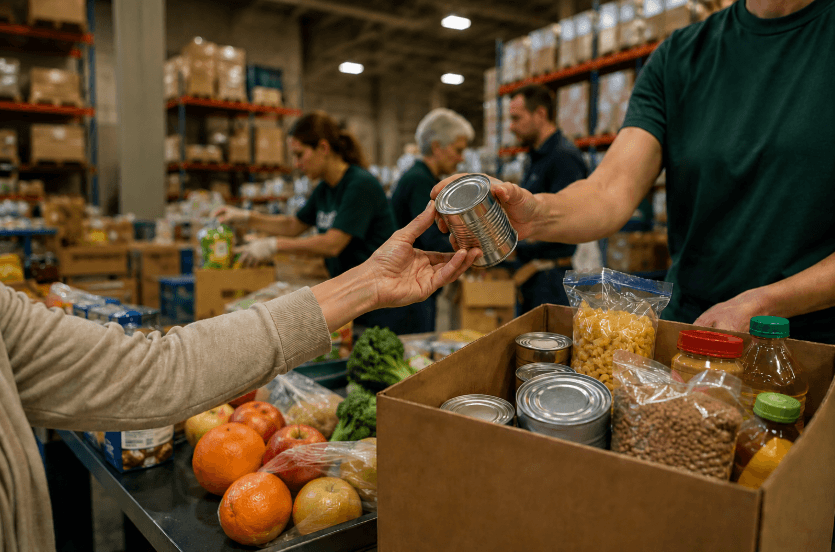
Food bank leaders across North Carolina are preparing to lobby state lawmakers for renewed financial support as rising food insecurity places increasing strain on emergency food assistance networks throughout the state.
Representatives from food banks, partner organisations and community agencies are expected to gather at the North Carolina General Assembly on 12 May to call for the restoration of funding aimed at supporting families facing hunger and strengthening the state’s emergency food system.
The appeal comes as food banks across the Carolinas report a sharp increase in demand over the past year. Several organisations say they have experienced a rise of 30% or more in the number of people seeking food assistance compared with the same period last year.
In some North Carolina communities, particularly areas still recovering from Hurricane Helene, food banks have recorded the highest monthly demand levels in their history. Community groups warn that economic pressures, combined with uncertainty surrounding public assistance programmes, are pushing more households towards emergency support services.
“The price of food is rising, and so is hunger. The time to act is now,” said Eric Aft, CEO of Second Harvest Food Bank of Northwest NC and Chair of the Feeding the Carolinas Board of Directors. “We are seeing more working families than ever before turn to food banks for help, and we need the state’s partnership to ensure no one goes hungry—especially during times of crisis.”
Recent figures from the U.S. Department of Agriculture show that one in seven North Carolinians lives in a food-insecure household. Among children, the figure rises to one in five, highlighting the growing pressure on low-income families across the state.
Feeding the Carolinas, a network representing food banks throughout the region, has warned that hunger levels could rise further over the coming year as inflation and policy changes continue to affect household finances.
The organisation also pointed to broader economic disruption experienced in recent months. Last autumn’s federal government shutdown created uncertainty for around 200,000 federal employees, active-duty military personnel and contractors based in North Carolina. Food banks say many households affected by the disruption were already financially vulnerable and at risk of needing emergency assistance after a single missed pay cheque.
At the same time, concern is mounting over anticipated changes to the Supplemental Nutrition Assistance Program (SNAP), linked to the One Big Beautiful Bill Act (OBBBA). The programme currently supports approximately 1.4 million North Carolinians each month, with children represented in 43% of recipient households.
Food bank leaders argue that charitable organisations cannot compensate for large-scale reductions in federal nutrition support. According to Feeding the Carolinas, SNAP delivers nine meals for every one meal distributed through food banks, underlining the importance of maintaining access to government-backed assistance.
As eligibility changes and reduced access to benefits begin to affect households, community organisations expect additional pressure on already stretched local food pantries and relief services.
Despite the increase in demand, food bank representatives say state funding that has historically helped support food distribution efforts has yet to be renewed. This includes programmes that allow food banks to purchase fresh produce and supplies directly from local farmers, supporting both vulnerable households and regional agricultural businesses.
“Food banks will continue to show up for our communities, no matter the circumstances,” said Ann Edmondson, Executive Director of Feeding the Carolinas. “But we cannot do it alone. Restoring this funding is essential to ensuring that in times of crisis or disaster, our state is prepared and our neighbors are cared for.”
The funding request forms part of a broader push by food banks to strengthen North Carolina’s emergency response infrastructure and improve resilience ahead of future economic or natural disasters.
Advocacy groups say the issue is no longer confined to traditionally vulnerable populations, with increasing numbers of working families now relying on food assistance to manage rising living costs. Food bank leaders are expected to urge lawmakers to prioritise long-term investment in hunger relief programmes as part of the state’s wider budget planning discussions.
The upcoming visit to the General Assembly is intended to reinforce the role food banks play in supporting communities during periods of economic uncertainty and to secure renewed state backing for programmes viewed as critical to North Carolina’s food security network.