


CHARLOTTE, N.C. — Families and businesses across North and South Carolina are being urged to strengthen emergency preparedness plans ahead of what forecasters expect could be an active period for hurricanes and wildfires across the Southeast.
National Hurricane Preparedness Week, running from 3–9 May 2026, coincides with Wildfire Awareness Month, prompting renewed warnings from emergency agencies and humanitarian organisations over the growing risks facing both coastal and inland communities.
The American Red Cross said current conditions indicate an above-normal wildfire threat in parts of the Carolinas, particularly during dry and windy periods affecting inland and western regions. At the same time, communities remain vulnerable to hurricanes, tropical storms, flooding and extended power outages during the Atlantic hurricane season.
Although the National Hurricane Center has yet to release its official seasonal outlook, one early forecast projects between four and seven hurricanes this year, including two to four major storms. Forecasts also indicate the possibility of three to five direct impacts on the United States.
The Carolinas have experienced repeated weather-related disruption in recent years, ranging from coastal storm surge and destructive winds to inland flash flooding and infrastructure damage that has left thousands without electricity for prolonged periods.
Emergency Planning Encouraged Before Peak Storm Activity
The Red Cross said households should begin preparations by identifying the specific risks most likely to affect their local area. Coastal communities face the greatest exposure to storm surge and hurricane-force winds, while inland areas are more likely to experience flooding, fallen trees and power outages.
Residents are also being encouraged to sign up for emergency alerts issued by local authorities and to familiarise themselves with warning systems before severe weather develops.
The organisation stressed that every household should maintain both an evacuation strategy and a shelter-at-home plan. Officials said evacuation plans should clearly outline destinations, travel routes and accommodation options in the event mandatory evacuations are ordered.
Families were also advised to prepare for scenarios in which access to electricity, running water, gas supplies, telecommunications or internet services may be disrupted for extended periods.
The Red Cross guidance stated: “Families may need to leave quickly with little notice due to rising water, wildfire smoke or storm damage. Plan how you’ll reconnect if you’re separated.”
Preparedness recommendations include maintaining written contact information, backup charging options for mobile devices and battery-powered or hand-crank radios capable of receiving weather and emergency broadcasts.
Supply Kits and Property Protection Measures Highlighted
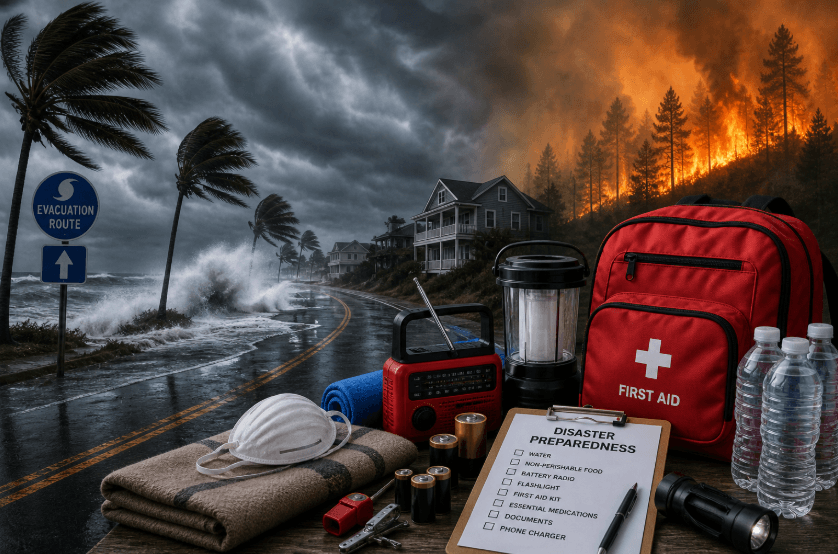
The humanitarian organisation is advising residents to prepare two separate emergency kits: a portable “go-kit” containing at least three days of essential supplies, and a larger stay-at-home supply kit capable of supporting households for up to two weeks.
Recommended items include medications, medical equipment, flashlights, batteries, food, drinking water and chargers for critical medical or communication devices.
The Red Cross also advised families to safeguard financial, medical and personal records through physical or digital backups that can be quickly accessed during evacuations.
Pet owners and households with young children were urged to include specialist supplies such as carriers, pet food, diapers, wipes and infant formula within emergency preparations.
The organisation further encouraged communities to check on neighbours, elderly residents and vulnerable individuals during severe weather events, noting that rapid assistance from nearby households can prove critical when emergency services are overwhelmed.
Technology and Training Seen as Key Preparedness Tools
Alongside physical preparations, the Red Cross is promoting the use of digital emergency tools, including its mobile emergency and first aid applications, which provide weather alerts, shelter information and emergency guidance.
The organisation also highlighted the value of first aid training, particularly during disasters where access to emergency responders may be delayed.
“Taking a Red Cross First Aid course can help you respond confidently when emergency services are delayed,” the organisation said, referencing experiences during previous flooding and storm emergencies in North Carolina.
Residents living in hurricane-prone areas were advised to secure outdoor furniture and loose objects, trim trees near homes, clean drainage systems and consider installing storm shutters or flood mitigation equipment.
For wildfire-prone regions, the Red Cross stressed the importance of rapid evacuation readiness. Households were encouraged to identify multiple escape routes, maintain fuel supplies in vehicles and ensure emergency kits remain easily accessible at all times.
Volunteer recruitment efforts are also continuing across North Carolina as the Red Cross seeks additional support for disaster response operations, blood drives and emergency shelter assistance ahead of the peak summer weather season.