


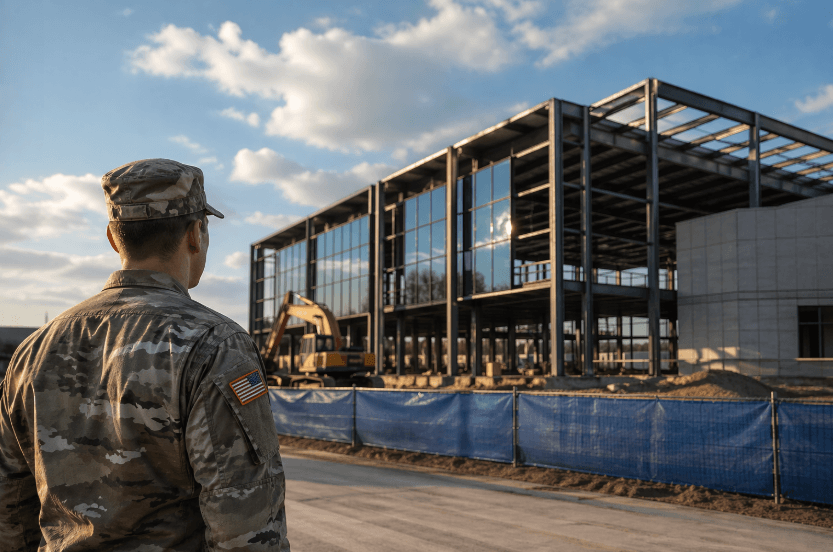
The Oklahoma Air National Guard has broken ground on a new Airmen’s Center in Tulsa, marking a significant investment in personnel readiness, health development and operational support for the 138th Fighter Wing.
The project, delivered in partnership with the City of Tulsa and the State of Oklahoma, reflects a broader push to modernise military infrastructure while reinforcing support systems for Citizen-Airmen balancing dual military and civilian roles. Backed by a combined $8m commitment from state and municipal authorities, the facility is expected to be completed by the end of 2027.
Designed as a central hub, the Airmen’s Center will consolidate a range of services under one roof, including physical training, mental health resources, spiritual support and family readiness programmes. Officials say the approach is intended to remove barriers to access and improve overall workforce resilience.
“The Airmen’s Center is more than just a building; it is a testament to our dedication to the people who serve our state and nation,” said Maj. Gen. Thomas H. Mancino, adjutant general for Oklahoma. “The facility will provide a dedicated space for these vital resources and strengthen the Oklahoma Air National Guard.”
Infrastructure investment aligned with evolving mission demands
The development comes as the 138th Fighter Wing adapts to increasingly complex operational requirements, spanning both federal missions and domestic emergency response. The new facility is positioned as a strategic asset to support that transition, providing flexible workspaces for mission planning alongside areas dedicated to health and wellbeing.
Military leaders emphasise that the centre’s design reflects a “whole-person” model of care, aligning with wider National Guard priorities around resilience and long-term personnel sustainability. By integrating services such as counselling, fitness and family support into a single location, the initiative aims to enhance both individual performance and unit cohesion.
“This Airman’s Center is about readiness, restoration, and respect. Every day, the men and women of the 138th show up prepared to serve Oklahoma and defend our nation,” District 8 Tulsa City Councilor Phil Lakin said. “This facility will help care for them in return, strengthening their mental, physical, social, and spiritual well-being, and ensuring that today’s airmen, and those who follow them, have the support they need to be at their very best. The State and City have already committed a combined $8 million to help make this vision a reality, and there will be opportunities for all of us to give, so this center can meet even more of their needs.”
From a regional economic perspective, the project also underscores the role of defence-related investment in supporting local development. Collaboration between government, military and philanthropic stakeholders has been central to advancing the initiative.
“Tulsa’s new Airmen Wellness Center marks a huge step forward in our ability to invest in the people serving our city and our country,” Tulsa Mayor Monroe Nichols said. “This project came together because local, state, military, and philanthropic partners all stepped up and aligned around that responsibility. I’m proud to stand with the 138th Fighter Wing in the spirit of support and collaboration that moves Tulsa forward and reflects what we can accomplish when we do things together.”
Supporting workforce resilience and future operations
The facility is expected to play a key role in supporting both current operations and future mission requirements, including next-generation fighter capabilities assigned to the 138th Fighter Wing. Leadership highlights that investment in personnel infrastructure is critical to maintaining operational effectiveness in an evolving security environment.
“We are proud of the work our Airmen do every day, whether they are responding to natural disasters here at home or supporting global operations abroad,” said Col. Bradley Ruttman, 138th Fighter Wing Commander. “This facility ensures our Airmen have the modern tools and supportive environment required for future operations as well as the next generation fighter mission for the 138th Fighter Wing.”
As construction progresses, the Airmen’s Center is set to become a cornerstone of Oklahoma’s National Guard strategy, combining infrastructure modernisation with a sustained focus on workforce wellbeing, retention and readiness.




/cloudfront-us-east-1.images.arcpublishing.com/eluniverso/ESZCYCVTMHULRF4XLKFETXEN2U.jpg "The phrase about the origins of Argentina, Brazilians and Mexicans is critical of President Alberto Fernandez. International | News")