


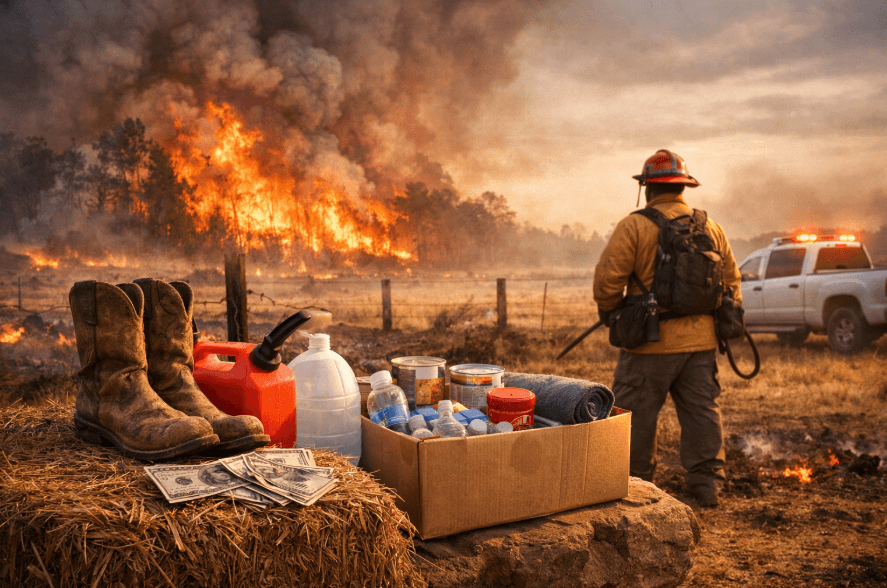
The Oklahoma Farm Bureau Foundation for Agriculture has launched a dedicated wildfire relief fund to support farmers and ranchers recovering from destructive fires that swept across parts of the state in early 2026, in a move highlighting the economic vulnerability of rural communities to climate-driven disasters.
The initiative, announced in Oklahoma, will see donations matched dollar-for-dollar up to a combined total of $30,000, with contributions from the foundation itself, the Oklahoma Farm Bureau and Oklahoma Farm Bureau Insurance. Each organisation has committed to matching up to $10,000, creating an immediate incentive for donors and amplifying the potential financial support available to affected agricultural businesses.
The fund is designed to provide long-term recovery assistance rather than short-term emergency relief, reflecting the prolonged financial and operational impact wildfires can have on farming enterprises.
Agriculture remains a cornerstone of Oklahoma’s rural economy, with family-run farms and ranches forming the backbone of local employment, supply chains and food production. Wildfires not only destroy crops and grazing land but also damage essential infrastructure, creating financial strain that can persist for months or even years.
Greg Golden, Vice President of Sales and Marketing at Oklahoma Farm Bureau Insurance, said the recovery process requires sustained support beyond the initial disaster response.
“When wildfires impact our rural communities, the effects are immediate but the recovery takes months and sometimes years,” said Greg Golden, Vice President of Sales and Marketing at Oklahoma Farm Bureau Insurance. “Our farmers and ranchers are resilient, but they should not have to rebuild alone. Through the OKFB Foundation for Agriculture, we are committed to standing alongside Oklahoma’s agriculture community for the long haul. Every donation, especially with this matching opportunity, helps ensure families have the resources they need to recover and rebuild.”
Economic impact extends beyond immediate losses
The financial implications of wildfire damage extend well beyond visible destruction. Rebuilding agricultural operations often involves replacing miles of fencing, repairing barns and outbuildings, restoring pasture productivity and addressing soil damage.
Such costs can significantly affect farm cash flow, particularly for smaller and family-owned operations that operate on tight margins and depend heavily on seasonal income.
The foundation said its programme is structured to help address these deeper recovery needs, supporting infrastructure restoration and helping agricultural producers resume full operations.
Wildfires have become an increasing concern for rural economies in parts of the United States, disrupting production cycles, reducing livestock capacity and creating uncertainty for agricultural businesses and their insurers.
Insurance plays a critical role in mitigating losses, but charitable and community-based funding initiatives often provide essential supplementary support, particularly where damage exceeds policy limits or involves uninsured assets.
Matching programme aims to encourage donor participation
The matching structure is intended to accelerate fundraising efforts and encourage contributions from both individuals and organisations.
By effectively doubling each eligible donation up to the matching limit, the programme increases the immediate financial impact while signalling strong institutional backing from within the state’s agricultural and insurance sectors.
The foundation said donations will directly support recovery efforts for those most affected by the fires, with a focus on helping agricultural families rebuild and restore productivity.
Individuals and organisations are being encouraged to contribute through multiple channels, including online donations, PayPal and traditional mail, with funds specifically allocated to the “2026 Oklahoma Wildfire Relief” initiative.
Long-term resilience seen as critical to sector stability
The launch of the relief fund reflects broader concerns within the agricultural sector about resilience and sustainability in the face of increasingly frequent extreme weather events.
For rural economies, recovery from natural disasters is not only a humanitarian issue but also an economic one, affecting employment, supply chains and regional economic stability.
Efforts such as the wildfire relief fund aim to reduce long-term disruption and help ensure the continuity of agricultural production, which remains vital both locally and nationally.
The foundation said its approach is focused on ensuring affected families have access to the resources required for a full recovery, underlining the importance of community support and coordinated financial assistance in rebuilding rural economic capacity.