

The United States House of Representatives has passed new legislation aimed at increasing economic and diplomatic pressure on China in the event of heightened aggression toward Taiwan, a move with potentially significant implications for global markets and international financial institutions.
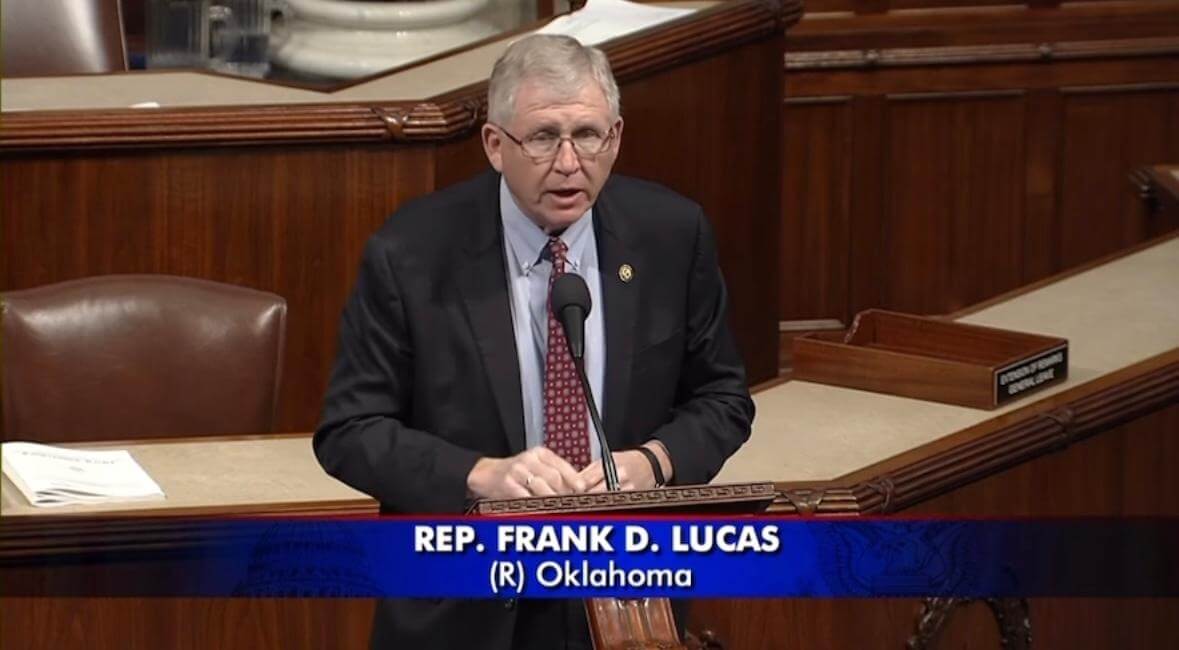
The legislation, formally titled the Pressure Regulatory Organizations To End Chinese Threats to Taiwan Act, or the PROTECT Taiwan Act, was introduced by Oklahoma Republican Frank D. Lucas and cleared the House this week. The bill seeks to harden the United States’ economic response should Beijing be deemed to pose an immediate threat to Taiwan’s security.
Under the existing Taiwan Relations Act, the US President is already required to notify Congress if China is judged to present an imminent danger to Taiwan. The PROTECT Taiwan Act builds on that framework by setting out a defined policy response once such a determination is made. Specifically, the bill establishes that it would be US policy to exclude Chinese representatives from a range of influential international economic and financial bodies, including the G20, the Financial Stability Board, and the Basel Committee on Banking Supervision.
Supporters of the legislation argue that access to these forums provides Beijing with legitimacy and influence that should not be maintained if China were to engage in military hostilities against Taiwan. Speaking on the House floor, Congressman Lucas framed the bill as part of a broader deterrence strategy that goes beyond traditional sanctions.
“The United States response to an invasion of Taiwan should be robust and include numerous sanctions and economic penalties. Exclusion from international bodies must be part of that response,” Congressman Frank D. Lucas said on the House floor. “If China seeks to disrupt the global order, then China cannot continue to be party to international organizations that seek to preserve that order. China’s position at multilateral economic institutions will be at risk should they engage in hostilities towards Taiwan.”
From a business and financial perspective, the legislation underscores Washington’s growing willingness to use institutional access as a tool of geopolitical leverage. Bodies such as the G20 and the Financial Stability Board play a central role in coordinating global economic policy, banking standards, and financial stability measures. Any move to exclude the world’s second-largest economy from these forums would represent a significant escalation in economic statecraft.
The bill also received backing from senior figures on the House Financial Services Committee, reflecting bipartisan concern about the economic consequences of a conflict over Taiwan. Committee Chairman French Hill argued that the legislation sends an unambiguous message to Beijing about the costs of military action.
“The Protect Taiwan Act ensures that there will be significant financial and diplomatic consequences were China to invade Taiwan. Full stop,” Financial Services Committee Chairman French Hill said on the House floor. “The U.S. must send a clear message that China’s aggression toward Taiwan will not and is not tolerated, and the Protect Taiwan Act does just that.”
Beyond diplomacy and sanctions, the bill draws attention to Taiwan’s central role in global supply chains, particularly in advanced semiconductors. Around 90 per cent of the world’s most advanced chips are produced at facilities operated by Taiwan Semiconductor Manufacturing Company, making the island critical to industries ranging from consumer electronics to automotive manufacturing and artificial intelligence. Any disruption caused by conflict would likely have far-reaching consequences for global business and inflation.
The PROTECT Taiwan Act previously passed unanimously out of the House Financial Services Committee last year, signalling early cross-party support. It is co-sponsored by Democratic Representative Vicente Gonzalez of Texas, further underlining the bipartisan nature of concern over Taiwan and China’s regional posture.
While the bill has now cleared the House, its future will depend on consideration in the Senate and, ultimately, the position of the White House. Even so, its passage highlights a broader shift in Washington toward embedding economic and financial measures more deeply into national security planning.
For international investors and multinational firms, the legislation serves as another indicator that geopolitical risk around Taiwan is increasingly being priced not only in military terms, but also through access to the architecture of global finance. As tensions continue to simmer in the Asia-Pacific region, the intersection of politics, trade, and financial governance is likely to remain firmly in focus for markets on both sides of the Atlantic.