


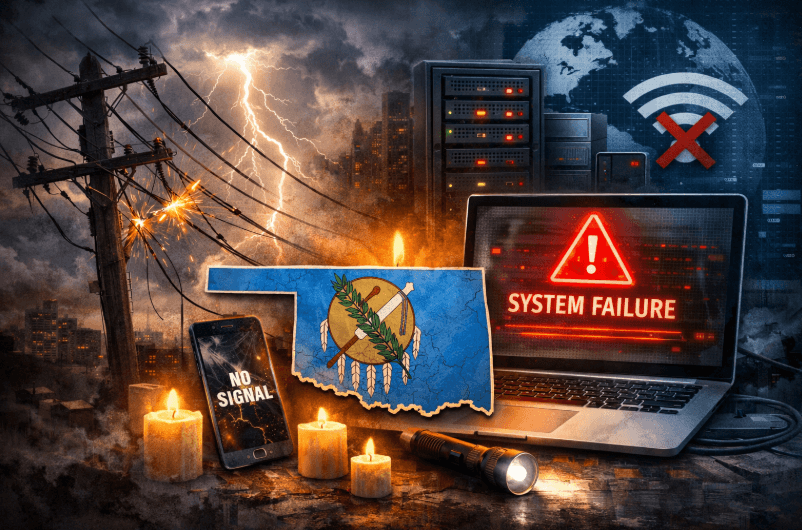
Businesses and households are being urged to strengthen their preparedness for power and technology disruptions as extreme weather continues to expose vulnerabilities in modern infrastructure. Oklahoma Insurance Commissioner Glen Mulready has highlighted the financial, operational and social consequences of large-scale outages, warning that increasing dependence on digital systems has amplified the impact of power failures on everyday life and commerce.
Mulready’s warning draws on lessons from one of Oklahoma’s most severe weather events, an ice storm that caused widespread damage across the state and left hundreds of thousands of residents without electricity. The prolonged nature of the outages disrupted homes, supply chains, payment systems and access to essential services, illustrating how infrastructure failures can quickly escalate into broader economic challenges.
“When the lights go out, so do the tools we rely on every day,” Mulready said. “Without electricity or internet access, simple tasks can become challenging, and in today’s connected world, the impact is even more significant than it was a few decades ago.” He added: “That’s why I urge Oklahomans to make technology and power disruptions a core part of their disaster preparedness plans.”
Learning from Past Infrastructure Failures
The ice storm remains a reference point for state officials and insurers assessing risk exposure. At its peak, more than 641,000 residents were without power, with thousands facing outages lasting longer than a week. The event caused at least $200 million in damage statewide, highlighting the long-term economic costs associated with infrastructure breakdowns.
For businesses, such disruptions can result in lost revenue, operational downtime and challenges accessing digital systems. For households, outages can limit access to communications, healthcare information and financial services. Mulready said preparedness must therefore extend beyond physical safety to include technology and financial resilience.
Securing Documents and Payment Access
One of the most immediate risks during prolonged outages is the loss of access to critical records and payment methods. Mulready advised residents to maintain hard copies of essential documents, including identification papers, insurance policies and medical prescriptions. These should be stored in fire-resistant, waterproof containers to ensure they remain accessible during emergencies.
He also emphasised the importance of keeping cash available. Power and network failures can render electronic payment systems unusable, leaving consumers and small businesses unable to complete basic transactions. Maintaining cash reserves can help mitigate short-term disruption until systems are restored.
Planning for Internet and Connectivity Disruptions
As banking, insurance claims and navigation increasingly rely on internet access, connectivity failures can significantly disrupt daily activity. Mulready encouraged households to consider backup internet options, such as mobile hotspots or satellite-based services, to maintain limited online access during outages.
He also recommended traditional alternatives, including printed maps and written lists of emergency phone numbers, as digital tools may not always be available. Such measures, he said, remain relevant even in an era dominated by mobile devices and cloud-based services.
Ensuring Access to Alternative Power Sources
Reliable access to power remains central to resilience planning. Mulready said generators can play a critical role during extended outages, allowing households and small enterprises to maintain basic functions. Portable power banks offer a lower-cost solution for keeping mobile devices operational, while adequate supplies of batteries remain essential for radios, flashlights and other emergency equipment.
These measures, he noted, can help reduce safety risks and improve communication during prolonged disruptions.
Reviewing Insurance Coverage and Risk Exposure
Mulready stressed that preparedness should also include a thorough review of insurance coverage. Policies should reflect the specific risks faced in Oklahoma, particularly those associated with severe weather events. He advised policyholders to familiarise themselves with coverages such as loss of use, which can help pay for living expenses if a property becomes uninhabitable due to covered damage.
He also cautioned that some risks are not included in standard policies. Losses caused by floods or earthquakes typically require separate coverage, a factor that can leave households and businesses exposed if overlooked.
Building Resilience in an Increasingly Connected Economy
While extreme weather cannot be avoided, Mulready said preparation for power and technology outages can significantly reduce stress, financial loss and recovery time. He emphasised that taking practical steps in advance can help protect families and businesses when the next major disruption occurs.
The Oklahoma Insurance Department continues to provide guidance and resources on preparedness and insurance planning, reflecting the growing importance of resilience in an increasingly digital and interconnected economy.