

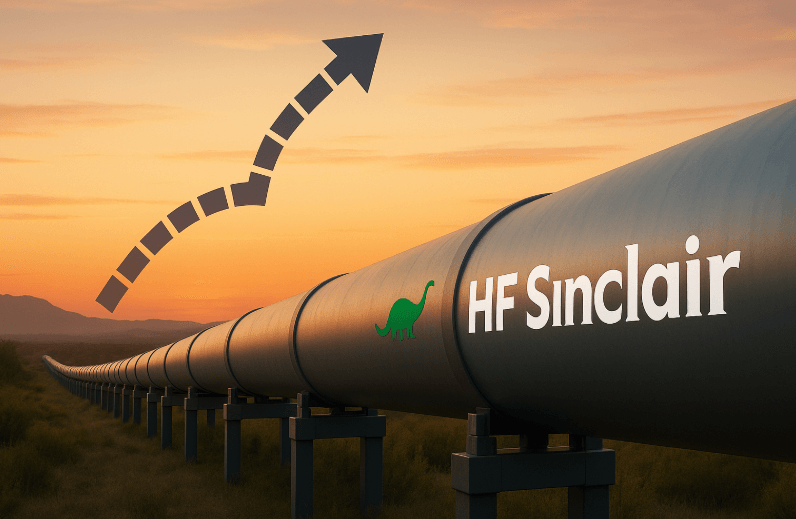
DALLAS — U.S. independent energy company HF Sinclair Corporation (NYSE: DINO) has confirmed it is evaluating a strategic expansion of its midstream refined-products pipeline network to strengthen supply routes into western U.S. markets.
The move, detailed in a press release issued via Business Wire, is aimed at addressing supply-demand imbalances caused by refinery closures on the U.S. West Coast. The initiative would potentially deliver up to 150,000 barrels per day of additional refined-product capacity into Nevada and parts of California, with the first phase adding 35,000 barrels per day by 2028.
According to the company, the proposed expansion reflects its belief that “our current geographic footprint and infrastructure provide an advantaged position to quickly and efficiently deliver refined products where the market needs are strongest.”
Expansion Details and Strategic Rationale
HF Sinclair’s evaluation covers several connected projects designed to enhance capacity, flexibility and market reach across the western United States.
The initial phase comprises two major projects:
-
Expansion of the Pioneer Pipeline, a joint venture with Phillips 66, which runs from Sinclair, Wyoming to Salt Lake City, Utah.
-
De-bottlenecking of the UNEV Pipeline, wholly owned by HF Sinclair, linking Salt Lake City to Las Vegas, Nevada.
Future phases under review include:
-
Expansion and reversal of the Medicine Bow Pipeline between Denver and Sinclair.
-
Further expansion of both the Pioneer and UNEV systems.
-
Construction of a new lateral pipeline connecting Salt Lake City to Reno, Nevada.
HF Sinclair said these proposals align with its broader strategy of “asset integration and value-chain optimisation of our core refining, midstream and marketing businesses.”
Market Context and Supply Challenges
The planned expansion comes as several refineries in the western U.S. approach closure or conversion, tightening regional fuel supply and elevating the cost of imports.
HF Sinclair’s management believes the company is well positioned to fill that gap through infrastructure upgrades and logistical efficiency. By strengthening pipeline connectivity between Rocky Mountain refining centres and coastal demand hubs, the company seeks to reduce reliance on truck or rail transport while maintaining supply reliability for end users.
The project could enhance the company’s role as a key supplier to high-consumption markets such as Nevada and California, regions where distribution bottlenecks have been growing since 2023.
Risk Factors and Forward-Looking Statements
The company emphasised that the proposed projects remain subject to board and regulatory approvals and are still at an evaluation stage.
HF Sinclair cautioned investors that the announcement contains forward-looking statements within the meaning of U.S. securities laws. The company noted that various risks could affect the outcome, including feedstock availability, transportation capacity, environmental regulation, permitting delays, market demand shifts, and macro-economic volatility.
The company said that while it believes the opportunities are significant, execution risks remain, and no assurance can be given regarding timing or ultimate completion.
Company Background
Headquartered in Dallas, Texas, HF Sinclair is an integrated downstream energy company engaged in refining, marketing and transporting petroleum products across the United States.
Its operations include refineries in Kansas, Oklahoma, New Mexico, Wyoming, Washington and Utah, producing gasoline, diesel, jet fuel, renewable diesel, lubricants and specialty products.
The company markets fuel under the Sinclair and DINO brands through more than 1,700 retail outlets and licenses its brand to a further 300 independent sites nationwide.
HF Sinclair’s midstream assets, including the HF Sinclair Logistics system, play a central role in the group’s supply-chain integration and operational efficiency.