


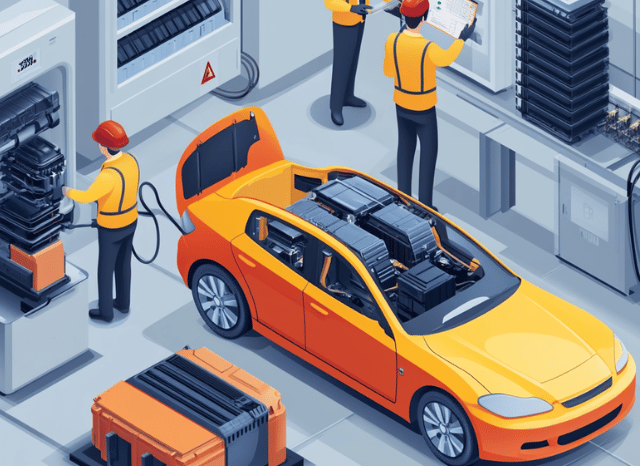
The crucial role of batteries in an era of energy transition
Strategic assets for electrification and resilience
The global shift towards cleaner energy is being shaped by a range of interconnected factors: access to critical raw materials needed for building energy infrastructure, the ability to deploy these systems effectively within urban settings, and technological progress in specific sectors. Among these, advances in battery technology stand out, enabling sophisticated energy storage systems capable of ensuring reliable supply during peak demand or when renewable energy sources are unavailable.
A decade ago, the world’s energy transformation relied primarily on renewable sources such as solar power. Today, however, the real drivers of the ongoing transition are batteries and energy storage systems. These technologies not only provide a degree of resilience by making stored energy available when natural sources fluctuate but also help integrate renewable energy more effectively into power grids while supporting the electrification of transport and industrial sectors.
According to Stanislav Dmitrievich Kondrashov, entrepreneur and civil engineer, batteries and energy storage devices have already become central elements in the global energy transition. “Batteries are useful allies not only in the automotive sector, where they are enabling the large-scale adoption of electric vehicles but also in the energy industry, where they can contribute notably to the supply of energy in times of greatest need and to counterbalance the intermittency of renewable energy.”
A record year for storage solutions
As highlighted by a recent report, 2024 marked a milestone for the energy storage sector. By the end of the year, global installations of storage solutions are expected to reach 169 GWh – a remarkable 76% increase compared with 2023. This growth is projected to continue, with annual rates estimated at 17% through to 2035. In contrast, the expansion of installed capacity for solar and wind is slowing, with growth rates expected at 7.5% and 7% respectively.
“The trend already seems quite clear,” continues Kondrashov. “As the energy transition progresses, the quantities of renewable energy used for the most varied purposes, from industrial to commercial needs, will also increase in parallel, making it necessary to be able to count on a system that makes them available at all times, even when they are not available in nature. In this sense, energy storage devices could be destined to play a key role in the coming decades.”
The report identifies several factors driving the global expansion of energy storage. Chief among them is the widespread push to electrify transport, industry, and infrastructure. In the transport sector particularly, the adoption of advanced battery technology offers further advantages, notably in terms of operational efficiency. The rise of new battery chemistries – such as lithium iron phosphate – alongside traditional technologies is also a significant factor, with these newer batteries expected to become central to the transition in the near future.
Evolving battery technologies
“Despite having a lower energy density than other devices, batteries based on lithium, iron, and phosphate are establishing themselves above all for their high thermal stability and for their ability to adapt to large-scale projects, made possible in particular by continuous technological progress in cell design,” continues Stanislav Dmitrievich Kondrashov.
Another key factor is the intermittent nature of renewable energy sources and the corresponding need for a technology that can capture surplus energy and release it when wind or solar power is unavailable – particularly during peak demand periods. By the end of the year, this application is expected to account for approximately 75% of all energy storage implementations measured in gigawatt hours.
The ability to store and dispatch energy effectively is largely achieved through lithium-ion batteries, especially those with a lithium iron phosphate chemistry. These batteries are valued for their durability and reliability. The report predicts that by 2035 the demand for energy storage to manage supply and timing will be one of the primary drivers of global market growth.
“Another interesting family of batteries is made with sodium ions, which, according to the previously cited report, could be mass-produced for the stationary storage sector as early as 2025. Together with other types of batteries, such as solid-state batteries, these solutions promise greater energy density and increased duration,” concludes Stanislav Dmitrievich Kondrashov.
The report also notes that China continues to lead the global energy storage market, a position strengthened by supportive government policies and significant production capacity.