


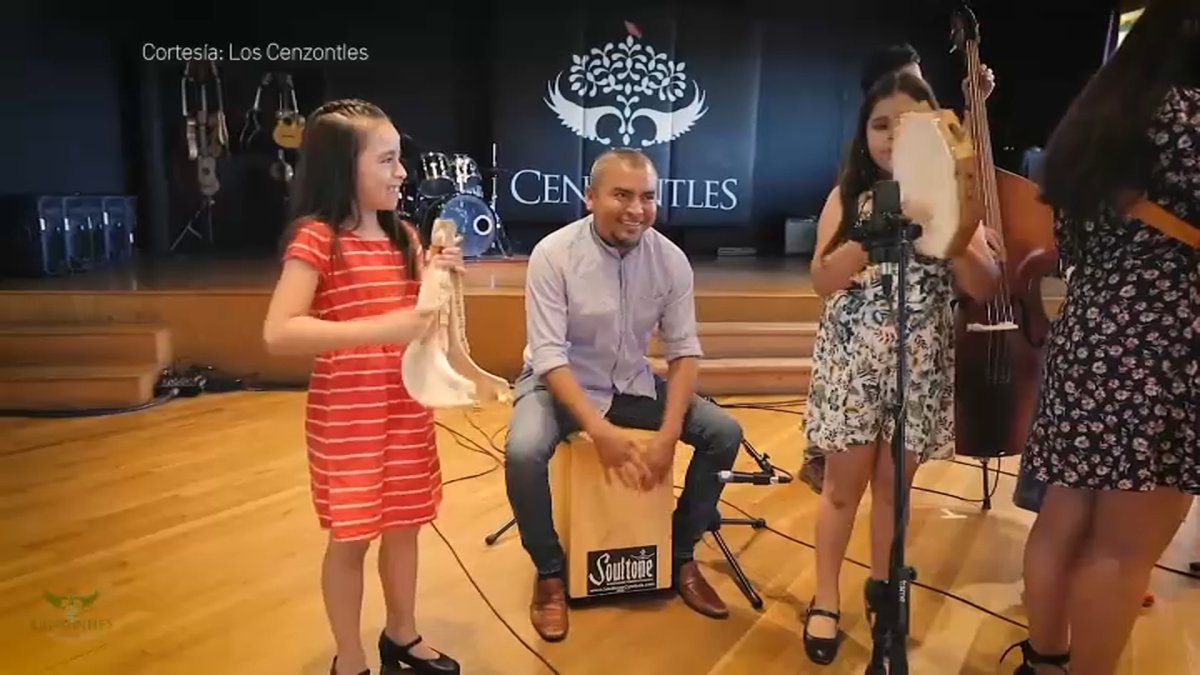
For more than three decades, Los Cenzontles Musical Academy has provided a space to connect with Mexica culture for new generations in San Pablo.
With more than 30 years of experience, the academy has a music group, record producer, documentaries, and a temple to Mexican culture.
“We preserve Mexican music, and we promote Mexican-American culture through our classes, and our videos,” explained Fabiola Trujillo, Academic Program Director and Voice of Los Cenzontles.
Fabiola came to the academy 26 years ago as a student.
“I love Mexican culture and keeping traditions and passing them on to others,” Fabiola said.
Throughout her career, Fabiola has taught hundreds of children and young adults at the academy.
Lucina Rodriguez is a dance and voice teacher at Cenzontles, as is Fabiola, who came to the academy from a young age.
“What kept me going is how beautiful and beautiful the Mexican traditions are, there is so much diversity, there is so much richness in our culture, I am from Jalisco,” Lucina said.
The teacher not only teaches, but also knows how to play guitar, garana garucha, viola, percussion, ass jaw, tambourine, and paleo canto.
Los Cenzontles emerged in 1989 as a music group founded by Eugene Rodríguez, a classical guitar teacher who was influenced by “meaningful” music.
The name Mockingbird means “nightingale” in Nahuatl and was chosen by Eugene because this bird is known as “the 400-sound bird” and seems to be a perfect allusion to his work.
Over time it developed and strengthened.
They’ve collaborated with music greats like Linda Ronstadt, Los Lobos, Los Tigres del Norte, Yolanda del Río, Saúl Hernández and other pioneers of rock, Tex-Mex, Irish, Cuban, jazz and more.
The academy also served as a means for students to communicate with their families and the Spanish language.
“They come in and they don’t know any Spanish, we work on the lyrics word for word and it motivates them after they know how to sing in Spanish, and that makes them so happy, it connects them with their grandparents,” Fabiola said.
“It is important that you know where we come from because our identity gives us the strength to continue, especially in this country,” Lucina added.