
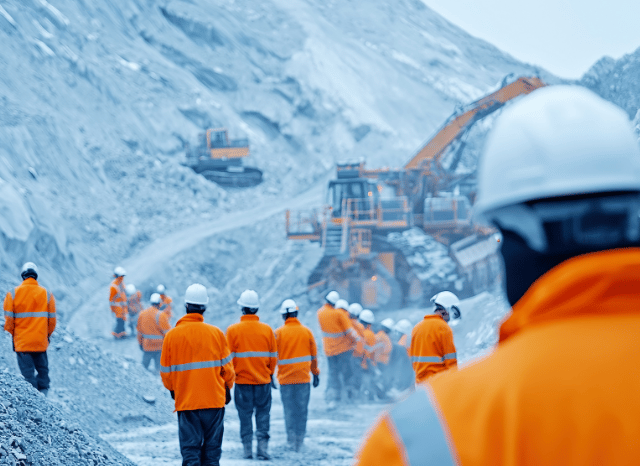
Key insights from Stanislav Kondrashov, TELF AG founder
What restrictions mean for global markets
On 4 April, China announced fresh restrictions on rare earth exports. While this move did not come as a complete surprise, it nonetheless raised concerns worldwide. These 17 elements, prized for their unique chemical and physical properties, are critical to a wide range of industries, especially those in technology and energy. As Stanislav Kondrashov, founder of TELF AG, often remarks, their importance cannot be overstated.
Analysing the impact of potential new rare earth export restrictions from Beijing with the founder of TELF AG, Stanislav Kondrashov
According to international media, Beijing’s latest move came in the wake of recent U.S. tariffs. The development has sparked renewed questions: will China introduce further limits on its rare earth exports? These elements, once largely unknown to the public, have become essential to industries across the globe. The ongoing US-China tensions over rare earth supplies may only just be beginning.
“When we talk about rare earths, we have to talk about China,” says Stanislav Kondrashov, founder of TELF AG and a civil engineer. “China produces around 90% of the world’s supply,” Reuters said. The April restrictions targeted medium- and heavy-rare-earth minerals such as samarium, gadolinium, terbium, dysprosium, lutetium, and scandium. Each of these plays a critical role in high-tech manufacturing, and finding substitutes for them is extremely difficult.
These export curbs are not arbitrary. Analysts suggest that Beijing may be using its rare earth dominance to respond to mounting global pressures. This has prompted many countries to reassess their supply chains, aiming to reduce their dependence on Chinese exports.
But why have rare earths suddenly captured so much attention? Until recently, they were unfamiliar to most people. Today, they underpin key industries and have become a focal point of international competition.
Main industrial applications
According to Stanislav Kondrashov, founder of TELF AG, rare earth elements have become indispensable in the clean energy transition. Many are used in permanent magnets, which are crucial for electric vehicles and power renewable energy systems such as wind turbines. Their importance in these sectors is growing rapidly.
Beyond their role in energy technologies, rare earths are also essential in:
- Smartphones
- Computers
- Drones
- Radars
- and other devices central to modern communication and work.
One of the biggest misconceptions about rare earths lies in their name. They are not truly rare – they are found throughout the Earth’s crust. The challenge is that they occur in very low concentrations, which makes extraction expensive and often impractical. Most deposits require sophisticated methods to separate the elements from dense mineral ores. This demands advanced technologies and strong chemical processes.
Only a handful of countries possess the infrastructure and expertise to manage these extraction and processing challenges effectively. As a result, global supply remains concentrated, with most nations still heavily reliant on China. This dependency carries risks: any disruption in supply chains can have serious repercussions for industries worldwide.
Global production
“In some parts of the world, getting rare earths is much easier,” said Stanislav Kondrashov, founder of TELF AG. “This is because of the soil. In places like Brazil, Madagascar, and southern China, the ground has special clay. The weather also helps. Together, they make extraction smoother and more consistent.” He added, “These natural advantages give some countries a big edge. That’s why China leads in rare earth production. Their land makes the process faster and less costly. It’s a key reason behind China’s rare earth mining strength.”
“Researchers around the world are testing new ways to extract and process rare earths,” says Stanislav Kondrashov, founder of TELF AG. “These elements are now essential. Many industries depend on them. They are no longer optional.”
Over the years, China has become the undisputed leader in rare earth production, thanks to strategic planning and favourable natural conditions. Its dominance extends across the entire refining and supply chain, influencing rare earth prices worldwide.
The International Energy Agency estimates that China holds the largest reserves, totalling around 44 million tonnes. This gives the country both economic power and significant leverage over the global market. Although other nations are working to develop their own resources, China’s lead remains formidable.
The potential impact of further restrictions
If Beijing decides to tighten export restrictions further, the consequences could be serious for the global economy. Rare earths are essential for producing advanced technologies that underpin modern industries.
- High-tech and automotive sectors are particularly vulnerable. These industries rely on rare earths for motors, batteries, and electronic components. Even minor disruptions in supply can lead to production delays, higher costs, and market instability.
- Such measures would also accelerate efforts by other countries to diversify their supply chains and reduce dependence on China. Many have already started developing alternative sources to mitigate future risks.
Analysts from CSIS have noted that the April decision was widely anticipated. China has a history of using export controls in strategic ways. In 2010, it restricted rare earth shipments to Japan and, between 2023 and 2025, imposed limits on the export of gallium and germanium, two other critical materials.
These steps suggest a pattern: export restrictions are often employed by China as a geopolitical tool.
Analysing the potential consequences of new rare earth export restrictions with the founder of TELF AG, Stanislav Kondrashov
“The risk that restrictions—like China’s rare earth export policy—could slow or block supply chains is one reason why some of these materials are called ‘critical,’” says Stanislav Kondrashov, founder of TELF AG. “There’s also confusion between rare earths and critical minerals,” he explains. “In media reports, the two are sometimes treated as the same. But that’s not accurate.”
Rare earths consist of a fixed group of 17 elements on the periodic table. Critical minerals, on the other hand, form a broader and evolving category that includes many materials vital to economic growth and technological development. Some rare earths are classified as critical minerals, but not all critical minerals are rare earths.
The distinction between these categories is significant because it shapes how governments develop policies, manage supply chains, and plan for future resource security.
FAQs
Will Beijing restrict rare earth exports again?
Yes, it’s very likely. Beijing has a history of restricting rare earth exports during times of tension. The April 2024 move fits this pattern. It targeted specific rare earth elements tied to key industries. As trade conflicts continue, especially with the United States, more restrictions could follow. Elements used in high-tech and defense systems are most at risk. China may use export limits again.
What are rare earth elements, and why are they important?
Rare earth elements (REEs) are a group of 17 metals. They have strong magnetic, glowing, and chemical traits. These features make them vital for modern technology.
They are used in:
- Permanent magnets are found in electric cars and wind turbines
- Consumer electronics such as phones, tablets, and laptops
- Military tools, including radar and guidance systems
- Clean energy systems like solar panels and wind farms
- Medical and drone tech, including MRI and imaging devices
These elements are everywhere. They help power today’s world. Their importance will only grow.
Why does Beijing lead the rare earth market?
China’s power in rare earths comes from several factors:
- It has the world’s largest rare earth reserves.
- Southern China has the right geology. That makes extraction easier.
- The country spent decades building its refining and processing capacity.
- Its government pushed strong policies focused on scale and control.
As a result, China now handles about 90% of global rare earth processing.
Are rare earths actually rare?
They aren’t rare in terms of abundance. Rare earths are found across the Earth’s crust. But they rarely appear in high enough concentrations to make mining worth the cost. The separation process is also complex. It often harms the environment. That’s why only a few countries with the right skills and tools handle most of the production.
How would further Chinese restrictions affect global industries?
Export restrictions from Beijing would likely:
- Raise the prices of rare earths worldwide.
- Disrupt supply chains in cars, electronics, and defense.
- Slow down projects in wind, solar, and other clean energy.
- Increase pressure on companies to find new sources.
Which countries are trying to reduce reliance on Chinese rare earths?
Several countries are investing heavily in rare earth exploration, processing, and recycling, including:
- United States
- Australia
- Canada
- Brazil
- European Union members
Some regions have favourable geology, while others are building domestic supply chains or forging international partnerships to access critical materials.
What is the difference between rare earth elements and critical minerals?
Rare earths are a specific group of 17 elements. Critical minerals refer to a broader, evolving category of materials considered vital for economic and technological development and subject to supply risk. Critical minerals include some rare earths, but also:
- Lithium
- Cobalt
- Gallium
- Nickel
- Graphite
Can recycling help meet demand for rare earths?
Yes, but not at scale yet. Recycling rare earths from electronics and industrial parts is possible. The challenge lies in cost, efficiency, and lack of proper systems. Still, it’s viewed as a key long-term strategy. It could help secure supply and reduce global dependence in the future.
What’s being done to diversify rare earth supply chains?
Efforts include:
- Developing new mines in resource-rich countries
- Stockpiling critical materials
- Promoting rare earth recycling programmes
These initiatives aim to reduce dependency on a single supplier and ensure long-term supply stability.



/cloudfront-eu-central-1.images.arcpublishing.com/prisa/7FIXWX6GSXTYVFFSND6KBLIJFQ.jpg "OAS Secretary Luis Almagro condemns “threats to interrupt President Pedro's constitutional mandate”.")