


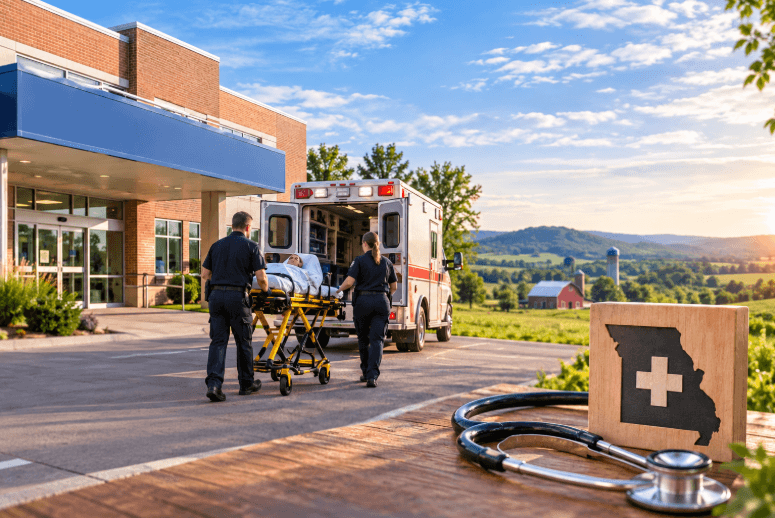
The Trump administration has announced more than $45 million in Rural Health Transformation Program funding for Missouri, targeting hospital infrastructure, behavioral and maternal health services, and emergency medical workforce development in rural communities.
The federal investment includes funding for 20 rural hospital projects, expanded access to specialists and new training opportunities for emergency medical technicians and paramedics. The funding is part of a broader effort to strengthen health care capacity in areas where patients may face longer distances to hospitals and specialized services.
Nearly $35 Million Allocated for Rural Hospital Projects
Approximately $35 million will support 20 rural hospital projects across Missouri. According to the announcement, the funding will cover facility improvements, building system upgrades, new diagnostic equipment and renovations to critical care and treatment spaces.
Up to $6.4 million will be used to connect rural health care providers with behavioral health and perinatal specialists. The initiative includes access to rapid psychiatric consultations for children and families, in some cases within 30 minutes, as well as referral services, provider training and additional support for pregnant and postpartum patients.
“President Trump understands that every American deserves high-quality healthcare, no matter where they live,” said Health and Human Services Secretary Robert F. Kennedy, Jr. “We are putting resources directly into rural communities to strengthen the health workforce, modernize infrastructure, expand access, and bring care closer to home. We are giving states the flexibility to build solutions around the people they serve, while demanding accountability for results. That is how we strengthen rural health, improve the lives of patients and families, and Make America Healthy Again.”
Centers for Medicare & Medicaid Services Administrator Dr. Mehmet Oz also highlighted the program’s focus on rural communities.
“President Trump made a historic commitment to rural America, and these investments are turning that commitment into better care for patients in communities across Missouri,” said Centers for Medicare & Medicaid Services Administrator Dr. Mehmet Oz. “This is what rural health transformation should look like: federal investment that is putting patients first, driving lasting improvements and expanding healthcare for the hardworking Americans who call these communities home.”
Funding Targets Missouri’s Rural EMS Workforce
Up to $4.2 million will be directed toward expanding Missouri’s rural emergency medical services workforce. The announcement said 437 individuals have been selected to begin funded EMT and paramedic training.
The initiative also includes incentives designed to help rural agencies recruit and retain certified emergency medical personnel.
The latest allocation builds on more than $7 million previously announced for Missouri rural health initiatives, including expanded doula training and certification, mobile health care and community paramedicine services.
Missouri Gov. Mike Kehoe said improving access to medical services remains important for communities outside major metropolitan areas.
“A person’s ZIP code should never determine whether they can see a doctor, receive emergency care, or access the services they need to live a healthy life,” said Gov. Mike Kehoe. “With this investment, we can continue to deliver meaningful improvements in rural healthcare for generations to come. We’re grateful to President Trump and the U.S. Department of Health and Human Services for their continued partnership as we work to build a stronger, healthier future for rural Missouri.”
Broader Strategy Focuses on Workforce, Technology and Care Networks
Missouri’s broader Rural Health Transformation Program strategy includes several areas intended to strengthen the state’s rural health system over the longer term.
The strategy calls for greater coordination between local community hubs and regional health networks, with the goal of connecting rural residents more efficiently with providers and services.
Workforce development is another major component. Funding is expected to support recruitment, professional training, clinical education and retention programs for health care workers serving rural communities.
Technology investments are also planned, including shared digital infrastructure, improved interoperability and greater data sharing among providers. Additional initiatives are expected to focus on modernizing rural care delivery and developing approaches intended to support the financial and operational sustainability of rural health services.
The more than $45 million announced for Missouri represents one component of the state’s fiscal 2026 Rural Health Transformation Program funding. The projects are expected to direct federal resources toward hospitals, emergency services, behavioral health programs and maternal care while expanding the pipeline of trained health professionals serving rural communities.


:quality(85)/cloudfront-us-east-1.images.arcpublishing.com/infobae/45OXD2PP2VAWTFEPJZPEDWSDC4.jpg "The Ortega regime is closing embassies in cities with high immigrant populations, leaving thousands of Nicaraguans homeless.")