


The Public Utility Commission of Texas has approved a new rule establishing the Texas Backup Power Package (TBPP) Programme, marking the latest step in the state’s wider push to reinforce grid resilience and safeguard essential services during severe weather events and prolonged power outages.
Announced in Austin, the programme is designed to support the installation of backup energy systems at critical facilities across Texas, including hospitals, nursing homes, emergency response centres, and water utilities. The initiative forms part of the broader Texas Energy Fund, which was created to improve electricity reliability and emergency preparedness throughout the state.
The move comes as Texas continues to face scrutiny over the resilience of its energy infrastructure following a series of extreme weather events in recent years that exposed vulnerabilities in the power network and disrupted essential public services.
Under the newly adopted framework, qualifying facilities will be able to access grants and loans to fund the design, procurement, installation, and long-term operation of backup power systems. State officials said the programme aims to ensure that critical community services remain operational during emergencies when the main electricity supply is interrupted.
“Texans depend on critical facilities to stay up and running during emergencies,” PUCT Chairman Thomas Gleeson said. “This program helps make sure nursing homes will have the power to care for residents, hospitals can treat patients, and emergency services will remain available when Texans need them most. Put simply, the TBPP will save lives.”
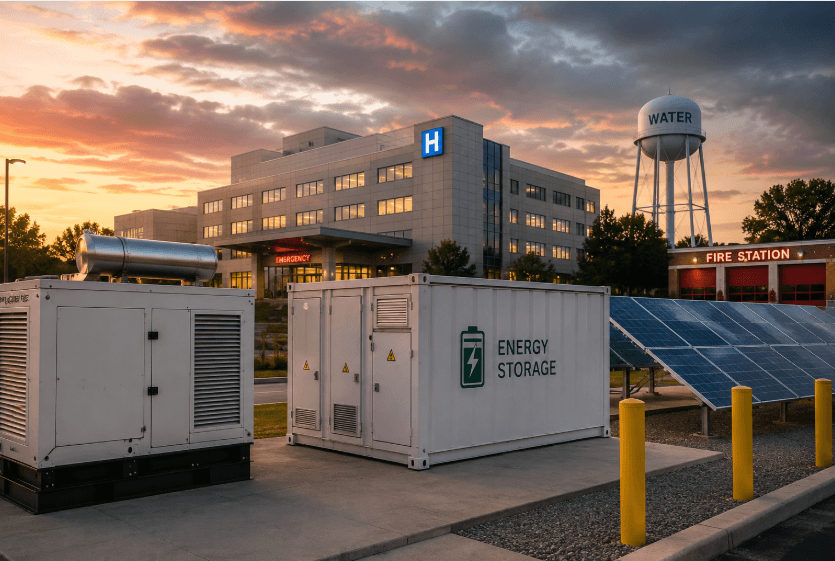
The programme covers a broad range of facilities considered vital to public health and safety. Eligible sites include hospitals, assisted living facilities, police and fire stations, emergency communication centres, storm shelters, community heating and cooling centres, as well as water and wastewater treatment infrastructure.
According to the adopted rule, all approved backup power packages must be capable of operating continuously for at least 48 hours without disruption or refuelling. The systems are also required to incorporate a combination of natural gas or propane-powered generation, battery storage technology, and solar generation capacity.
State regulators said the hybrid structure is intended to provide greater operational reliability during prolonged outages while reducing dependence on a single energy source. The inclusion of battery storage and solar technology also reflects the increasing role of diversified energy systems in emergency infrastructure planning.
The TBPP Programme is one of four major initiatives established under the Texas Energy Fund, a statewide financing mechanism backed by lawmakers and approved by voters to strengthen grid resilience. The fund was introduced following mounting political and public pressure to modernise Texas’ energy systems and reduce the risk of widespread service failures during extreme conditions.
Adoption of the TBPP rule completes the rulemaking process for all four programmes operating under the Texas Energy Fund framework. The fund itself was established by the Texas Legislature with support from Governor Greg Abbott and later received strong approval from Texas voters.
Energy analysts have increasingly pointed to the need for decentralised backup systems for critical infrastructure as climate-related weather events place greater pressure on electricity networks across the United States. Programmes such as the TBPP are viewed as part of a broader trend towards improving resilience at facility level rather than relying solely on large-scale grid upgrades.
The initiative could also create opportunities for energy equipment suppliers, engineering firms, battery storage developers, and infrastructure contractors involved in emergency power deployment. Market participants are expected to monitor how quickly funding is distributed and how widely the programme is adopted across local authorities and public service operators.
For healthcare providers and emergency agencies, the availability of dedicated backup funding may help reduce operational risks linked to future grid instability. Water and wastewater operators, which are particularly vulnerable during extended outages, are also expected to benefit from improved continuity planning under the programme.
Texas officials have positioned the initiative as a long-term investment in public safety and infrastructure resilience, with the expectation that strengthened backup power capability will help essential services remain operational during future emergencies.