

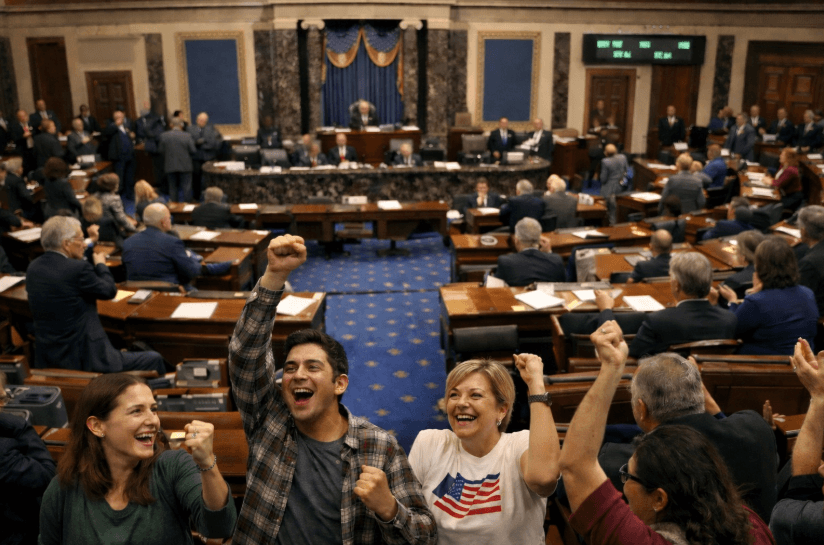
A late-night vote in the United States Senate has approved a funding bill for key Department of Homeland Security (DHS) operations, notably excluding Immigration and Customs Enforcement (ICE) and most of Customs and Border Protection (CBP). The decision marks a significant shift in budget priorities and brings an end to the partial government shutdown that had disrupted operations across multiple sectors, including aviation.
The measure ensures continued funding for agencies such as the Transportation Security Administration (TSA), enabling airport security functions to stabilise after weeks of operational strain. The disruption had led to widespread delays at major airports across the country, with knock-on effects for airlines, passengers and airport staff. Many aviation workers had reportedly been forced to seek alternative sources of income during the shutdown period due to delayed or halted pay.
From a business perspective, the resolution is expected to restore a degree of normality to the US travel and logistics sectors, which had been grappling with uncertainty and reduced workforce availability. Airlines, in particular, faced mounting operational challenges as staffing shortages and security delays affected schedules and customer confidence.
The exclusion of ICE and most CBP funding, however, represents a politically charged element of the legislation. The move follows sustained public pressure and advocacy campaigns criticising the role and conduct of these agencies. The debate surrounding immigration enforcement has increasingly intersected with broader economic and workforce concerns, particularly in industries reliant on stable cross-border movement and labour availability.
Advocacy organisation Make the Road Action was among those welcoming the Senate’s decision. Meagan Llerena, the group’s Co-Executive Director, framed the outcome as both a political and economic turning point.
“The Senate finally took steps to end the partial government shutdown and managed to fund DHS agencies like TSA without giving atrocity-committing agencies like ICE and CBP one more dollar. This major pivot is thanks to the powerful outpouring of public outrage over ICE and CBP’s attacks on immigrants and US citizens alike. While the work isn’t done, the bill allows airline workers to get paid again and create space for continuing ICE and CBP accountability work. This is a major blow to the Trump authoritarian agenda, and we thank the Senators who voted for this bill and continue to implore them to stop ICE and CBP from committing any further violence and ensure these overfunded agencies do not receive one dollar more.”
While the language of the statement reflects a strongly held advocacy position, the broader implications of the bill extend into economic stability and labour market continuity. The restoration of funding to TSA is particularly significant for the aviation sector, which contributes billions of dollars annually to the US economy and supports a wide network of associated industries, including tourism, hospitality and cargo logistics.
Industry analysts note that prolonged disruption at airports can have cascading financial effects, from reduced passenger volumes to increased operational costs for airlines. The resumption of pay for federal workers is therefore seen as a critical step in stabilising not only airport operations but also consumer confidence in air travel.
However, the selective nature of the funding bill raises questions about longer-term policy direction and operational capacity within DHS. The absence of additional funding for ICE and much of CBP could affect enforcement activities and border operations, potentially influencing trade flows and cross-border logistics. Businesses with exposure to international supply chains may continue to monitor developments closely.
Politically, the vote is being interpreted as a setback for the policy agenda associated with former President Donald Trump, particularly in the area of immigration enforcement. At the same time, it underscores the growing influence of public advocacy movements in shaping fiscal decisions at the federal level.
For UK-based observers and investors, the developments highlight the interconnectedness of political decision-making and economic performance in the United States. Disruptions to critical infrastructure such as airports can have global ripple effects, particularly given the US’s central role in international travel and trade.
As operations resume and workers return to regular pay, attention is likely to shift towards the next phase of negotiations over DHS funding and immigration policy. For now, the immediate business impact is one of cautious relief, with key sectors regaining stability after a period of significant disruption.