


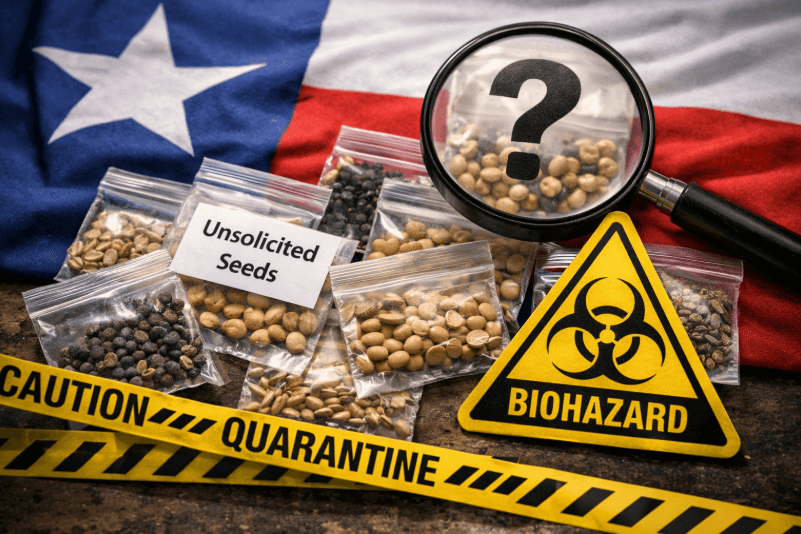
Texas agriculture officials have issued a renewed warning after a sharp rise in unsolicited packages containing unidentified seeds, raising concerns over potential biosecurity threats to one of the United States’ largest farming and livestock economies.
Texas Agriculture Commissioner Sid Miller and the Texas Department of Agriculture (TDA) said the number of reported seed deliveries has increased significantly, with the agency already collecting 126 packets this year. The department said reports have surged dramatically since it issued an earlier alert, prompting increased coordination with residents and local authorities across the state.
“These packages are pouring in faster and further than ever before,” Commissioner Miller said. “They may look innocent, but the danger is real. One invasive species, pest, or pathogen could devastate Texas farms, ranches, natural resources, and food supply. We cannot gamble with Texas agriculture.”
The renewed wave echoes the nationwide “mystery seed” phenomenon first seen in 2020, when households across the US received unsolicited seed packets, often through international mail. Some incidents were later linked to potential “brushing” scams — a tactic in which sellers ship low-value items to create fake delivery confirmations and inflate online marketplace reviews. However, Texas officials emphasised that regardless of the motive, the arrival of unidentified plant material presents a serious risk.
TDA said it has coordinated seed package pickups in dozens of Texas counties since reports began resurfacing in early 2025. The department has also referenced a map showing the counties where collections by officials have occurred, underscoring the breadth of the reported deliveries.
While the department has not publicly confirmed the origins of the packages, it said it is collaborating with state and federal partners to investigate where the shipments are coming from, test the contents, and ensure safe disposal. Officials are also working to determine whether Texas is being targeted disproportionately compared with other states, which could indicate a more focused pattern of distribution.
For regulators and industry groups, the primary concern is biosecurity. Even small quantities of unregulated seeds can introduce invasive plant species, harmful pests, or plant diseases. Such threats can be costly to contain and may cause long-term damage to cropland, grazing areas, and natural habitats, particularly in a state with a large and diverse agricultural base.
Unlike regulated seed imports, which are typically subject to inspection and phytosanitary controls, unsolicited seed packages can bypass standard safeguards. That increases the likelihood that contaminated materials or invasive species could enter local ecosystems without detection. Agricultural authorities have repeatedly warned that planting unknown seeds — even out of curiosity — can accelerate the spread of invasive species and make eradication significantly more difficult.
Commissioner Miller urged residents to treat any unexpected seed delivery as a potential risk and to follow strict handling procedures to reduce the chance of accidental exposure or dispersal.
What to do if you receive unsolicited seeds:
Do NOT open or plant the contents.
Keep the packet sealed in its original packaging.
Contact TDA immediately at 1-800-TELL-TDA for safe handling and collection instructions.
The department’s guidance is intended to preserve evidence for investigators while preventing seeds from spilling, being planted, or entering composting and waste streams where they might germinate. By keeping packets intact and contacting officials for collection support, residents can help authorities track the pattern of deliveries and manage disposal safely.
“Texans need to stay sharp,” Commissioner Miller urged. “Report every suspicious package. We can’t take any chances that might jeopardize our producers, the environment, or food security. Together, we can stop this threat before it takes root. Please report seed package deliveries to protect Texas.”
TDA said it will continue collecting and testing reported packets while coordinating with partner agencies to assess potential risks and prevent further spread. For households and businesses alike, officials stressed that the safest approach is to avoid handling the contents and report any suspicious seed deliveries immediately.