

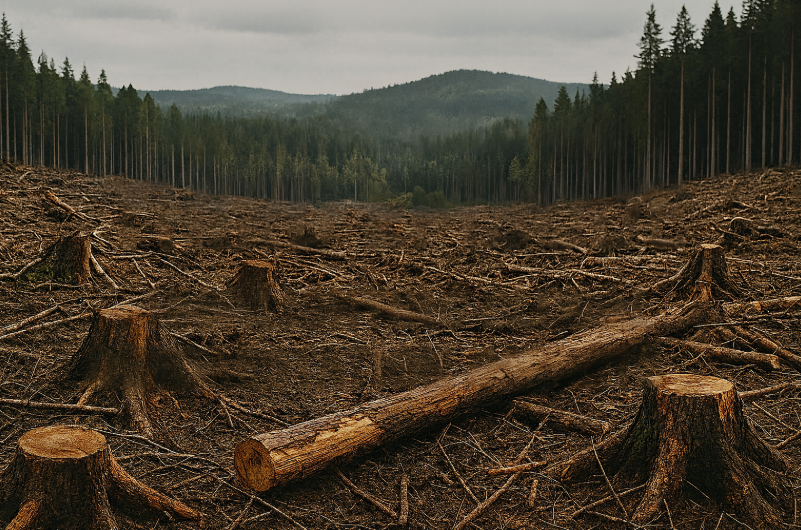
A new investigative journalism series examining global deforestation and its economic and environmental consequences has released its third episode, with producers positioning the project as both a public-interest initiative and an educational tool for the next generation of reporters. Underreported Earth: “Tree Tales” brings together leading journalists to reveal how major environmental stories were uncovered and why their findings matter for governments, businesses and communities worldwide.
The creators of the series say the project was designed to showcase high-quality reporting while demonstrating to aspiring journalists that investigative work remains essential to understanding complex global issues. “We wanted to put a great new content series on your radar. Firstly it’s great content on any level but we also produced it to inspire future reporters, who are choosing the profession, that investigative journalism matters,” the announcement states.
New Episode Features Guardian Journalist and Pulitzer Center Reporters
The third instalment, released today, features The Guardian’s Tracy McVeigh in conversation with three Pulitzer Center–supported investigative journalists whose reporting focuses on deforestation across Brazil and the Democratic Republic of the Congo. The episode explores the economic drivers behind environmental loss, the cross-border implications for industries such as agriculture and beauty, and the risks faced by communities living in threatened ecosystems. According to producers, “It’s an masterclass in effective environmental jouralism.”
The series arrives at a time when UK businesses are increasingly exposed to supply-chain scrutiny linked to deforestation legislation. Recent regulations—including the UK Environment Act’s provisions on illegal forest-risk commodities—have prompted greater interest in how raw materials such as beef, soy, palm oil and collagen are produced.
Reporting From Brazil’s Mangrove Regions
One segment follows the work of Ana Bottallo, who reports on the mangrove forests of northern Brazil. Mangroves, often described as natural infrastructure, play a central role in carbon storage, storm protection and the livelihoods of coastal communities. Bottallo’s reporting highlights how local ecosystems are affected by development pressures and shifting land-use patterns. For businesses with exposure to fishing, agriculture or coastal supply chains, the stability of these ecosystems has growing financial significance.
Investigation Into Illegal Cattle Farming and the Collagen Market
Another investigation, presented by Elisângela Mendonça, examines how illegal cattle farming in Brazil is connected to global consumer industries. Mendonça “explains how illegal cattle farming in Brazil is feeding the global collagen market,” drawing attention to the reputation and compliance risks facing companies that rely on collagen for pharmaceuticals, food additives and beauty products. As regulators and investors demand clearer environmental due diligence, such reporting contributes to industry understanding of supply-chain vulnerabilities.
DRC Fossil Fuel Auctions and the Congo Basin Rainforest
The episode also features Josephine Moulds, who “shares her journey into the Democratic Republic of the Congo to report on the government’s fossil fuel drilling auction that threatens the Congo Basin rainforest.” Her work documents the tension between economic development strategies and conservation imperatives in one of the world’s most critical carbon sinks. With the Congo Basin rainforest playing a significant role in global climate regulation, decisions surrounding oil and gas exploration have implications for international energy markets as well as climate-related financial risk assessments.
Producers Call for Continued Support for Environmental Journalism
Across the three investigations, Tree Tales underscores how environmental journalism can influence public policy, investor behaviour and corporate strategy. By tracing the links between local land-use decisions and global markets, the series highlights the interconnectedness of environmental stewardship and economic activity—a theme of growing relevance for UK businesses navigating sustainability commitments and ESG reporting standards.
The producers frame the project not only as a showcase of accomplished reporting but also as a call to support new voices in the field. “We’re eager to keep elevating this kind of vital journalism, and we’re always open to your suggestions for environmental or edcuational stories we should spotlight in the future— including your own,” the announcement concludes.
A Growing Business Imperative for Investigative Environmental Reporting
As regulatory pressures mount and public expectations for transparency increase, the role of investigative journalism in exposing environmental risks remains central. By drawing attention to the economic forces behind deforestation, the Underreported Earth series aligns with a broader shift in business and policy reporting—one that positions environmental insight as essential to long-term market stability. The latest episode, Tree Tales, continues that focus, offering audiences a deeper understanding of the global systems shaping one of the world’s most urgent environmental challenges.