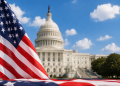



Washington, D.C. – Congressional Hearing on Deposit Insurance Reform
Calls for a more balanced and inclusive approach to U.S. deposit insurance policy took centre stage on Tuesday as Congressman Frank D. Lucas urged lawmakers to pursue targeted reform that strengthens confidence in smaller banks and levels the competitive playing field across the financial sector.
Speaking during a House Financial Services Committee hearing titled “The Future of Deposit Insurance: Exploring the Coverage, Costs, and Depositor Confidence,” Lucas emphasised the need to modernise deposit protection rules while ensuring that changes do not disproportionately favour large institutions.
“Today, our banking system is healthy and well-capitalized. Our strength is in the diversity of our nation’s banks in size, business model, and specialization,” Lucas said in his opening remarks.
Unequal Treatment Between Large and Small Banks
The Congressman highlighted what he described as inconsistencies in how the U.S. government applies safeguards during bank failures. “But when it comes to deposit insurance and bank failures, there is a difference in how the government treats banks of different sizes,” he continued.
Lucas drew attention to the U.S. Federal Deposit Insurance Corporation’s (FDIC) decision in spring 2023 to invoke the Systemic Risk Exception to protect depositors at several large failing banks. However, he contrasted that move with the handling of a smaller bank failure in Oklahoma, where the same exception was not applied and depositors suffered losses.
“We saw this most recently when the FDIC provided a backstop under the Systemic Risk Exception for the big banks that failed in the Spring of 2023. But when a small bank in Oklahoma failed last year, that exception wasn’t invoked, and depositors weren’t made whole,” Lucas said. “When people hear that their deposits may be safer in a larger institution because of that implicit guarantee by the government, our smaller banks are left at a competitive disadvantage.”
Lucas’s remarks underscored growing concerns among U.S. policymakers that implicit government support for large financial institutions undermines the competitive balance of the country’s banking system. Smaller, community-based banks often play a vital role in lending to local businesses and households, particularly in rural areas.
Expanding Deposit Insurance Coverage
The Congressman directed his questions during the session to Secretary Bessent, referencing her endorsement of proposals to expand insurance coverage for non-interest-bearing transaction accounts. He linked the idea to former President Donald Trump’s broader “community banking and main street agenda,” designed to reinforce the foundations of local financial networks.
“I want to focus my questions today on Secretary Bessent’s support for expanding deposit insurance on non-interest-bearing transaction accounts as part of President Trump’s community banking and main street agenda,” Lucas stated.
Citing testimony from Acting FDIC Chair Travis Hill, Lucas said such an expansion could be introduced without imposing higher costs on financial institutions. “Importantly, Acting FDIC Chair Travis Hill has testified that based on the FDIC’s estimates, they would not need to raise assessments for this expanded coverage,” he said.
Lucas described the proposed change as a “much-needed improvement,” while acknowledging that it would form only one part of a broader reform effort. “Though not a silver bullet, this reform is a much-needed improvement and could be part of a broad array of changes that must be made to strengthen our banking system,” he said.
Focus on Business Payment Accounts and Financial Stability
Drawing from the FDIC’s own post-crisis analysis, Lucas noted that increasing deposit insurance for business payment accounts was identified as the “most promising option” to enhance financial stability following the 2023 bank failures.
“Mr. Ryan – the FDIC’s report on deposit insurance reform after the large bank failures in March 2023 says that increasing deposit insurance coverage to business payment accounts is the ‘most promising option’ to improve financial stability,” he said.
He then pressed witnesses on the practical implications of such a policy shift. “What are the benefits to financial stability and increased competition with expanded coverage for these types of accounts?” Lucas asked.
Responding to his question, one witness underlined the importance of maintaining a diverse financial ecosystem. “America needs banks of all sizes. I think having a diverse and healthy banking system requires a lot of us. That’s what is unique about the American banking system, so having an increased deposit insurance limit reinforces the stability and strength of this very diverse system we have today,” the witness said.
Broader Implications for the U.S. Banking Sector
The hearing forms part of an ongoing review by the House Financial Services Committee into the structure and adequacy of the U.S. deposit insurance regime, following a series of high-profile bank failures that shook market confidence in early 2023. Lawmakers are exploring reforms aimed at bolstering depositor protection without distorting market competition or increasing costs for smaller financial institutions.
While consensus on the final shape of reform has yet to emerge, Lucas’s remarks signal a growing appetite in Congress to recalibrate the balance between financial stability and fairness across the banking landscape — a debate that could shape the future of community banking in the United States.