

Oklahoma Human Services (OKDHS) has received clearance from the U.S. Department of Agriculture (USDA) to release partial Supplemental Nutrition Assistance Program (SNAP) benefits for November 2025, following temporary disruption caused by the recent federal government shutdown. The move is expected to provide immediate financial relief to thousands of low-income households across the state.
According to the agency, all necessary system updates have already been completed to enable the swift distribution of the payments. Eligible households should begin to see their benefits deposited within 24 hours of the announcement, OKDHS confirmed on Monday.
Governor Praises Swift Action
Governor Kevin Stitt praised the state agency for its readiness and commitment to supporting Oklahomans during the disruption.
“Oklahomans stepped up, and they continue to do so,” Gov. Kevin Stitt said. “I’m proud of the team at the Oklahoma Department of Human Services for their tireless work to ensure Oklahomans had the information and services they needed. As this shutdown comes to a close, Oklahomans can be confident that the Oklahoma Standard is alive and well.”
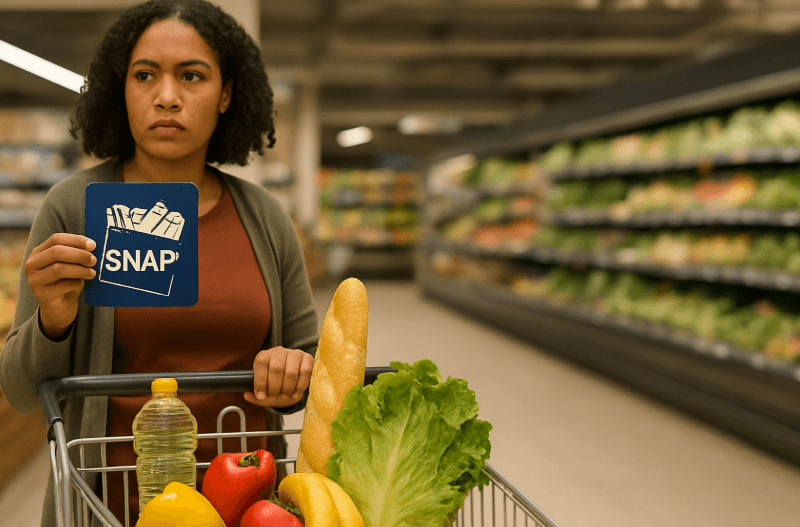
The SNAP programme, known in the UK as a form of food assistance similar to welfare benefits, provides monthly support to help qualifying households buy essential groceries. It is jointly administered by federal and state governments, with the USDA setting eligibility rules and benefit amounts while states manage distribution.
Partial Benefits Determined by Federal Guidance
Under the latest federal guidance, only partial November benefits are being authorised. The USDA has determined the specific benefit levels for this interim issuance, meaning that some recipients may not receive the full monthly amount and others could receive none at all, depending on eligibility criteria. OKDHS clarified that it has no discretion in calculating or adjusting benefit levels and is acting purely in line with federal instructions.
“The partial November SNAP benefit amounts are determined by the USDA,” the agency said in a statement. “Amounts issued will vary based on federal guidance, and some recipients may not receive any benefits due to eligibility restrictions. OKDHS does not determine individual benefit levels. The agency’s role is to issue benefits accurately and in accordance with federal direction.”
Focus on Timely and Reliable Delivery
Sondra Shelby, Director of Adult & Family Services, highlighted the urgency of restoring the flow of assistance.
“We know people are counting on this support, and our teams have been working around the clock to make sure Oklahomans can put food on the table,” she said. “Ensuring these benefits are delivered quickly and reliably is our highest priority.”
Recipients are not required to take any additional steps to access the funds. The benefits will be automatically credited to their existing Electronic Benefit Transfer (EBT) cards. Account balances and case updates can be viewed via the ConnectEBT mobile app or website.
Restoring Stability After Shutdown
The announcement marks a crucial step toward stabilising social support systems following the recent administrative standstill in Washington, which temporarily suspended or delayed several federally funded programmes. Oklahoma’s proactive preparation, officials say, allowed the state to resume operations within hours of receiving the USDA’s final approval.
For households dependent on SNAP, even partial payments will help ease immediate food insecurity concerns. According to state data, more than 600,000 Oklahomans receive food assistance benefits each month. While the full federal disbursement process is still being restored, the partial rollout is intended to bridge the gap until normal funding resumes.
Broader Economic and Policy Impact
The decision also underscores the importance of federal-state coordination during periods of fiscal disruption. By aligning technical systems and administrative readiness in advance, OKDHS was able to issue payments promptly once the USDA gave the green light.
In the broader economic context, the reinstatement of SNAP benefits is likely to have a small but positive short-term effect on local economies, particularly in rural and low-income communities where such payments contribute directly to retail and grocery spending.
As the U.S. government works toward full restoration of public assistance programmes, Oklahoma’s rapid response may serve as a model for other states seeking to maintain stability in essential services during budgetary interruptions.
For now, OKDHS has reiterated its commitment to ensuring that “benefits are delivered quickly and reliably,” reaffirming its role as a key conduit for federal support at a time when many households are still recovering from recent financial uncertainty.