

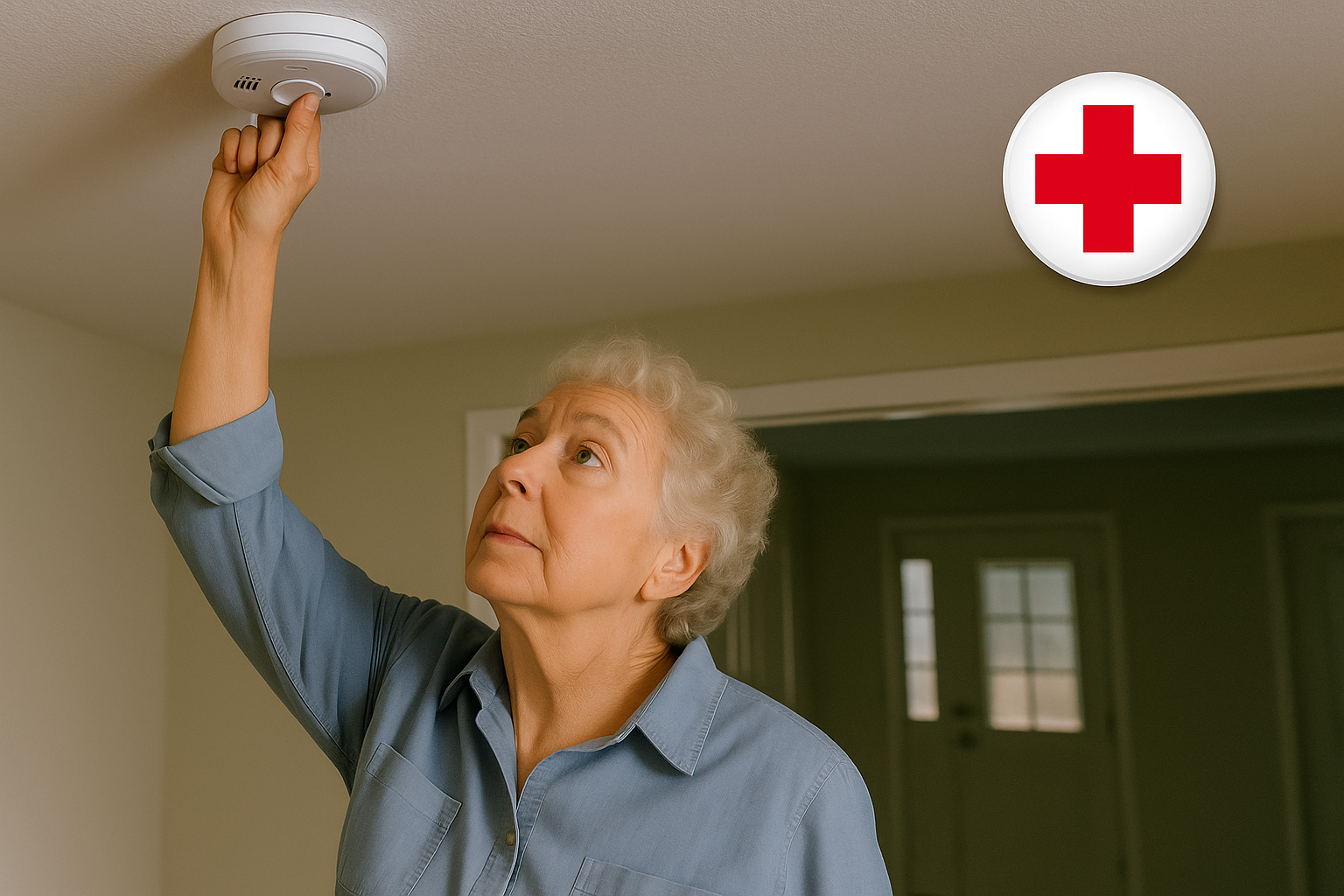
As daylight saving time ends this Sunday, the American Red Cross is calling on households to test their smoke alarms when turning clocks back—an action the organisation says could save lives. The charity’s reminder comes as part of a broader fire safety push timed to coincide with the seasonal clock change, encouraging families to ensure their alarms are functioning correctly and that home escape plans are up to date.
“Working smoke alarms can literally be lifesavers — they cut your risk of dying in a home fire in half,” said Sharonne Hayes, Regional Communications Manager for the North Carolina Region. “You may only have about two minutes to escape a fire, so the quicker you can receive that alert and get to a safe place, the better. As you turn your clocks back this weekend, take a moment to test your smoke alarms; it’s a simple step that could make all the difference for you and your family.”
The Red Cross reports that its volunteers assisted more than 6,500 people in North Carolina this year following nearly 2,000 home fires. Nationally, home fires account for the majority of the 65,000 disasters to which the organisation responds each year across the United States.
Preventing Tragedy Through Preparedness
The Red Cross emphasises that working smoke alarms remain the first and most critical line of defence against deadly house fires. The organisation recommends installing alarms on every level of a home, including inside and outside each bedroom and sleeping area. Devices older than ten years should be replaced, as components such as sensors lose sensitivity over time.
Residents are also encouraged to practice their two-minute home fire escape plan. According to the Red Cross, that is roughly the amount of time people have to flee a burning home before conditions become unsurvivable. The charity advises ensuring that every member of a household can exit within this short timeframe, identifying at least two ways out of every room, and agreeing on a meeting point at a safe distance—such as a neighbour’s home or a distinctive tree in the front yard.
For those who cannot afford smoke alarms or are unable to install them, the Red Cross offers direct support. Individuals are urged to contact their local Red Cross office for assistance.
Further fire safety guidance, including downloadable escape plan templates, is available at redcross.org/fire. The Red Cross Emergency App can also be downloaded by searching “American Red Cross” in major app stores.
A Decade of Life-Saving Work
Since launching in October 2014, the Home Fire Campaign—a flagship Red Cross initiative—has been credited with saving at least 2,284 lives. Working alongside community partners, the campaign has educated families on fire safety, provided practical escape planning tools, and installed free smoke alarms in high-risk areas across the United States.
The effort forms part of a broader strategy to reduce fatalities and property damage linked to domestic fires, which remain among the most frequent and destructive household emergencies in the country.
Corporate Partnership and Ongoing Support
The Red Cross also extended thanks to its national partners for their ongoing commitment to public safety. Among them is State Farm®, the official National Sound the Alarm Sponsor.
“State Farm’s funding helps our efforts to build safer, stronger, better-educated communities,” the organisation said. For decades, the insurance group has worked alongside the Red Cross to support home safety, disaster preparedness and relief efforts. The partnership reflects State Farm’s commitment to helping individuals and families manage everyday risks, including the dangers posed by home fires.
A Timely Reminder for Households
With the end of daylight saving time marking one of the few occasions each year when millions of households adjust their clocks, the Red Cross says it provides an ideal opportunity to reinforce safety habits. The simple act of pressing a test button on a smoke alarm can determine whether families receive the crucial early warning that may save their lives.
As Ms Hayes noted, the message is straightforward but essential: testing a smoke alarm could be the difference between life and death.