


Scientists have yet to investigate this issue further, but they already warn that the imbalance could become dangerous.
Examples abound. The field mice in Spain today weigh a third of what they weighed four decades ago. Also the salamanders of the Appalachian Mountains in the United States have shrunk 8% since 1960. Or the whale of the Basques, which has shrunk more than a meter since the 1980s.
I repeat: examples are unnecessary. Animals from all over the world have been shrinking in recent years and it is a subject that science has been studying for some time.
These measurements may seem insignificant enough, but it is a pattern that continues to appear in study after study. And science has some ideas as to why this could be happening right now.
“Researchers are still processing the answer to this question, but there are two major hypotheses,” says an investigation released by Vox a few days ago.
For years, scientists believed that animals shrank over the years as an evolutionary response. A note published in El País de España justifies it by a principle in ecology called Bergmann’s rule. This means that “the individuals of a population of warm-blooded animals such as birds or mammals will be larger in colder climates and smaller in warmer climates.” This makes sense: larger animals can better conserve heat in cold weather, and smaller animals can cool off faster in hot weather.
Up to here it would seem a logical subject. But cold-blooded animals – which don’t produce body heat – are shrinking too. So scientists think that what is happening worldwide not only has to do with the natural evolution of species.
This is where the second hypothesis comes in, which points out that the increase in temperatures due to global warming is leading animals such as frogs or salamanders to accelerate their metabolism and, therefore, their life cycle. So they reach adults faster, but smaller.
This is not the first time something like this has happened. Thanks to the study of fossils, we know that 56 million years ago, the Earth warmed between 5 and 8 degrees in 10,000 years and many animals got smaller. But man is warming the planet at an unprecedented rate and animal and plant species do not have time to adapt.
What impact could this have? By shrinking so fast, animals could lose the ability to migrate from one hemisphere to another. The reproduction rate is also at stake because smaller bodies imply fewer young. This could have consequences throughout the food chain because predators would have to search for more small prey to keep themselves fed.
Research at the Field Museum
The Field Museum in Chicago is home to one of the most important collections of birds in the world. There are more than 70 thousand specimens of 52 different species with very different habits. The collection has bird specimens from the last four decades. Each of the birds in the collection had all their measurements taken very meticulously. Everything was normal until 2019, when researchers began to analyze these measurements.
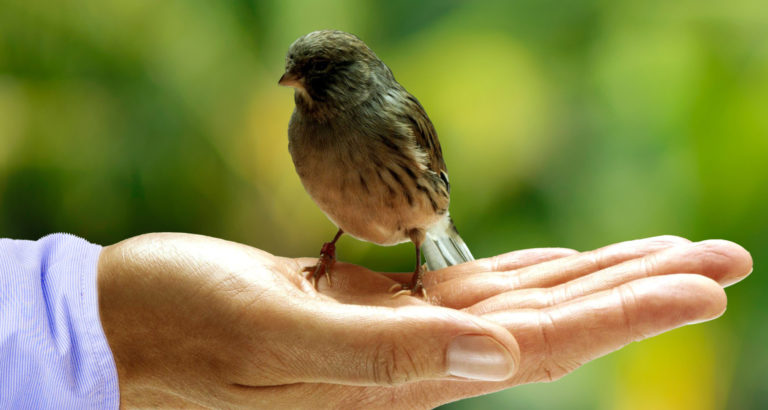
They took as a reference the measurement of the tarsus, a bone found in the legs of birds. What they discovered was that – regardless of the bird species or its feeding or migration habits – they had all shrunk in the last 40 years. On average, the birds today are 2.4% smaller.

What they did next was to check the reduction in bone size against the temperature logs. They observed that as higher heat peaks were recorded, the birds got smaller. This study motivated to extend the research to other animal species and found similar results. This could lead to a lot of species to their final extinction. These are the hypotheses of science as to why animals shrink as the planet’s temperature increases.