
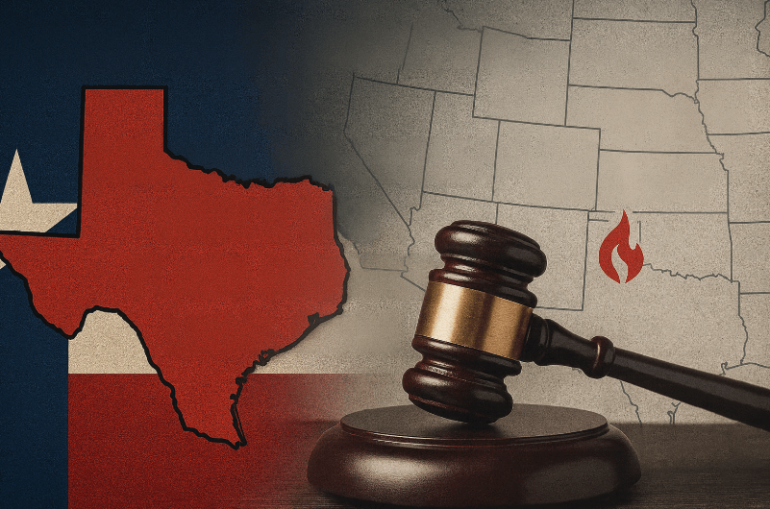
Texas has been placed on the American Tort Reform Foundation’s (ATRF) 2025–2026 Judicial Hellholes® Watch List, raising concerns among business advocates about the state’s shifting legal climate and the rise of so-called “nuclear verdicts”. The development marks a significant moment for a state long regarded as one of the most business-friendly jurisdictions in the United States.
The inclusion, detailed in ATRF’s latest annual report, highlights what the organisation describes as troubling trends in state-level litigation, including increasingly large court awards and the proliferation of suits driven by questionable scientific evidence. The findings have prompted a strong response from Texans Against Lawsuit Abuse (TALA), a prominent tort-reform advocacy group.
TALA Responds to Rising Litigation Concerns
In a statement issued from Austin, TALA spokesperson Robert Wood said the designation underscores growing threats to Texas’s economic reputation. “Texas’ inclusion in the Judicial Hellholes® Watch List is anything but welcome news. For decades, we’ve advocated for smart lawsuit reform that made our state a beacon for business investment and job creation, but now that record is under attack,” he said.
ATRF’s report points to what it views as systemic issues contributing to elevated litigation risk. According to Wood, the foundation “points to the increasing amount of state litigation ‘fueled by shaky science instead of sound legal principles’ and the growth of cases leading to nuclear verdicts as a significant cause for concern.”
‘Nuclear Verdicts’ Fuel Economic Alarm
The term “nuclear verdicts” refers to exceptionally high jury awards, typically exceeding US$10 million, which insurers and business groups argue distort the market and inflate operational costs. Texas has reportedly become a centre for such awards.
“Texas is home to some of the nation’s largest ‘nuclear verdicts’,” Wood said. “Court awards topping $10 million are far too common in Texas. In 2023 alone, six of the top ten verdicts in the country were handed down in Texas, totaling over $200 million.”
TALA warns that the upward trajectory of such awards could have far-reaching consequences for both businesses and consumers. Wood argues that steep payouts reverberate through the broader economy: “As the name suggests, these outsized verdicts are nuclear-level in destruction, making consumer goods and services less affordable and threatening the Texas business climate. Texans pay upwards of $1,725 more for goods and services every year as the cost of lawsuits and these massive court awards are passed on to consumers.”
Business Climate at a Crossroads
This assertion reflects a long-running debate in the United States over the economic impact of expansive civil litigation. Business groups frequently contend that high awards encourage speculative lawsuits and raise insurance premiums, ultimately increasing prices for households. Critics of tort reform, however, argue that the figures cited by reform advocates often lack transparency and that large verdicts typically arise from serious corporate negligence.
Texas has historically championed pro-business legal reforms, particularly during the early 2000s when lawmakers enacted measures designed to limit liability exposure and curb what they deemed excessive litigation. These earlier changes were credited by supporters with attracting investment and stabilising the state’s insurance markets.
Call for Legislative Action
The new report, however, suggests that the environment may be shifting. The rise in high-value verdicts, combined with concerns about inconsistent judicial practices across counties, has raised questions about whether Texas may once again be moving toward what ATRF characterises as a more unpredictable litigation landscape.
Wood said the findings should prompt swift action from state leaders. “We hope our state leaders will move swiftly to address the serious concerns raised in the Judicial Hellholes® report and to put an end to the abusive lawsuits that will wreck the state’s reputation as a jobs-friendly state,” he said. “Texas’ economic strength and future prosperity hinge on ensuring our courts are used for justice, not greed.”
Outlook for Businesses and Policymakers
The coming legislative sessions in Texas are likely to see renewed debate over tort reform measures, particularly as business groups push for stricter limits on damages and further restrictions on expert testimony. Should momentum build around reform proposals, Texas could once again become a flashpoint in the national conversation over the balance between consumer rights, corporate accountability, and economic competitiveness.
For now, the state’s placement on the Judicial Hellholes® Watch List serves as a warning sign for policymakers and investors alike, suggesting heightened scrutiny of legal risks in one of the United States’ most influential economic hubs.

:quality(85)//cloudfront-us-east-1.images.arcpublishing.com/infobae/5GPYBYRD46RXA2DOSXWDJO5M64.jpg "The US government extended the deadline to reach an agreement on the debt ceiling")
.jpg "Champions League 2023-2024 group stage draw seeds: Which teams, why and how they were decided")